
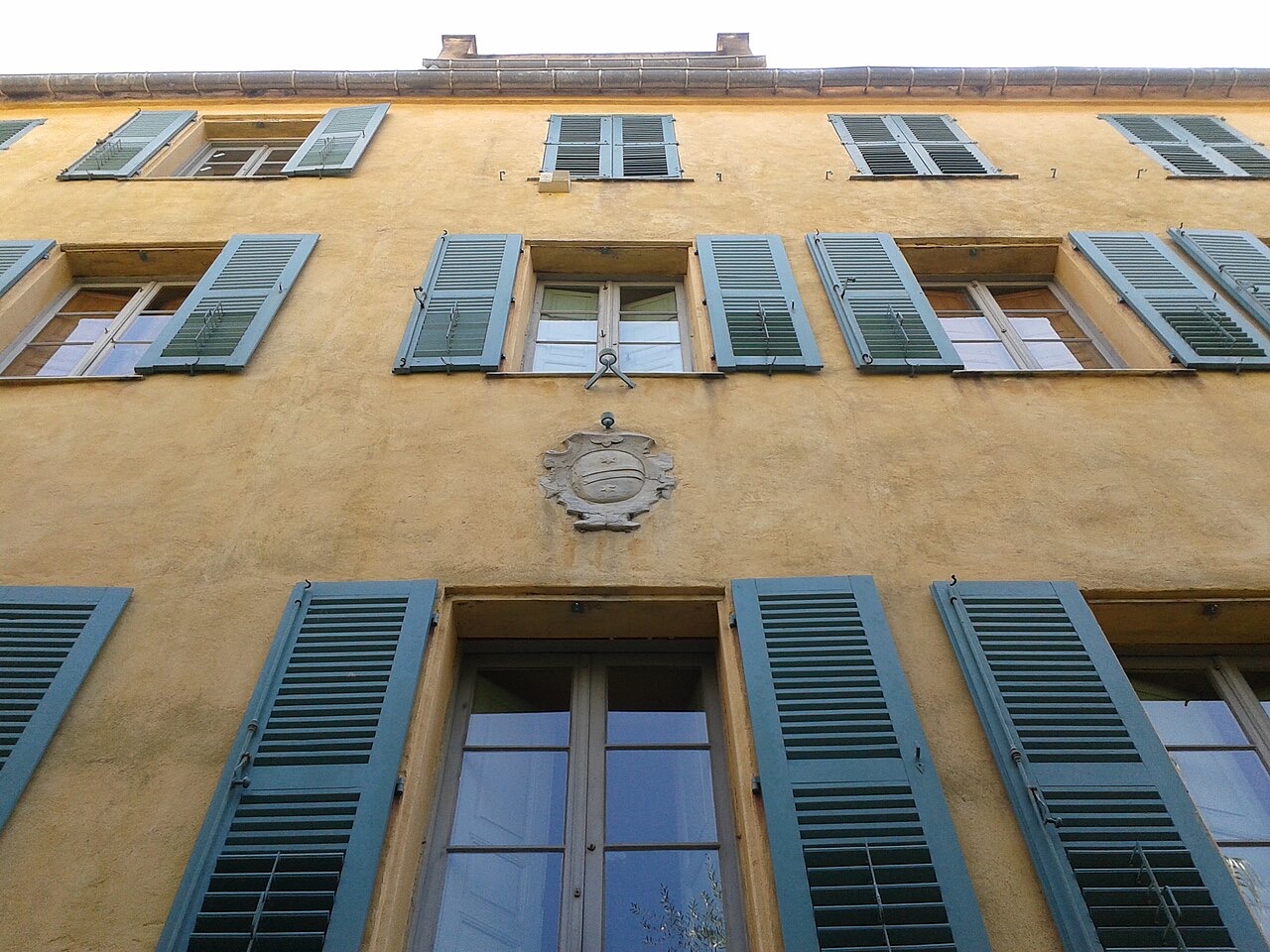
Ajaccio sits on the sea side of Corsica and carries its most famous son everywhere it goes. Yet it is no open-air museum devoted to a single man. There is also a national hero of the island, a coastal fortress and a chapel dedicated to a patron saint of sailors. On a walk through town, you go in just a few hours from an emperor's nursery to the ramparts that once guarded the city. Below is a selection of what you will come across along the way.
An emperor with a nursery
It begins at the Maison Bonaparte. Somewhere behind those walls Napoleon was born and spent his childhood. The house is now a national museum, with furniture and objects that once belonged to him. Start here and you know right away that before there was an emperor, there was simply a boy from Corsica.
He was baptized in the Cathédrale Notre-Dame-de-l'Assomption. The shell of the building was finished in 1593, and in 1771 little Napoleon was baptized here. The cathedral is also dedicated to Saint Euphrasius, patron of the city's very first cathedral. Inside, the noise of the street fades away, which is welcome after the bustle outside.
The Napoleon theme keeps returning throughout the city, often with a twist of its own. On the Place du Diamant stands the monument to Napoleon and his brothers. He shares it with them, which is only natural: several of those brothers ended up wearing a crown somewhere in Europe thanks to him. The monument to Napoleon I himself has a name of its own among locals: Casone. It is one of the spots on the route that goes by more than one name.
Then there is the Chapelle impériale. Napoleon's mother Letizia and his father Charles are buried here. In a city where everything revolves around the Bonapartes, this is where the family itself rests.
Play Ajaccio right in your browser →
Not everything revolves around Napoleon
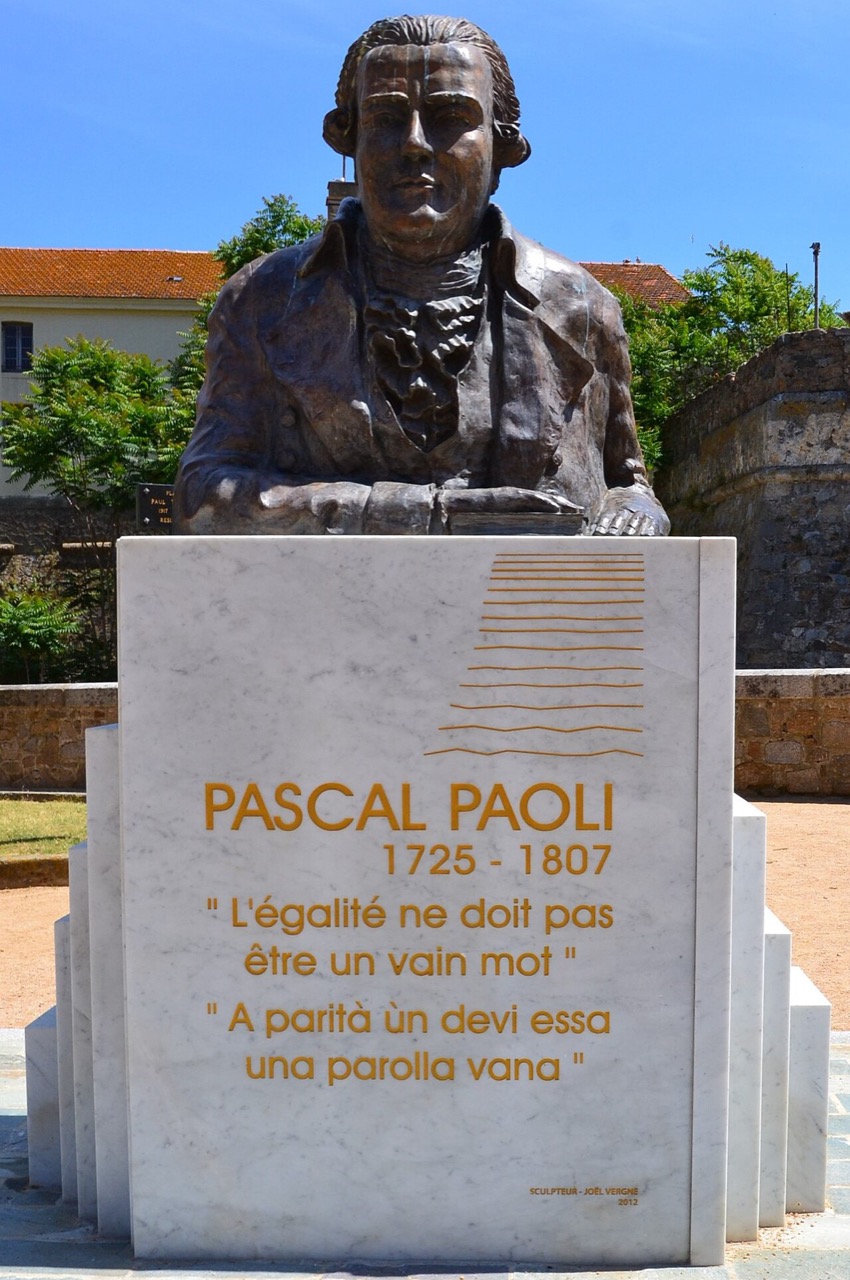
It is refreshing that Ajaccio also makes room for other figures. The monument to Pascal Paoli is a reminder that Corsica was independent under his leadership in the 18th century, years before the young Bonaparte was born. Many Corsicans still call Paoli the father of the nation. Anyone who comes only for Napoleon gets a counterweight here: the island had its own story, and that story began earlier.
Another counterweight can be found on the Cours Grandval. After the narrow alleys of the old town, the spaciousness of this avenue comes as a surprise. On the same street stands a church with an English name, Holy Trinity Church (in French, Église de la Sainte-Trinité). It is quiet proof that more languages were once heard here than French and Corsican.
Among the buildings that stand out even without Napoleon is the Palais Lantivy. This neoclassical palace was built between 1826 and 1830 to plans by the architect Alphonse de Gisors. It has been a protected historic monument since January 1990. Behind the façade live the highest representatives of the state in the department and the whole region, so it is a workplace rather than a museum.
Salt, cannons and a patron saint of sailors
A city by the sea has another side, and you see it at the Citadelle. These walls were built in the 16th century as a military structure, to keep watch over anything approaching the city. Their value lay not in beauty but in reach: how far the cannons on the ramparts could shoot. You can smell the salt in the air here, and that suits the purpose of the fortress.
A little further on, away from the Napoleon trail, stands the Chapelle Saint-Érasme. Sailors on the Mediterranean knew Erasmus as Saint Elmo and called on him when storms raged. The ghostly light that sometimes flickers on masthead tips during thunderstorms still bears his name: St. Elmo's fire. In a city full of imperial references, this is one of the few places that is mainly about the sea.
The walk ends at the Place Foch, where Napoleon is honored once more, this time together with Marshal Foch. In the middle stands the Fountain of the Four Lions. Find a spot in the sun, let the fountain do the talking and look back on what you saw along the way.
A selection, not a complete route
This article covers only part of what you will come across in Ajaccio. The full walk contains more stops, more quiz questions and more hidden details than I can fit here, and that is precisely why you walk it yourself. If you want to explore the city that way, choose the Ajaccio walk in the CityWalkGems app. Then at every corner you will find out what lies hidden behind the walls.
- 12 stops
- Start anywhere
- ~4,2 km route length
- ~770 m longest stretch
- about 1,5–2,5 h duration
- Free

