
Arequipa has its own food identity within Peru, built around the picantería — a traditional eating house serving spicy, hearty regional dishes — and a handful of specialties that rarely travel far beyond the region. If you're walking the old town, here's what to actually look for.
The dish most associated with the city is rocoto relleno: a rocoto pepper, hot and thick-walled, stuffed and baked. Order it anywhere serious about Arequipeño cooking and it won't be toned down for visitors — rocoto is a different, fiercer pepper than the ones used elsewhere in Peru. Alongside it, chupe de camarones is the other dish locals point to first: a shrimp chowder built on the freshwater shrimp from the rivers around Arequipa, thickened and spiced rather than light. Adobo arequipeño, a pork stew traditionally slow-cooked and eaten as a Sunday morning dish, rounds out the trio of things worth asking for by name.
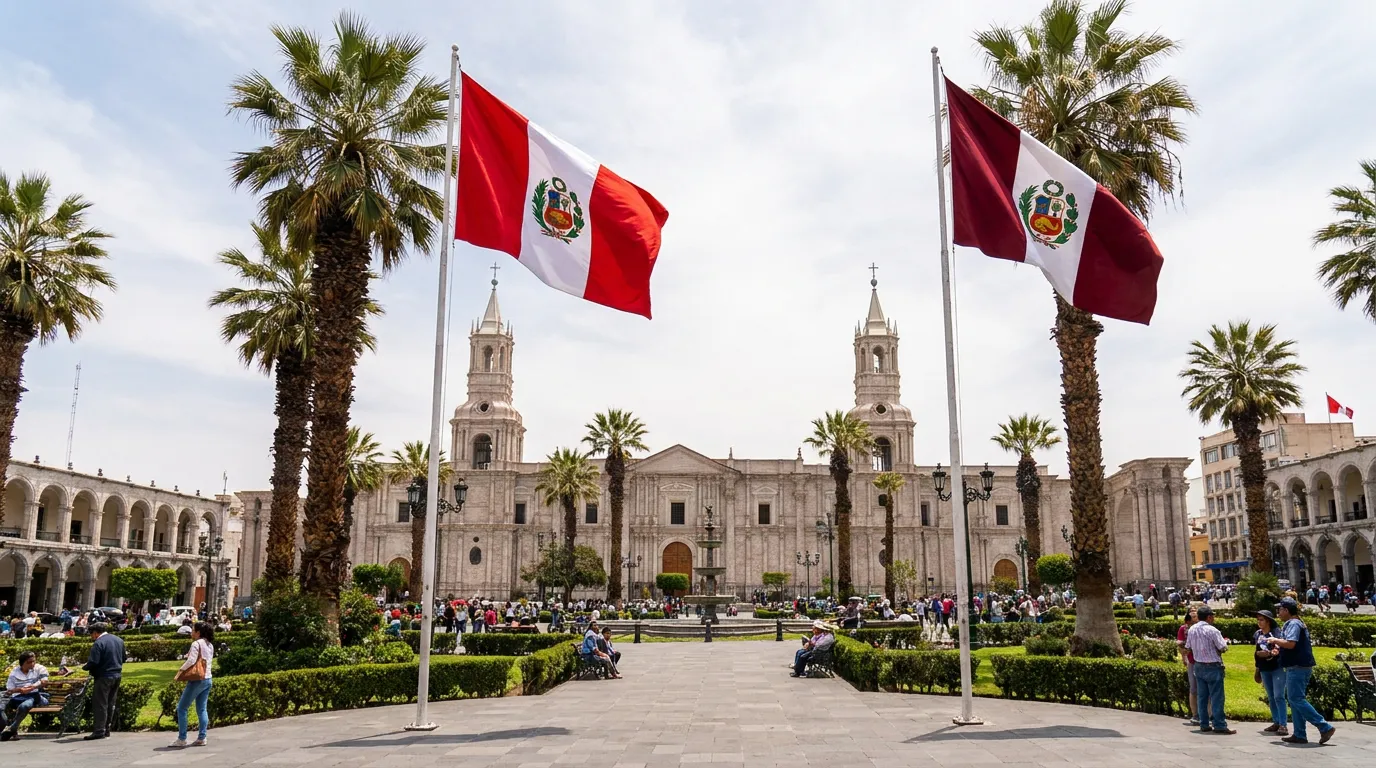
A good place to start looking is the Plaza de Armas, the square at the center of the old town. It's surrounded by the kind of cafés and restaurants where a short stop for coffee easily turns into a full meal — the square itself is framed by sillar-stone arcades, and the buildings around it are part of why the city carries the nickname "White City."
A few minutes' walk away is Mundo Alpaca, where the city's other food connection becomes clear: alpaca meat. It's a lean, mild Andean meat that shows up on Arequipa menus the way lamb or beef would elsewhere, and this stop is where you can see the animals themselves up close before deciding whether to try it at dinner. It's also one of the few places on the walk where you get the wool side of the story — spinning and natural dyeing — alongside the food side.
For something quieter, the Museo Arqueológico UNSA is a Hidden Gem worth slotting into the same stretch of the walk. It won't feed you, but its collection of pre-Inca ceramics is a reminder that Arequipa's food culture has roots that go back long before the Spanish arrived — the same region that grows the maize and peppers on today's menus was feeding people here centuries earlier.
If you want somewhere to sit afterward, loop down to the Puente Grau, the stone bridge over the Río Chili. It's another Hidden Gem on the route, and with the volcanoes visible in the background, it's a better spot to let a heavy plate of adobo settle than anywhere directly on the square.
None of this requires a reservation or a special food tour — just knowing which three dishes to ask for, and which stops on the walk put you near a kitchen that takes them seriously.

_GTS_2.0L_Twin_Cam_24_Valve_(Converted_to_LHD._Arequipa,_Per%C3%BA._2020).jpg)