
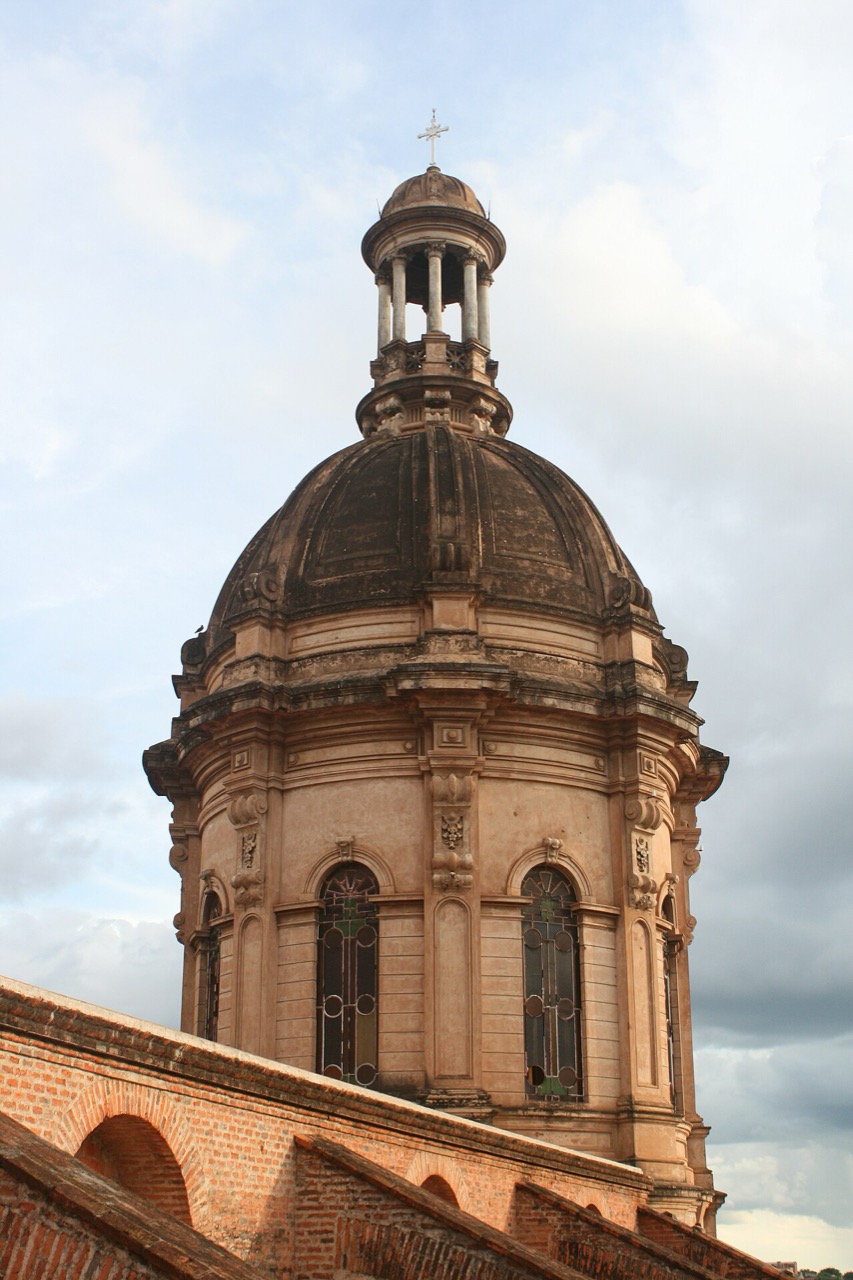
Asunción is rarely mentioned when you dream about South America, and that is exactly what makes the city so interesting. On the banks of the river lies a capital where independence, war and everyday life blend together within a few streets of one another. If you are wondering what to do in Asunción, you won't find a list of tourist highlights, but a compact center that is easy to explore on foot, past places where people still simply live, pray and go to the theater.
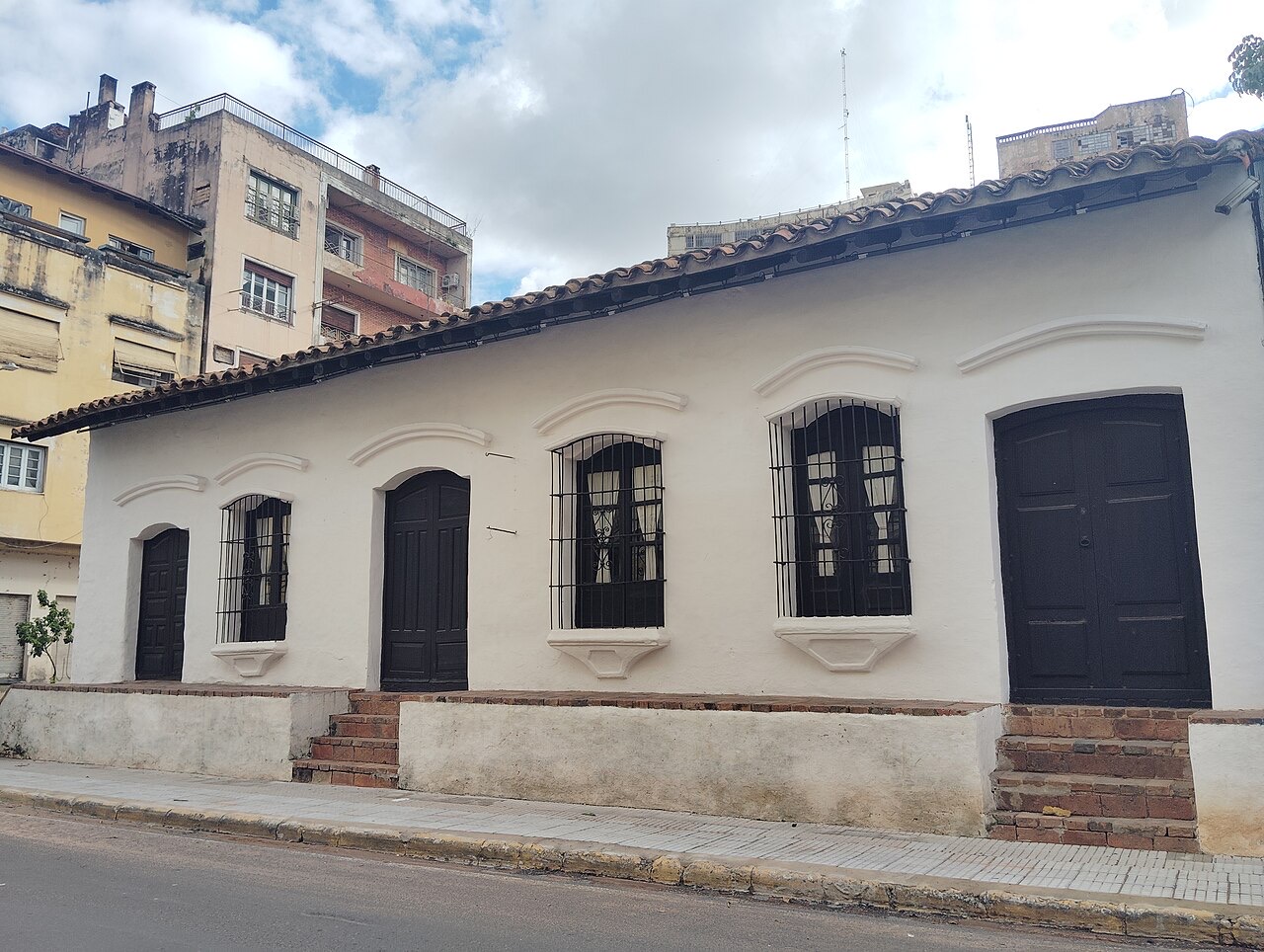
The Night of May 14 and the House of the Conspirators
Start on 14 de Mayo, a busy street where traffic roars past. At the Iglesia de la Encarnación, the noise noticeably fades away. The name, Incarnation, refers to the Christian belief that God became human. It is a quiet start, and a little further along the same street the first real story awaits.
The street name is already a clue in itself. 14 de Mayo commemorates the night of May 14 to 15, 1811, when Paraguay broke free from Spanish rule. In the Independence House Museum, the conspirators met in secret for exactly that purpose. The house is now a museum, small enough for you to imagine them sitting close together, whispering. It is no grand palace, and that is precisely what makes it so convincing: a revolution that began in an ordinary house.
A little further on stands the Manzana de la Rivera. Manzana means apple in Spanish, but in Asunción it also means city block, and that is the meaning intended here. An entire block of old houses was restored and joined together into a single cultural center. Where families once lived, exhibitions and events now fill the rooms.
Power, War and the Heroes of Paraguay
The story of Asunción is also the story of the López family. Behind the Palacio de López lies the Bay of Asunción. Carlos Antonio López had the palace built for his son Francisco Solano López, who in the end never lived there. Construction began in 1857 under the English architect Alonso Taylor. Today the president works there, but he sleeps elsewhere: at Mburuvicha Róga, Guaraní for House of the Chief. That Guaraní name is a reminder that the language here is not folklore, but part of the machinery of state.
A little further on stands the Metropolitan Cathedral, and there is a nice linguistic joke in it. The name of the city and that of the church are the same: Asunción means Assumption of Mary, and the cathedral is dedicated to Our Lady of the Assumption. As a metropolitan cathedral, it is the seat of the archbishop and the mother church of all the parishes in the city.
The building that says the most about more recent history is the National Pantheon of the Heroes. For more than seventy years it stood unfinished, wrapped in scaffolding. Francisco Solano López ordered a chapel in 1863, but the war brought the work to a halt. It was not consecrated until 1936, after the Chaco War. Here rest Carlos Antonio López, his son Francisco Solano López and the child martyrs of Acosta Ñu. A building that waited so long for its completion says a great deal about how heavily those wars weighed on the country.
You also encounter this history on a square. Plaza Uruguaya, with its old trees, benches and shade in the middle of the center, bears the name of the neighboring country. Paraguay chose that name as a thank-you after the War of the Triple Alliance, when Uruguay made a conciliatory gesture toward its defeated neighbor.
Trains Without Rails and Stories From Before the City
Not everything in Asunción revolves around generals. The old central station is now a railway museum. Paraguay was one of the first countries in South America with a railway, and this is where the trains departed. They no longer do: the building keeps the memory of the steam age alive.
Those who want to know what came before all of this end up at the Andrés Barbero Ethnographic Museum. It preserves objects of the indigenous peoples of Paraguay, whose cultures flourished here long before the founding of Asunción. After all those palaces, churches and monuments, it is good to end with the oldest stories of the city. Do it like the locals: with an ice-cold tereré in your hand.
A Taste of the Whole
This article only picks out a part. The full route through Asunción holds more stops, quiz questions and hidden details that I deliberately don't give away here. If you want to decipher the city yourself, choose the walk through Asunción in the CityWalkGems app and let the streets tell the story.
- 11 stops
- Iglesia De La Encarnacion start
- ~4,0 km route length
- ~723 m longest stretch
- about 1,5–2 h duration
- Free

