
Badajoz sits on the Guadiana River, right next to the Portuguese border, and that explains a great deal. Anyone walking through Badajoz from east to west sees a city that spent centuries as a gateway, a fortress and a lookout post. Islamic walls, a Renaissance gate, a cathedral and nineteenth-century square façades all stand within walking distance of one another. This is a city you read on foot, from the river up to the hill.
By the River: Bridge, Gate and Quiet Convents
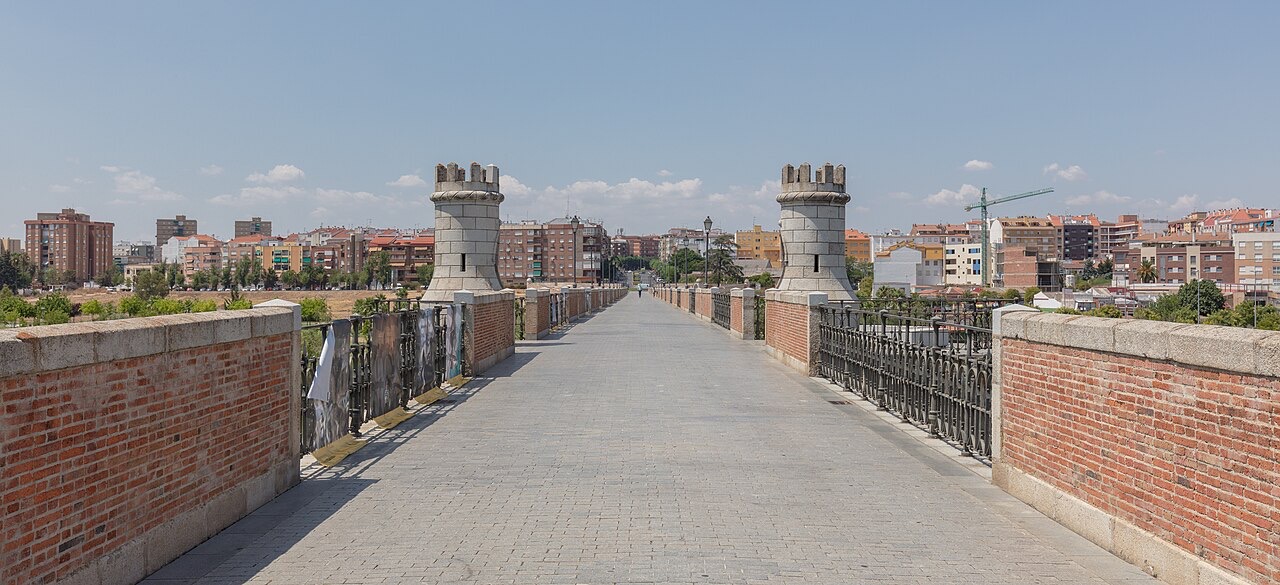
The story begins at the Guadiana. The Puente de Palmas is the oldest bridge in Badajoz and links the city with the San Fernando and Santa Isabel neighbourhoods on the right bank. Chroniclers disagreed about when it was built: around 1460 or 1511. Most historians favour the 16th century.
At the city end of the bridge stands the Puerta de Palmas. Two towers flank a Renaissance arch that imitates a Roman triumphal arch. The gate was completed in 1551 and was first called Puerta Nueva, the New Gate. Over time it served as a lookout, a lodging and a royal prison. Later it became a checkpoint for customs and taxes.
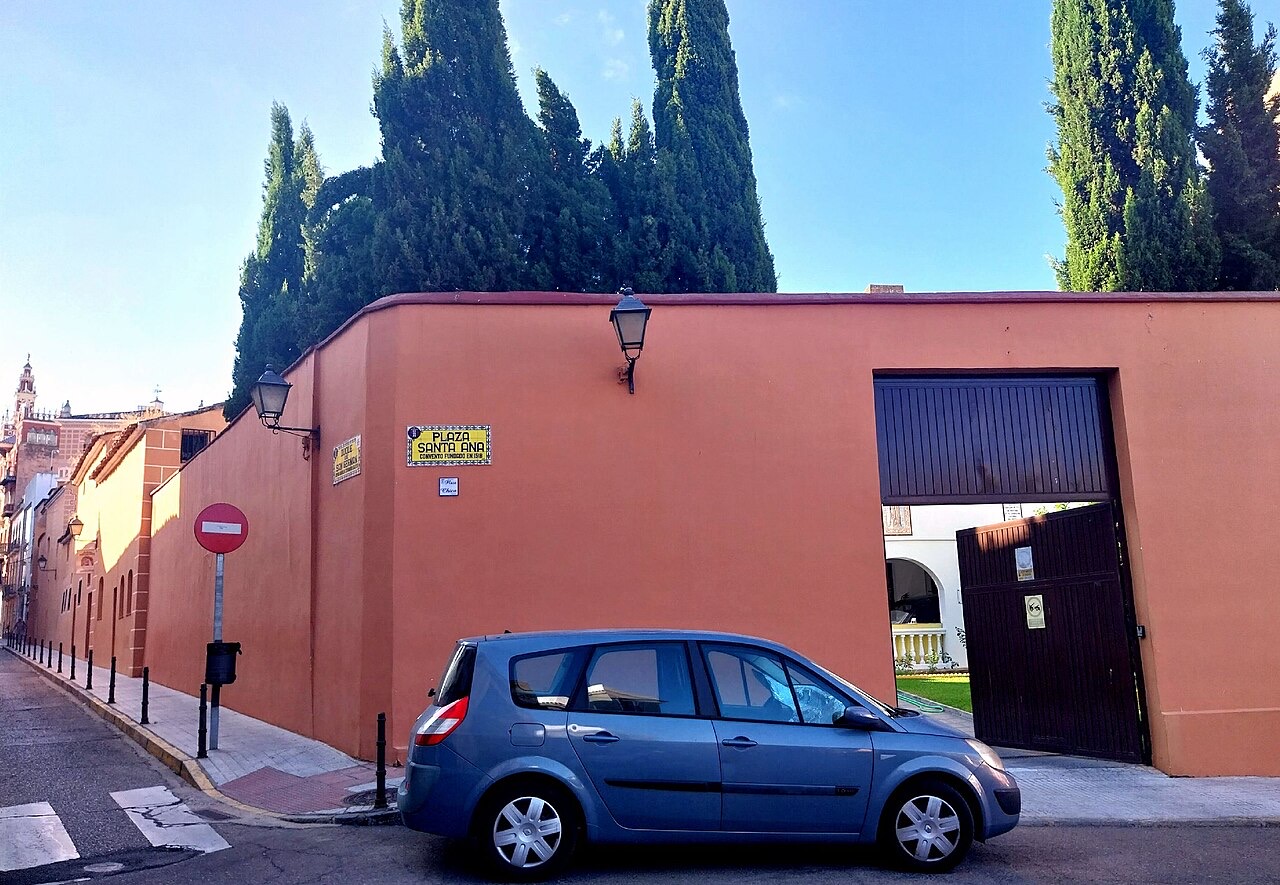
The old centre sometimes keeps its riches hidden. The Real Monasterio de Santa Ana gives away almost nothing from the street. Leonor de Vega y Figueroa founded it in 1518. Queen Anne of Austria was buried here before her move to El Escorial. Nearby stands the Hospital Provincial San Sebastián. It cared for the sick from 1694 until 2003. Since 2021 it has been a cultural centre.
The Heart of the City: Cathedral and Plaza de España
The beating heart of the centre is the Plaza de España, also known as the Plaza de San Juan. Most of the buildings around the square date from the 19th and 20th centuries. Look for the Casa Álvarez-Buiza, a textbook example of regionalist architecture.
On the same square stands the Catedral de San Juan Bautista. It is the mother church of the Archdiocese of Mérida-Badajoz and holds metropolitan rank. Together with the cathedrals of Coria and Plasencia, it founded the association Ciudades Catedralicias, which fifteen other Spanish cathedrals have since joined. Step back a little until the whole façade fits into view.
One of the strangest buildings on the route is the Iglesia de Santa Catalina. From 1515 Augustinian nuns lived here. From around 1633 the Jesuits took over until their expulsion under Charles III. Afterwards the church became private property and was used for very different purposes. In 2013 the city bought the building in order to restore it.
Heading Up: The Alcazaba and Its Tower
Walk uphill and you reach the Torre de Espantaperros, also called the Torre de la Atalaya. The first name roughly means "dog scarer", the second "watchtower". It is an Almohad torre albarrana, built in front of the main wall, next to the alcazaba and the Jardines de La Galera.
The Alcazaba de Badajoz is the centrepiece. Eight hectares lie within its walls, and about 1,300 metres of wall survive. Judged by its Arabic construction, it is considered the largest alcazaba in Europe. It commands the natural crossing of north–south and east–west routes, with steep slopes and two rivers acting as natural moats. Between the 9th and 19th centuries, Arabs, Christian lords and fortress engineers each added their own layer.
Inside the fortress stands the Museo Arqueológico Provincial. The building itself is a monument: in 1962 it was declared a historic-artistic monument, which now makes it a Bien de Interés Cultural. The house is thus just as protected as the finds it displays. On the Plaza Alta, the "high square", you feel the altitude in your calves straight away. It is a good spot to linger at the edge and watch the city go by.
As a finale, La Giralda stands on the Plaza de la Soledad, next to the church where Badajoz's patron saint is kept.
More Than a Taste
This article covers only part of what the route has to offer. The full walk through Badajoz contains more stops and details that you only notice when you look closely. If you want to discover it yourself, choose the Badajoz walk in the CityWalkGems app and let the city unfold step by step.
- 12 stops
- Start anywhere
- ~4,3 km route length
- ~727 m longest stretch
- about 1,5–2,5 h duration
- Free

