
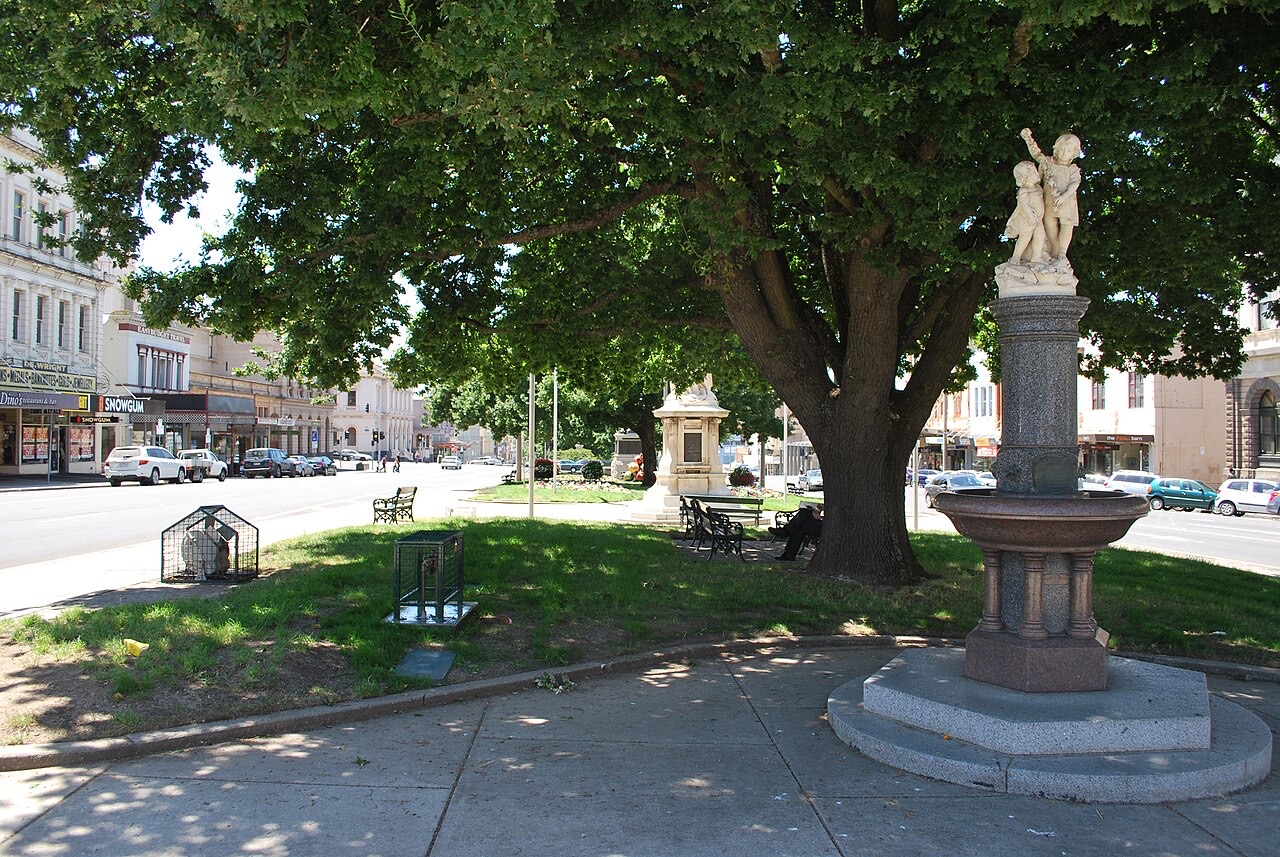
Ballarat is a city where you don't have to go looking for the past, because it simply stands along the roadside. A walking tour of Ballarat takes you past a broad green median strip, a mining exchange, a railway station from 1862 and a tiny suburb of 180 residents where tempers once ran high. The centre is compact enough to explore entirely on foot, and almost every stop has a story that reaches beyond its facade.
Sturt Street: A Green Backbone
The best place to start is Sturt Street Gardens. Thirteen blocks of greenery stretch from Grenville Street in the east to Pleasant Street in the west. The strip is only about 20 metres wide, yet it holds statues, monuments, bandstands and old trees. Some blocks have names of their own, such as Queen Victoria Square and Alexandra Square.
On this strip you will also find the Queen Alexandra Bandstand, named after Queen Alexandra. Bandstands like this are part of the heritage that gives the gardens their protected status as a whole. Take a seat and picture the folding chairs set out on the grass.
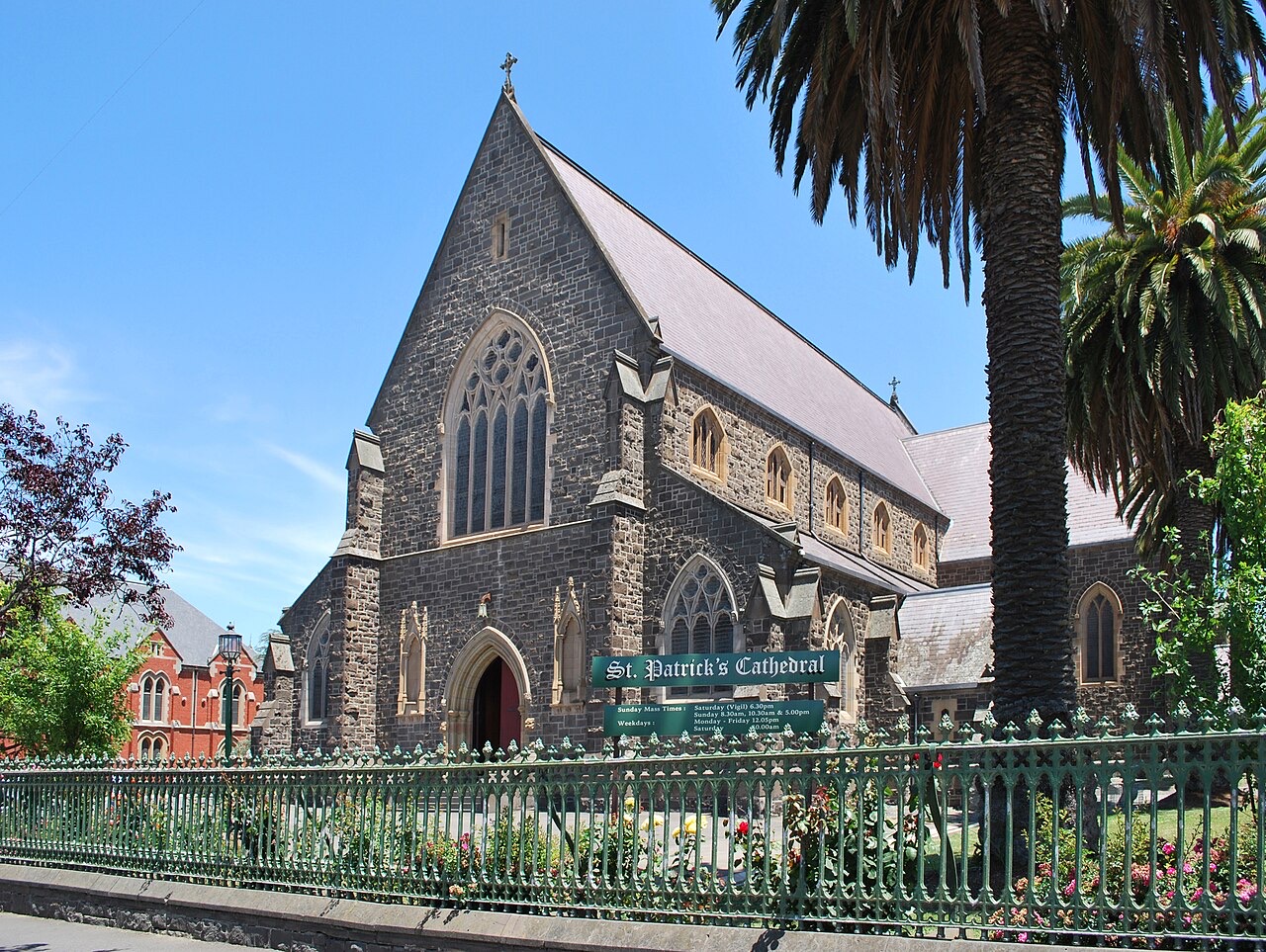
A little further along stands the cathedral, and there is a fun fact to go with it. A church is a cathedral because of a single piece of furniture: the cathedra, from the Greek word for seat. Size, age or height don't matter. If the doors are open, step inside for a moment and see whether you can spot that chair.
Authority and Money: The Administrative Heart
Next comes a row of buildings that show how the gold city organised itself. The town hall on Sturt Street opened in 1872 after a design competition. Around the corner on Lydiard Street South stands the former Supreme Court from the late 1860s. Subsiding ground soon drove the court out, and the School of Mines moved in. Today the building belongs to Federation University.
The contrast comes at the Mining Exchange. A stock exchange is no quiet place: here shares in mines changed hands, and a single rumour from a shaft could make or break a fortune in an afternoon. Stand at the entrance and imagine how that noise rolled out into the street.
Her Majesty's Theatre is of a different order. Theatres all over the British world were given this name in honour of the reigning queen. Come back after dark, when the foyer fills up and the house lights dim, and check at the entrance to see what's on soon.
From Art Treasures to the Smallest Suburb
The Art Gallery on Lydiard Street North opened in 1890. Admission has been free since 2008, and more than 11,200 works await you. Since 1895 the collection has also included the Eureka Flag, a flag that helped shape Australian history. It is now on long-term loan to the Eureka Centre.
A very different piece of heritage can be found at the railway station. It opened on 11 April 1862. It is one of only three 19th-century stations in Australia that still have their original train hall. The goods shed is also the only one in Victoria built of bluestone.
After all that stateliness, Bridge Mall gives you back everyday life: voices, footsteps and the city centre going about its daily errands. A good spot to catch your breath before the final stretch.
That stretch ends in Bakery Hill, which at the 2021 census was Ballarat's smallest suburb, with 180 residents. Yet large public meetings were held here before and after the Eureka Rebellion. On 9 June 1858 a famous gold nugget was also unearthed here. A suburb hardly gets smaller than this, and a story seldom gets bigger.
More Than a Taster
This article covers only part of what Ballarat has to offer. The full walk includes more stops, quiz questions and hidden details that you only notice when you walk these pavements yourself. If you want to discover the whole route, choose the Ballarat walk in the CityWalkGems app and let the city tell you the rest itself.
- 12 stops
- Sturt Street Gardens start
- ~3,6 km route length
- ~710 m longest stretch
- about 1,5–2 h duration
- Free

