
Belo Horizonte is rarely the first place that comes to mind when you think of Brazil, and that is a shame. It is a city that was born on the drawing board in 1897 as the capital of Minas Gerais, and you can see it in the squares, buildings and ambitions that alternate within a few kilometers. If you are looking for sights in Belo Horizonte, you don't have to walk far: the center tells its own history, from a church with a Dutch builder to a modernist building by Oscar Niemeyer.
A City That Had to Grow Fast
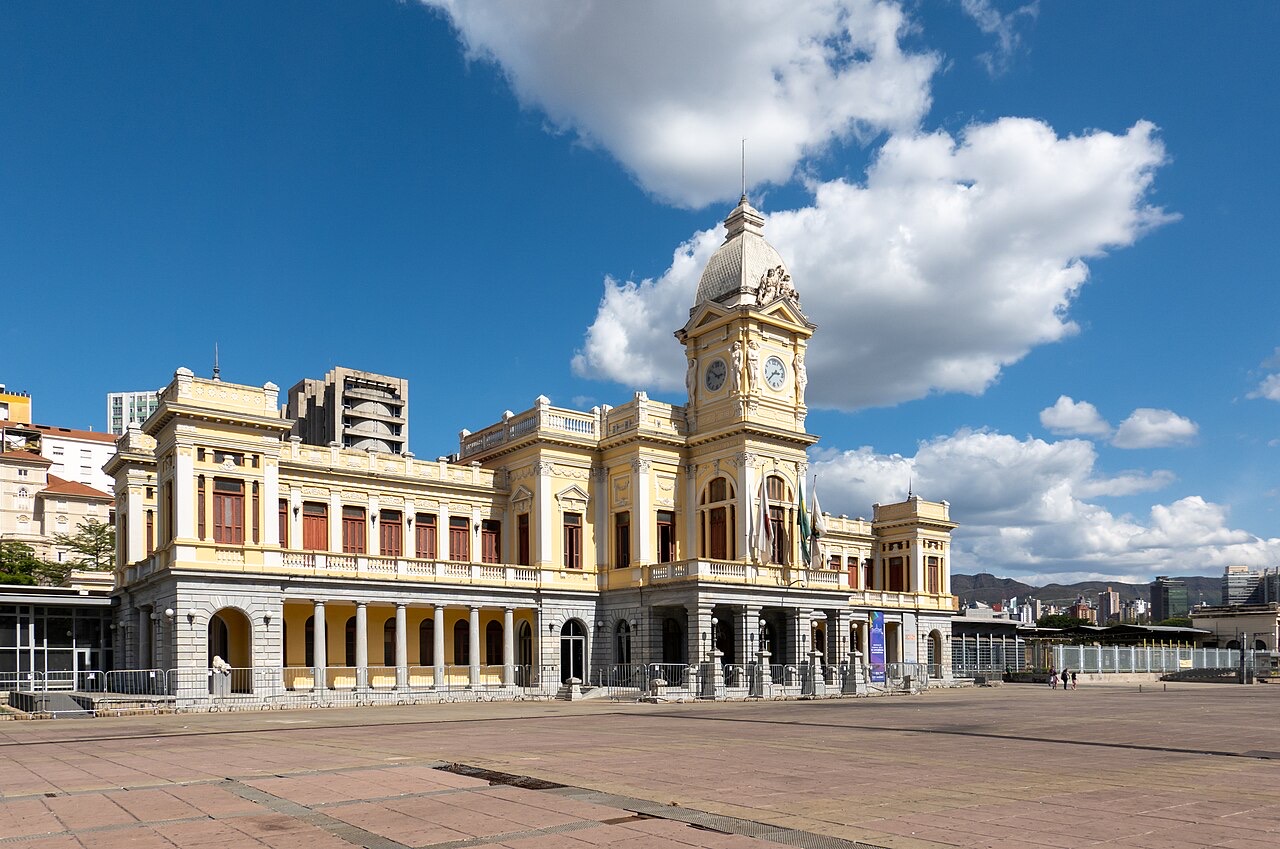
Start at the Praça da Estação, officially called Praça Rui Barbosa. The grand old railway station on the square now houses the Museu de Artes e Ofícios, a museum about work and crafts. A planned capital needed a gateway, and for decades this square was it.
A few steps further stands the Igreja São José, with a surprisingly Dutch background. The Redemptorist brother Gregório Mulders led its construction from 1902. Inside, Guilherme Schumacher painted walls, arches and vaults in 1911 and 1912, filling them with biblical scenes, saints and climbing vines. On the outside, Neo-Gothic and Neo-Manueline forms blend into a single building.
The Edifício Acaiaca represents a completely different era. The tower was built during the Second World War and therefore got an air-raid shelter in its basement. When it opened in 1947, Belo Horizonte was celebrating its fiftieth birthday, and for a while this was the tallest building in Brazil. Later it housed TV Itacolomi, the first television station in Minas Gerais, with its first studios.
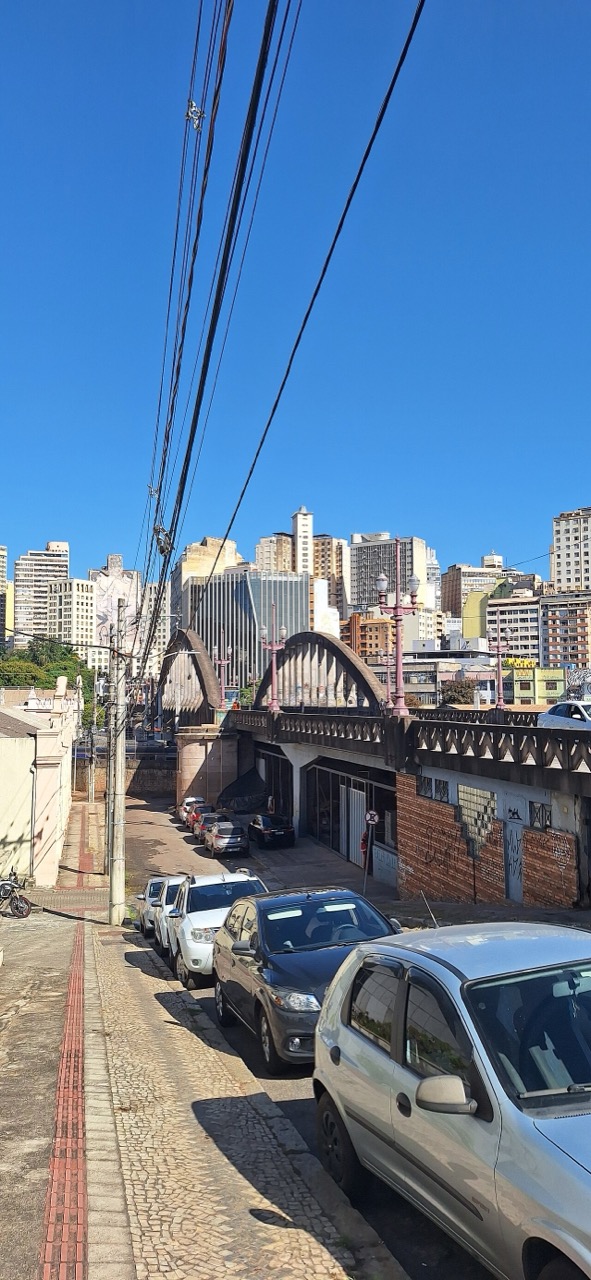
The Viaduto Santa Tereza from 1929 shows how the city expanded. Emílio Baumgart drew the design, and the viaduct connects the Floresta and Santa Tereza neighborhoods with the center. Almost a century later, people still cross it every day between their neighborhood and downtown.
Play Belo Horizonte for free →
Where Belo Horizonte Began to Matter
The Parque Municipal, officially Parque Municipal Américo Renné Giannetti, is the place where the traffic fades away. Within its grounds lies the Palácio das Artes, a cultural complex with a long run-up. Construction began as early as 1942 based on an initial design by Oscar Niemeyer, stood still for years and was completed with changes by Hélio Ferreira Pinto. In March 1971 the Grande Teatro opened with Handel's Messiah, conducted by Isaac Karabtchevsky.
You go even deeper into history at the Igreja da Boa Viagem. Since 2024 the city has officially recognized this spot as its Marco Zero, its zero point. As early as the beginning of the eighteenth century, a chapel stood here for a statue of Mary from Portugal, and that statue is still kept in the church. The old colonial mother church next to it was demolished in 1932.
Praça da Liberdade and the Face of Power
The most designed part of the walk is the Praça da Liberdade. In 1895 there was still a hilltop here, which was leveled until 1897 to lay out the square as a ceremonial backdrop for the government palace and the first department buildings. Gardens, fountains and a bandstand were part of it from the start. Since 1977 the entire ensemble has been protected heritage of Minas Gerais.
The Palácio da Liberdade itself received its first stone on September 7, 1895. Two governors who lived and worked here later reached the presidency: Juscelino Kubitschek became president of Brazil, and Tancredo Neves was elected but died before taking office. Inside you will find a staircase of iron and marble, and the gardens were designed by Paul Villon.
On the same square, the Edifício Niemeyer shows the modernist layer that was added in the middle of the twentieth century. The contrast with the eclectic buildings of the first hour is visible at a glance. The walk ends here, between the palace and Niemeyer's curves.
This Is Just a Taste
What is written above is a selection: along the way you pass more stops than I mention here, and each of them has its own story and details that you only notice when you stand still. Do you want to know what else you will see between the old station and the Praça da Liberdade? Then choose the Belo Horizonte walk in the CityWalkGems app. That way you walk the entire route yourself and discover the rest on the spot.
- 12 stops
- Praça da Estação start
- ~4,2 km route length
- ~788 m longest stretch
- about 1,5–2,5 h duration
- Free

