
Bendigo was once called Sandhurst, and you can still hear that old name echo when you visit the right places. In the 19th century it grew rich so quickly that it could afford to build on a grand scale: theatres, a mining exchange, a fountain, cathedrals. If you wonder what to do in Bendigo, the best way to start is simply to look around. Almost every building in the centre tells, in one way or another, the same story: gold was found, and the town became confident.
Cathedrals, lodges and theatres
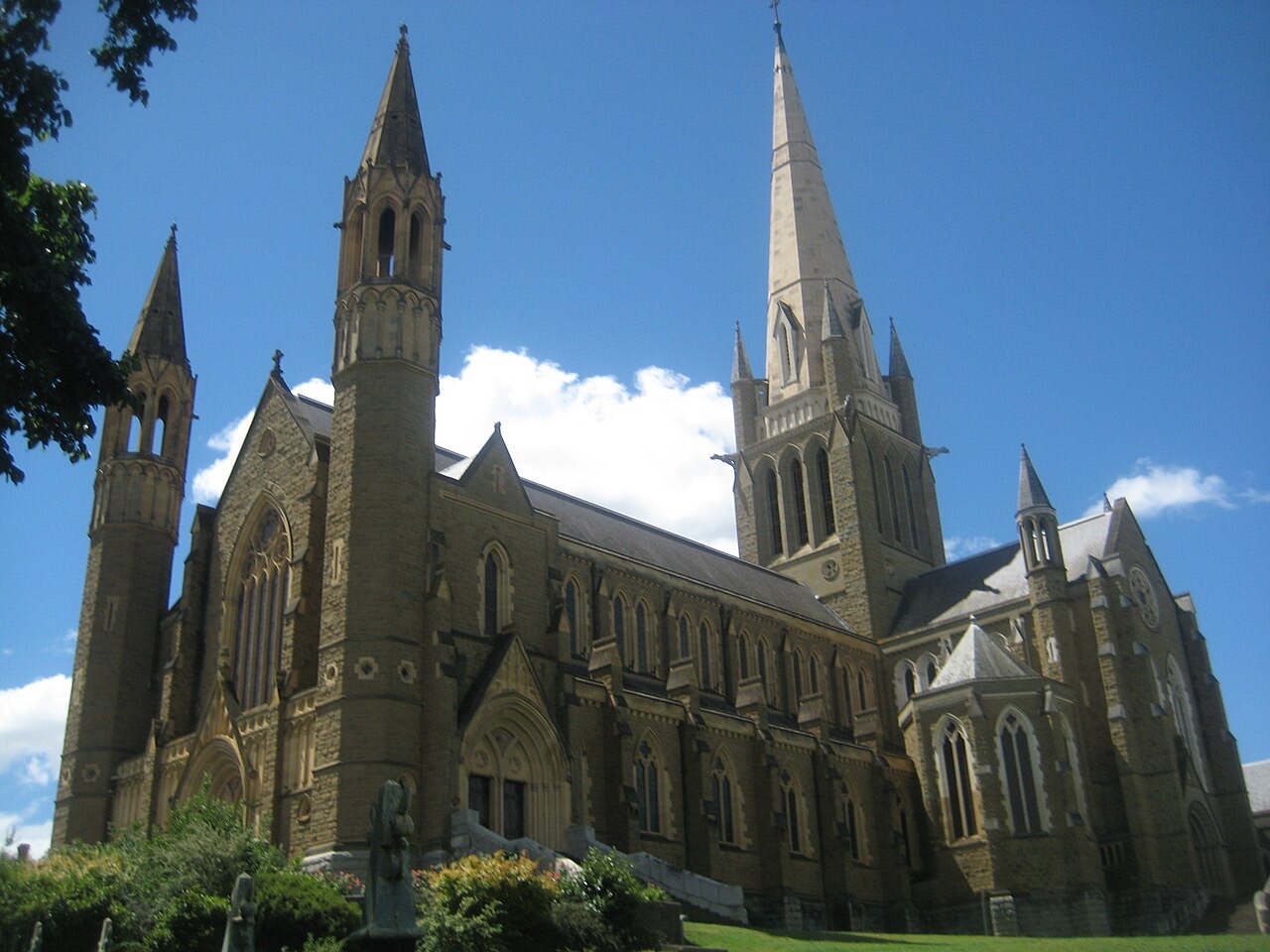
Your walk begins at the Sacred Heart Cathedral, the Roman Catholic cathedral of the Diocese of Sandhurst. The bishop who sits here is still called the Bishop of Sandhurst, after the town's old name. The building was designed in 1895 by an architect from the firm Reed, Barnes and Tappin and has been on the Victorian Heritage Register since 4 September 1997.
At the end of the route stands its counterpart: St Pauls Cathedral, the cathedral church of the Diocese of Bendigo and the seat of the bishop, currently Matthew Brain. Two cathedrals bracketing the walk like parentheses is not something you see often.
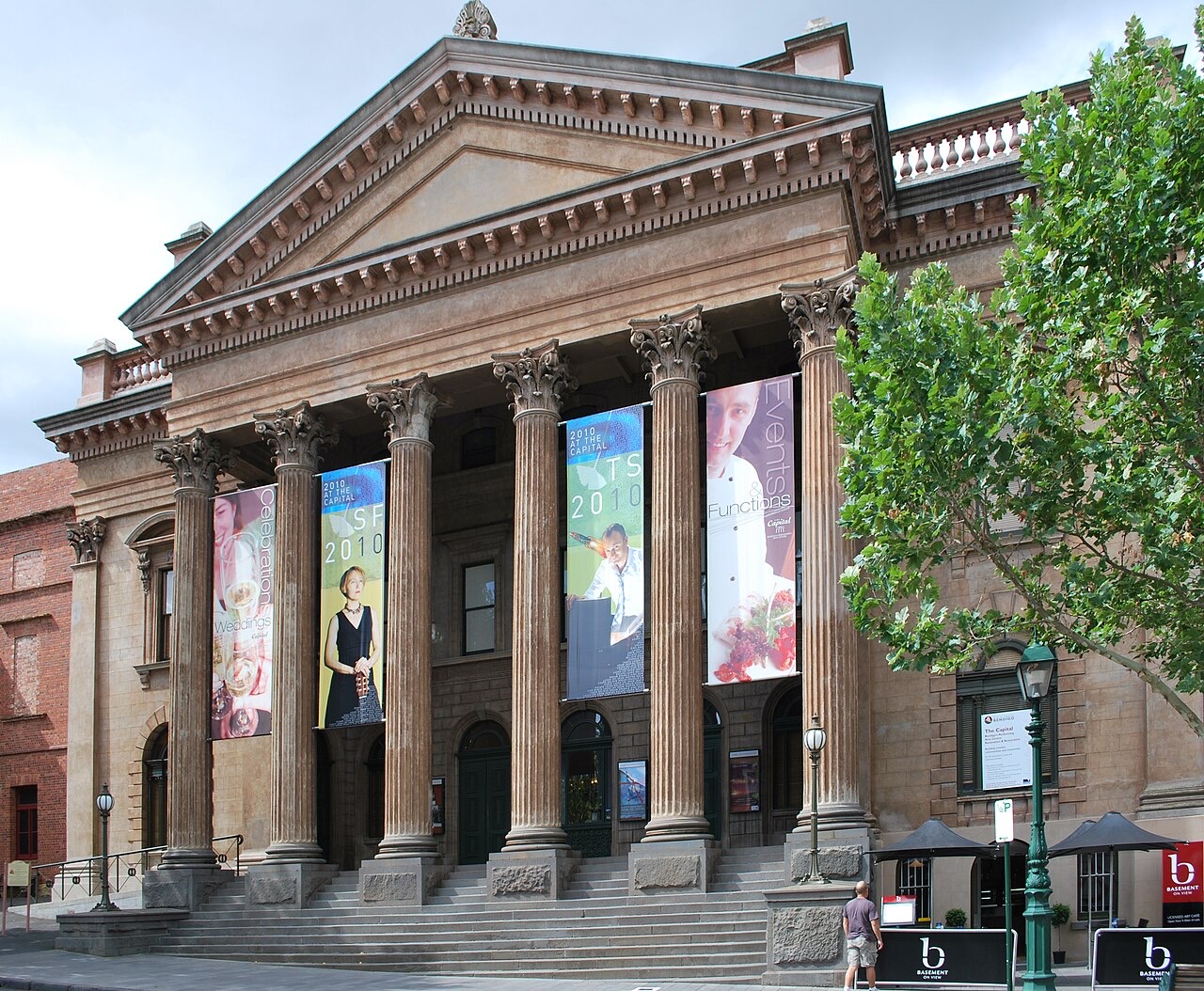
Between the two lies the Capital Theatre, which has a striking history. The building, by two Bendigo architects, opened in 1873 as a Masonic lodge. Opera, plays, lectures, recitals and later silent films were staged in its ballroom. A proper theatre auditorium was added in 1890, and today the theatre uses the entire building, with 480 seats and heritage status at both state and national level.
A very different kind of stage is the Ulumbarra Theatre, which opened in 2015. The name comes from the Djadjawurrung language and means 'gathering' or 'meeting place'. It has 953 seats around a black-box stage with a fly tower, and the theatre shares studios and a bar with Bendigo Senior Secondary College. You can practise the name right away: Ulumbarra.
Play Bendigo right in your browser →
Where gold turns up everywhere
Everything on this route goes back to the discovery of gold, and it has its own monument, the Discovery of Gold Memorial. The pull of the goldfields was so strong that in 1851 even Charles Webb, an architect in Melbourne, put his career aside to try his luck near Bendigo. Webb returned to his profession: he designed the Beehive Building, where shares in gold mines once changed hands when it was the Sandhurst Mining Exchange. The present-day Bendigo Stock Exchange is its modern successor, and the council is now investigating how the building might regain its former glory. Webb knew the goldfields from personal experience, which makes the building all the more special.
The Town Hall stands at the corner of Bull Street and Hargreaves Street. From 1878 architect William Vahland turned a plain building into a showpiece for the City of Gold. Its interior shines with 22-carat gold leaf. It is considered one of the finest Second Empire buildings in Australia.
Fountain, hotel and the Quartz King
The Alexandra Fountain shows how the town paid for its pride. Exhibition proceeds, £500 from George Lansell and £700 from the council covered the cost. It is named after Alexandra, Princess of Wales. Her sons, Prince Albert and Prince George, attended the opening on 5 July 1881.
On Pall Mall, the main street, stands the Hotel Shamrock. It began in 1854 as a small hotel for miners and was rebuilt in grand style in 1897. In 1898 Alfred Deakin spoke here in favour of an Australian federation. The double-storey iron lace verandah is hard to miss.
Gold also made great fortunes. In Rosalind Park a bronze George Lansell, the Quartz King, holds a large piece of quartz. On Pall Mall the former Post Office catches the eye with its clock tower of 43 metres. It was built between 1883 and 1887 to a design by George W. Watson.
A taste of the route
This article covers only part of what Bendigo has to offer. The full walk contains more stops, a few quiz questions along the way and details you only notice when you take the time to stand and look. If you want to discover what is missing here, choose the Bendigo walk in the CityWalkGems app and follow it at your own pace, from cathedral to cathedral.
- 12 stops
- Sacred Heart Cathedral start
- ~3,6 km route length
- ~653 m longest stretch
- about 1,5–2 h duration
- Free

