
Besançon is often skipped by those heading for the Alps or the Jura, and that's a shame. The city is tucked into a bend of the Doubs, has a fortress on the World Heritage List and the oldest museum in France. Anyone looking for Besançon's sights will find them close together: a compact centre where Spanish, French and Roman layers literally lie on top of one another. A walk through it tells that story almost by itself.
From Spanish crown to French fortress
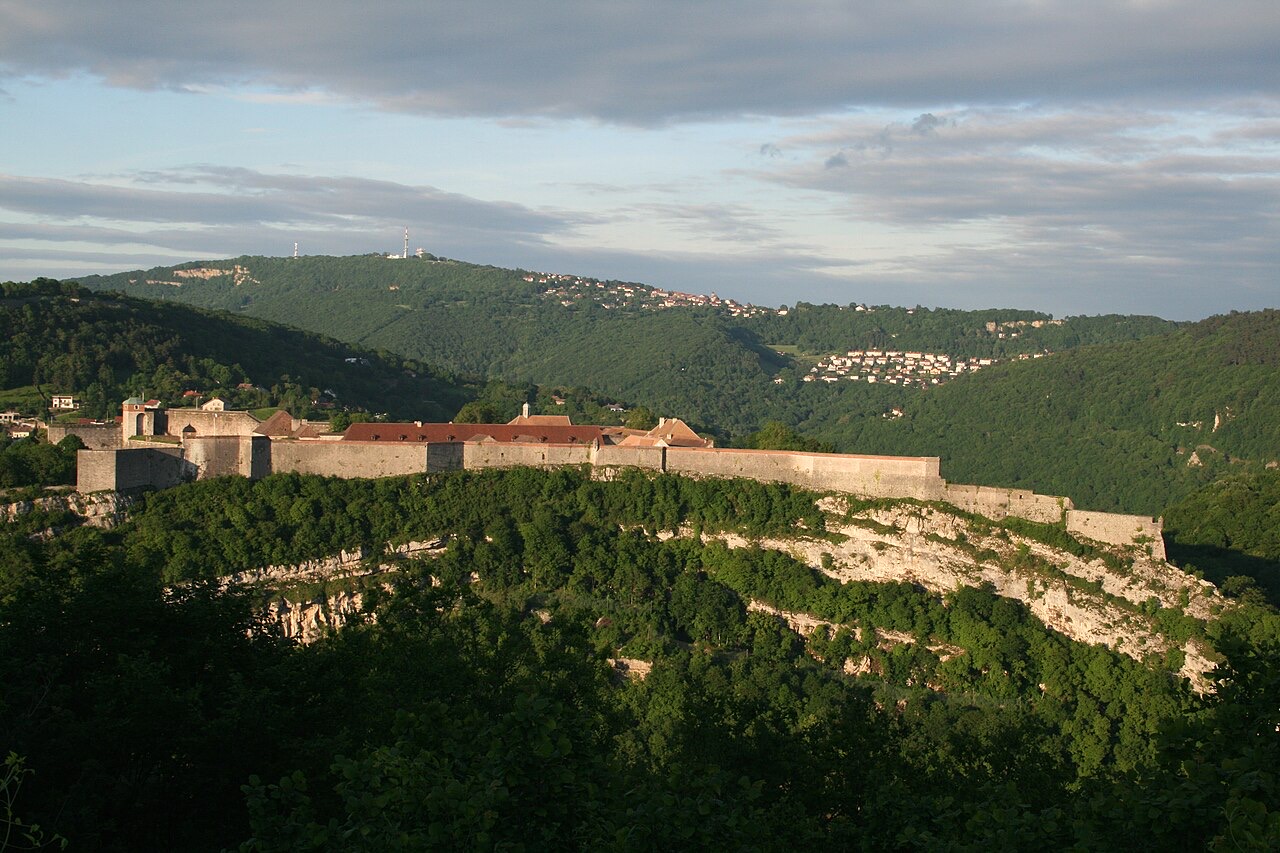
It starts at the top, at the Citadelle. Some 130 metres below the ramparts, the Doubs glitters between the rooftops. The first stone was laid here on 29 September 1668, when Besançon still belonged to the Spanish crown. That changed after the Peace of Nijmegen in 1678: Louis XIV then entrusted the job to Vauban. Since 2008 the fortress has been on UNESCO's World Heritage List. It's a great way to understand the city's setting: the river around the centre, the hill above it.
That the city long belonged to the Spanish crown is also visible down below. The Palais Granvelle was built by Nicolas Perrenot de Granvelle, keeper of the seals and trusted chief adviser to Emperor Charles V, who was also overlord of the Comté at the time. He was one of the richest men of his age, and his house in the middle of the city had to show it.
Daily governance, too, sits among old walls. The town hall, where Besançon handles weddings, council meetings and permits, has been protected as a monument historique since 1912. At the Palais de justice, the court of appeal, the court and the commercial court share one address. Inside is the salle des pas perdus, the hall of lost steps, where people pace while waiting for their case.
Churches, art and the oldest museum in France
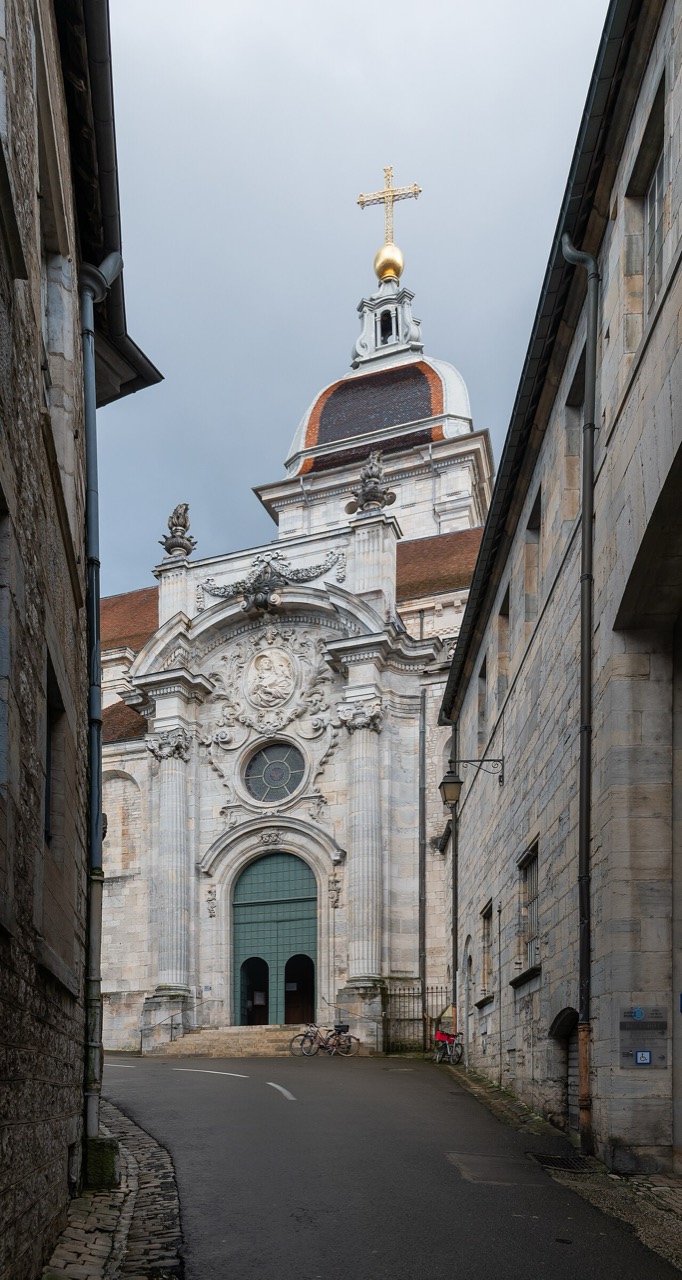
The Cathédrale Saint-Jean is a stop not to be rushed. Inside, an astronomical clock keeps time, regarded as a masterpiece of its kind. Look for the Rose de Saint-Jean too, a round 11th-century altar made entirely of white marble. The Franche-Comté-born Pope Callixtus II confirmed this church as an episcopal see, and counts of Burgundy and archbishops are buried there.
Culture lovers get their fill at the Musée des Beaux-Arts. The museum was founded in 1694, almost a century before the Louvre, making it the oldest in France. Architect Pierre Marnotte designed the building. After major renovations it reopened on 16 November 2018, in the presence of President Emmanuel Macron. By the end of 2019 it had already welcomed more than 105,000 visitors.
It is quieter at the Église Saint-Pierre, a few steps from the busy streets of the old town. It is still a living Catholic parish church in the historic centre, with Peter as its patron saint. A door that opens onto a calmer world like this is exactly why you're best off exploring a city like this on foot.
Across the Doubs to Battant, and back to Rome
Over the Pont Battant you walk to the Battant district, above the same water you saw from the citadel. Besançon has eight bridges of this kind across the river. In Battant almost nobody says Sainte-Madeleine: here the church is simply called la Madeleine. The Besançon architect Nicolas Nicole rebuilt it between 1746 and 1766 in classical style. The organ is a protected monument too, and the church houses a small museum about daily life in old Battant.
For a break, the Place de la Révolution is the place to go, the largest square in Besançon. Students, residents and visitors share its many terraces, bars and restaurants, with everyday shops around it. The route thus passes lively, central places, not a museum set.
The finale is the oldest. The Porte Noire is a Gallo-Roman triumphal arch from the 2nd century, built under Emperor Marcus Aurelius. It still stands 16.56 metres high, even though the raised ground has swallowed about a metre of it. You begin at Vauban's fortress and end under Rome itself, and few walks end beneath such an ancient arch.
There is more than this
This is only a taste of what Besançon has to offer. Along the way there are still fountains, smaller churches and details you only notice once you know where to look, plus quiz questions that let you know the city better than a brochure can. Want to walk the whole route through Besançon, with all the stops and hidden spots? Then choose the route in the CityWalkGems app and discover the rest yourself.
- 12 stops
- Start anywhere
- ~4,1 km route length
- ~595 m longest stretch
- about 1,5–2 h duration
- Free

