
Ceuta sits on the African side of the Strait of Gibraltar and is nonetheless Spanish. You can see that position in the city itself: on a narrow isthmus and a promontory, builders piled walls, gates and bastions on top of one another for centuries. Anyone taking a city walk in Ceuta therefore doesn't follow a single story, but several. The Romans, the Caliphate, the Portuguese and modern Spain have all left their traces, often just a stone's throw from each other.
Gates, Squares and Palaces: Ceuta Today
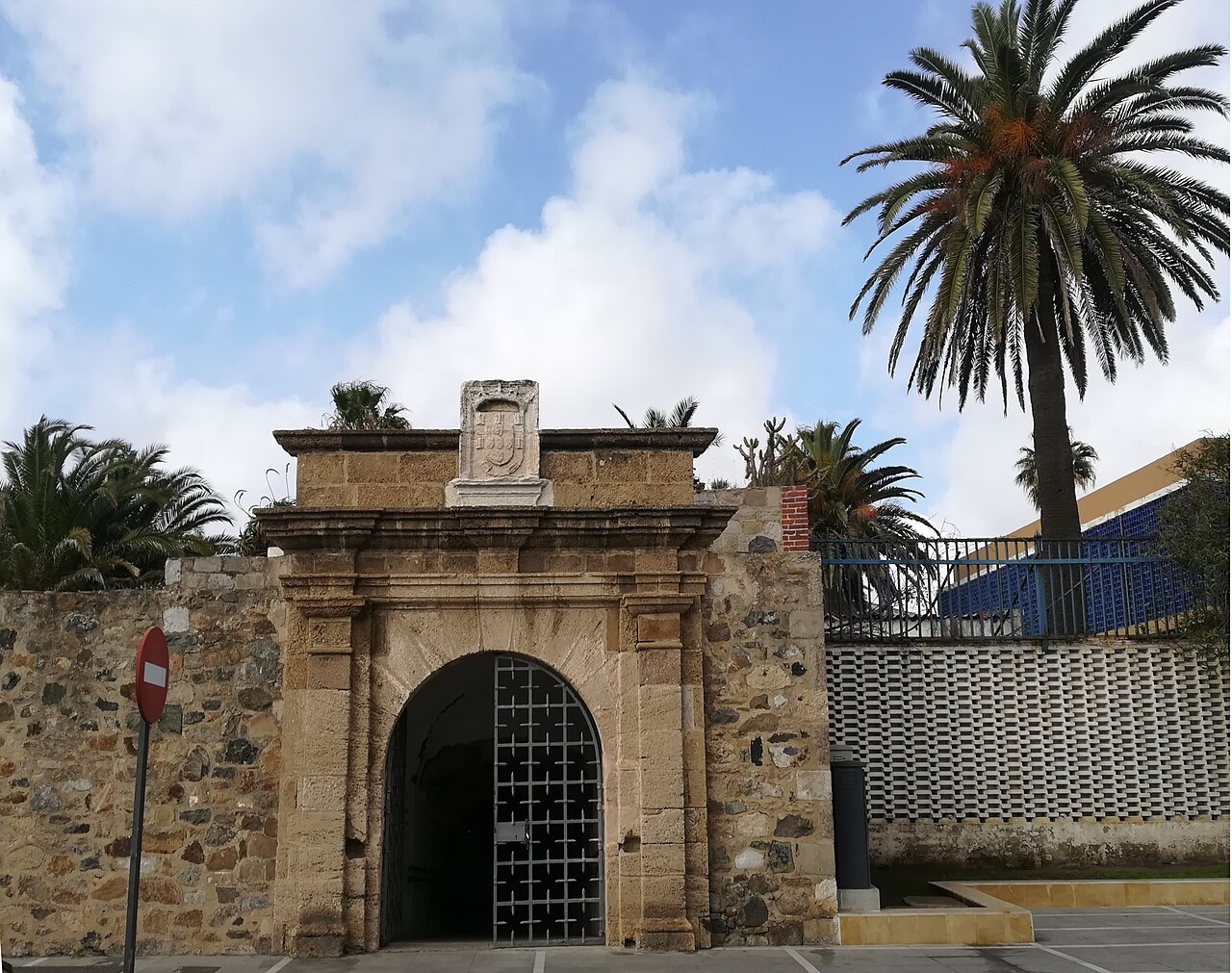
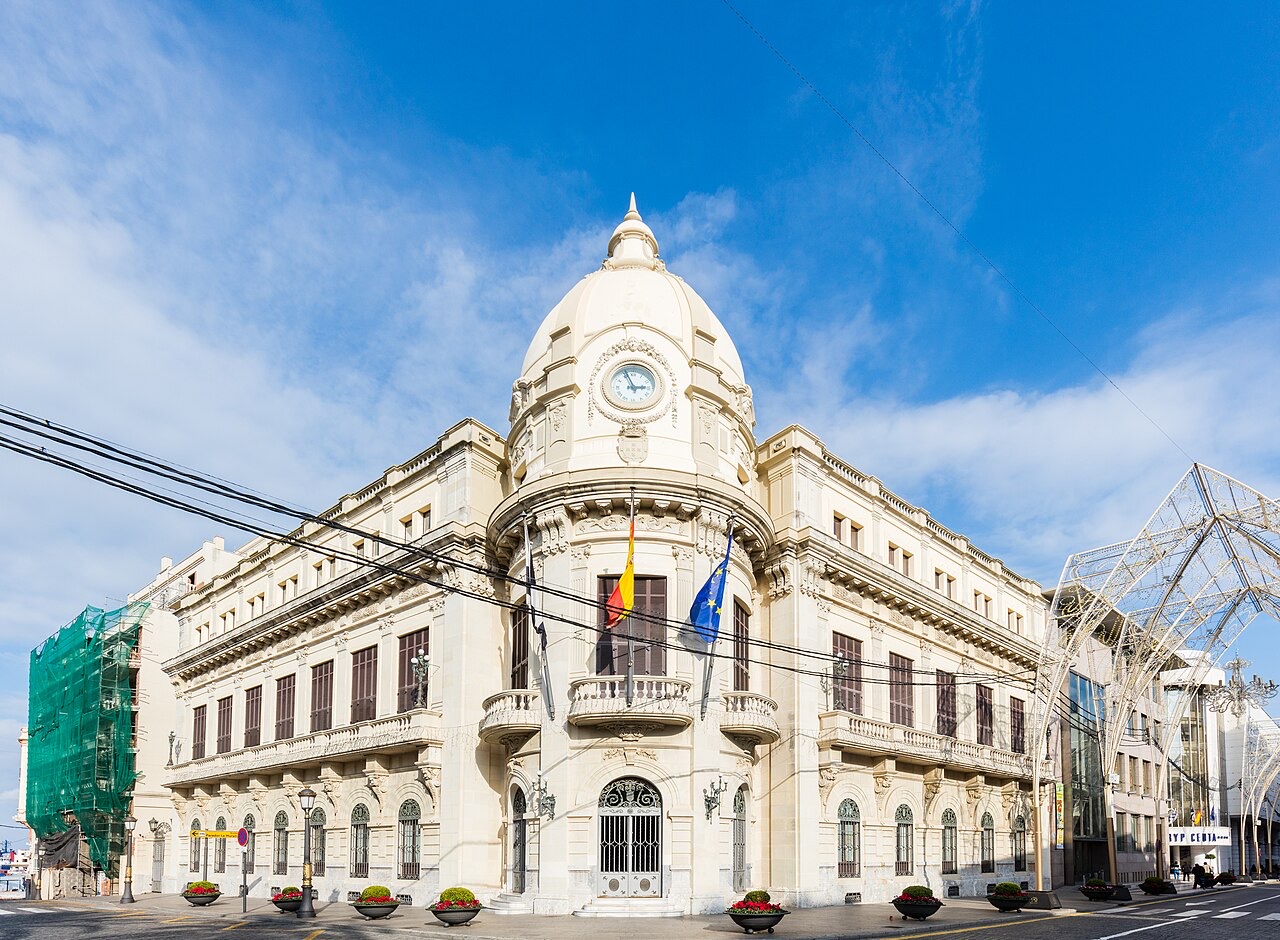
The route begins at the Puerta de la Ribera, a gate that has stood here since the 16th century. Gates like this once decided who entered a walled city and who stayed outside. A little further on stands the Palacio de la Asamblea on the Plaza de África. It is the seat of the Asamblea de Ceuta, so local politics has an entire square as its front garden.
Then things get more playful. Casa Delgado, the home of Manuel Delgado at number 20, is Modernista at its core, with details borrowed from older styles. Spain protects it as a bien de interés cultural, the designation for heritage that must be preserved. Nearby stands the Casa de los Dragones, an example of eclectic architecture that mixes styles from different eras. The house claims the corner of a square, so look at both façades before moving on.
On the Plaza de la Constitución, named after the document that sets out the basic rules for living together in a country, it is quiet for a moment. After that, the walls and bastions come into view.
Bastions and Walls: What a City Had to Defend
The Baluarte de la Bandera, from the 16th century, lies at the southwestern end of the Muralla Real. Bandera means flag. The bastion juts out from the wall so that defenders could cover the wall's side from the flank. It was a clever answer to attackers creeping too close. Right beside it stands the Baluarte Coraza Alta, whose name means "high armor".
The Murallas Reales are the strongest example of how layers come together in Ceuta. The Romans were the first to wall the city, new walls rose in the 10th century, and in the 16th century they were rebuilt. What you see is the sum of all those builders. A walk along these walls spans more than a thousand years.
Older Layers: Caliphate, Rome and a Blood Hospital
Some places take you back even further. The Puerta Califal dates from the Caliphate era and is older than the arrival of the Portuguese. For travelers centuries ago, a passage like this meant you were entering the city proper. The Basílica Tardorromana lies on Calle Queipo de Llano, on the narrow isthmus that connects the two halves of Ceuta. While traffic rushes past, the basilica reaches back to the final centuries of Rome.
More personal is the Santuario Santa María de África, a Catholic shrine for the statue that Ceuta honors as the patroness of the city. For many residents, this is where their patron saint lives.
The heart of the old town is the promontory that has simply been called La Ciudad, the City, since Portuguese times. The Catedral de la Asunción stands there. During the thirty-year siege, it served as a field hospital for the wounded of a besieged city. That immediately gives a building you would otherwise see only as a church a very different weight.
There Is More Than You Read Here
This is just a selection of what the route has to offer. The full walk through Ceuta includes more stops, a series of questions and details you only notice when you look closely. If you want to discover for yourself how these layers fit together, choose the Ceuta walk in the CityWalkGems app and explore the city at your own pace.
- 12 stops
- Start anywhere
- ~3,8 km route length
- ~565 m longest stretch
- about 1,5–2 h duration
- Free

