
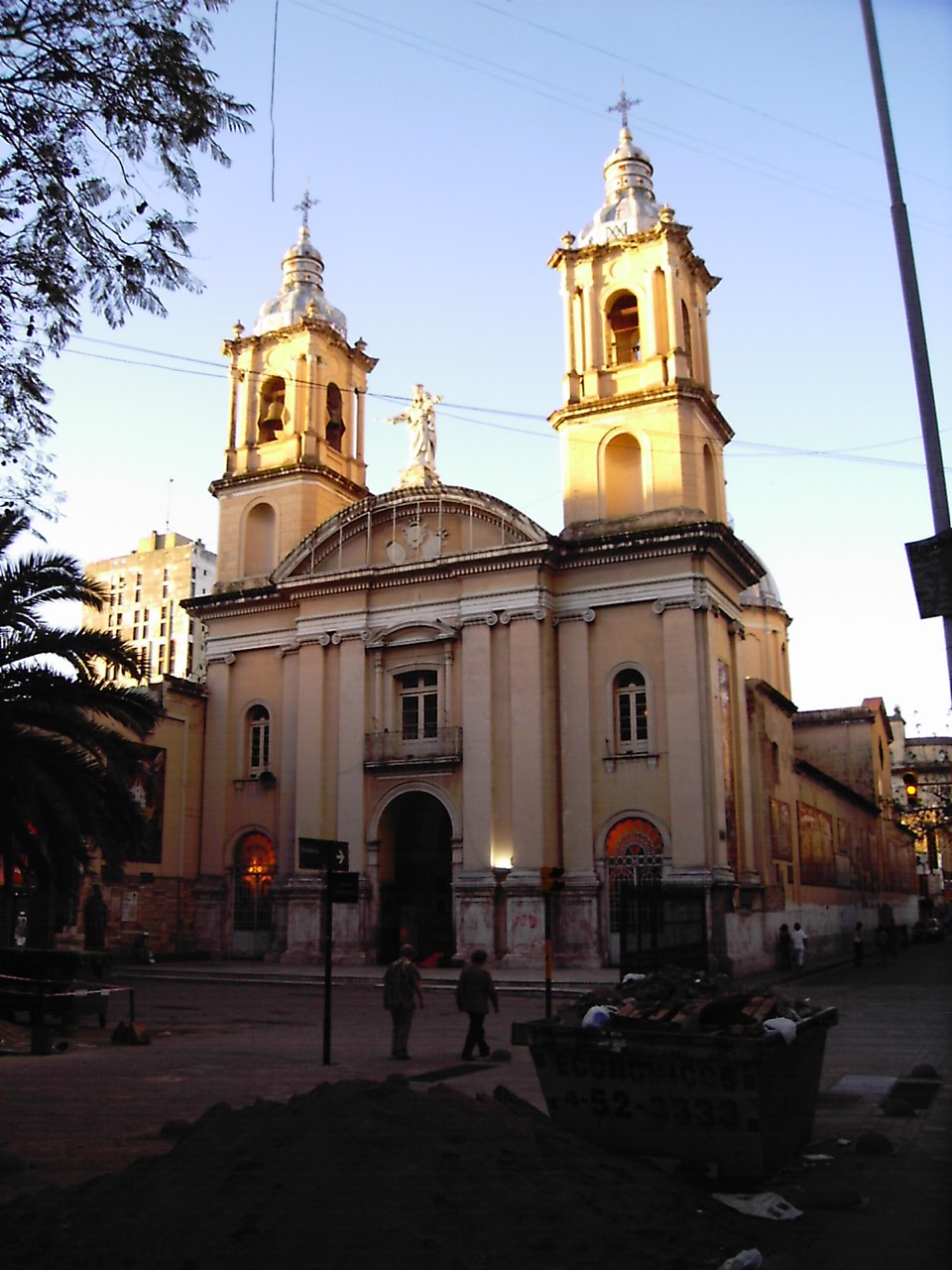
Córdoba is the city in Argentina where the colonial era isn't kept behind glass. Schoolchildren pour out of the gate of a school that has occupied the same building since 1782, a courthouse holds the tomb of the man who wrote the Civil Code, and a former women's prison is now a place for a coffee. Anyone taking a city walk in Córdoba, Argentina, therefore passes through layers of time that lie close together, often within just a few streets.
The Jesuit Heritage: Timber, School Desks and UNESCO Status
The Jesuits left a deep mark on Córdoba. The Iglesia de la Compañía de Jesús was consecrated by them in 1671 and is considered one of the oldest surviving churches in Argentina. The roof tells the best story: the walls were already standing and could not carry a heavy stone vault. Brother Felipe Lemer solved this with a light vault of cedar wood from the Jesuit missions in Paraguay. Since 2000, the church has been part of the Manzana Jesuítica, a UNESCO World Heritage Site.
Nearby is the Colegio Nacional de Monserrat, which is still a very real school. Backpacks, break time, crowds on the pavement. Its original name was Real Colegio Convictorio de Nuestra Señora de Monserrat. The Jesuits ran the school until their expulsion in 1767, and in 1782 it moved into its current building. Today it is a preparatory secondary school of the National University of Córdoba and a National Historic Monument.
A little further on stands the Basílica de Santo Domingo, with a history of misfortune. Two seventeenth-century churches once stood on that ground, and the floods of the La Cañada stream swept both of them away. The Dominicans rebuilt between 1857 and 1861. The fine tiles high on the towers were a gift from Justo José de Urquiza, and until the early twentieth century the whole church was painted white.
Government, Law and a Viceroy's House
The Cabildo is where the colonial town council ran the city: laws, education, care and even the public jail all went through this building. After 1824 it kept changing function, serving as provincial government, as city hall from 1857 and as police headquarters until 1989. Today it is a museum and cultural centre. The long arcade at the front is a good place to slow down for a moment.
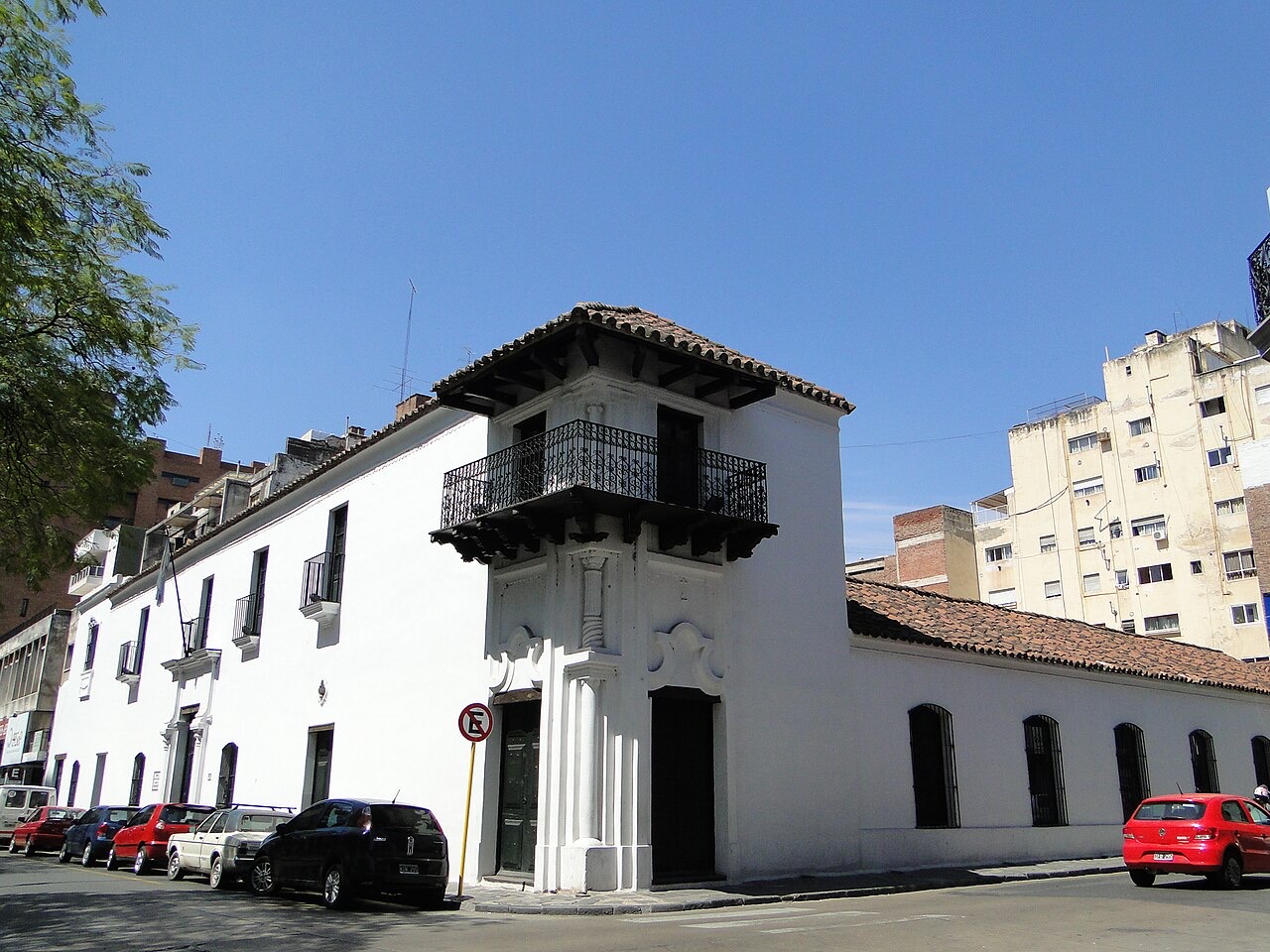
The Museo Histórico Provincial Marqués de Sobremonte also shows how the elite lived. The Spanish merchant José Rodríguez built the colonial house between 1752 and 1760. From 1783 to 1797 the Marquis of Sobremonte rented it, at the time governor of Córdoba del Tucumán and later viceroy of the Río de la Plata. The province bought the house in 1919. Around the patio you will find colonial furniture, antique weapons and religious art.
A completely different layer of time is the Palacio de Justicia, which locals simply call Tribunales I. The architects José Hortal and Salvador Godoy designed it, and it opened on 11 February 1936. High on the façade is a relief of Lady Justice, and inside lies the tomb of Dalmacio Vélez Sarsfield, the jurist from Córdoba who wrote the Argentine Civil Code. Since 1986 it has been a National Historic Monument.
From Penitentiary to Promenade, and an Evening Out
The Paseo del Buen Pastor on Avenida Hipólito Yrigoyen is perhaps the strongest example of reuse. Today you will find a gallery, cafés and a dancing fountain with music and light. But it was built between 1897 and 1906 for the Sisters of the Good Shepherd as a prison and penitentiary for women, and it served that role for almost a century. In 2007 it opened as a cultural promenade.
If you still have energy in the evening, check the programme at the Teatro del Libertador General San Martín on Avenida Vélez Sarsfield. Opera, ballet and symphony concerts take place here, and the hall is regarded as one of the best in Argentina for its acoustics.
A small language lesson is part of it too: hardly anyone uses the official name Sagrado Corazón de Jesús for the church that locals simply call "los Capuchinos", after the friars with the hood on their habit. And the Palacio Ferreyra was a real family home from 1919, with Martín Ferreyra, his wife, their seven children, a sister-in-law and the staff. Today it houses the province's art collection, with artists from Córdoba from the nineteenth century to the present.
This Is Only a Taste
What I describe here is a small selection of what the route has to offer. The full walk through Córdoba includes more stops, a few quiz questions along the way and details you only notice when you stand in front of them yourself, such as the places I deliberately left out. Choose the walk in the CityWalkGems app and discover for yourself how these layers fit together.
- 12 stops
- Basílica de La Merced start
- ~4,1 km route length
- ~686 m longest stretch
- about 1,5–2 h duration
- Free

