
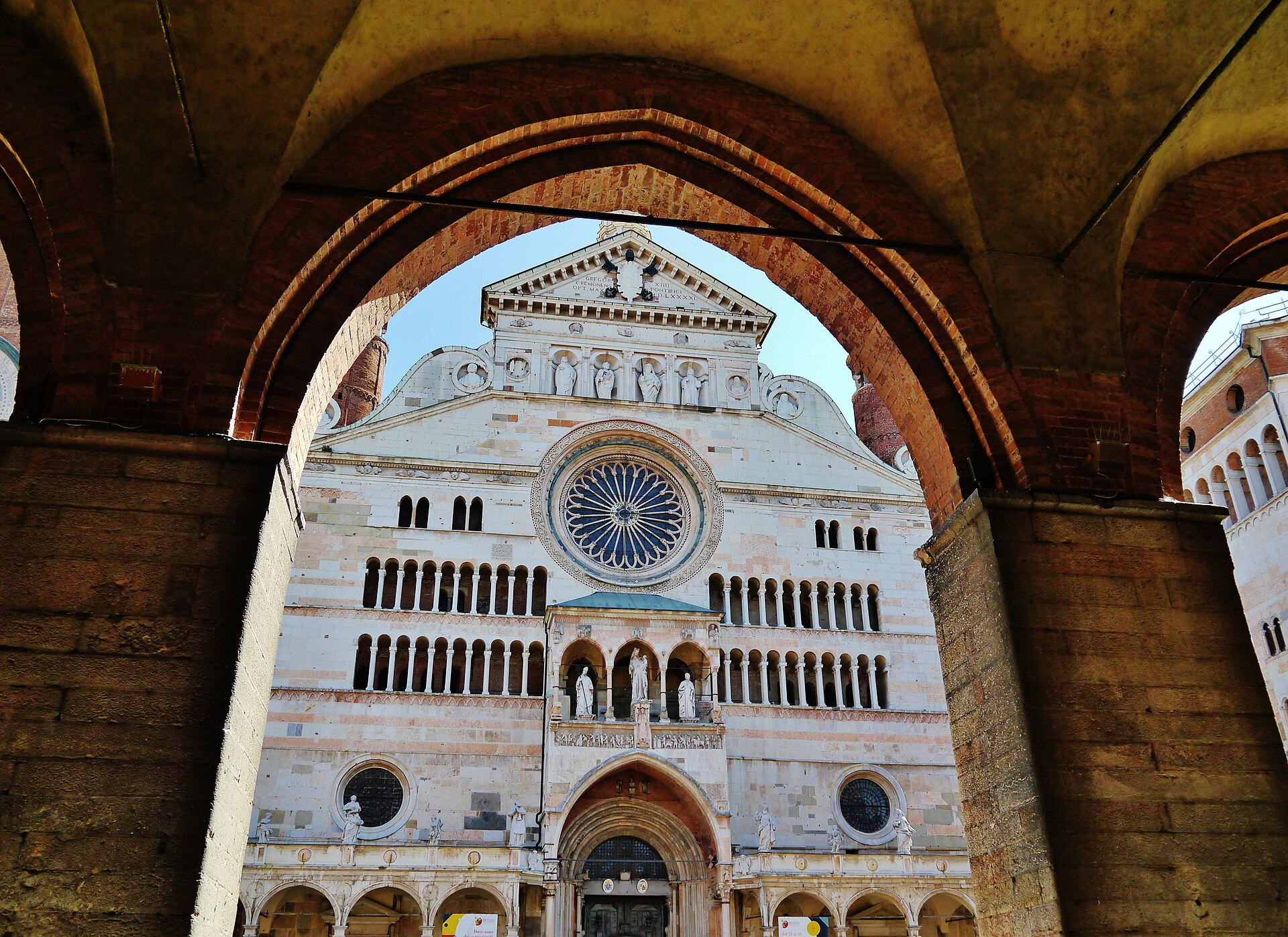
Cremona is a walking city in the most literal sense. It sits on the flat Lombard plain near the Po, the old centre is compact, and almost everything worth seeing stands within a few hundred metres of one square. You do not need a bus, a bike or a schedule — you need shoes and a route. Here is how the city reads on foot.
Start where the violins are
Begin at the Museo del Violino. Cremona is the city of Amati, Guarneri and Stradivari, and the craft of violin-making here is recognised by UNESCO as intangible cultural heritage. The museum is the one place where the instruments and the making of them are shown together, and it sets up everything you will see afterwards: the workshops with a violin in the window are not a tourist decoration, they are the local trade.
From there it is a short walk into the medieval core. Cremona's streets are narrow and shaded, which matters in a Po-valley summer — the route works in the heat because the buildings do the work.
Piazza del Comune: the whole city in one square
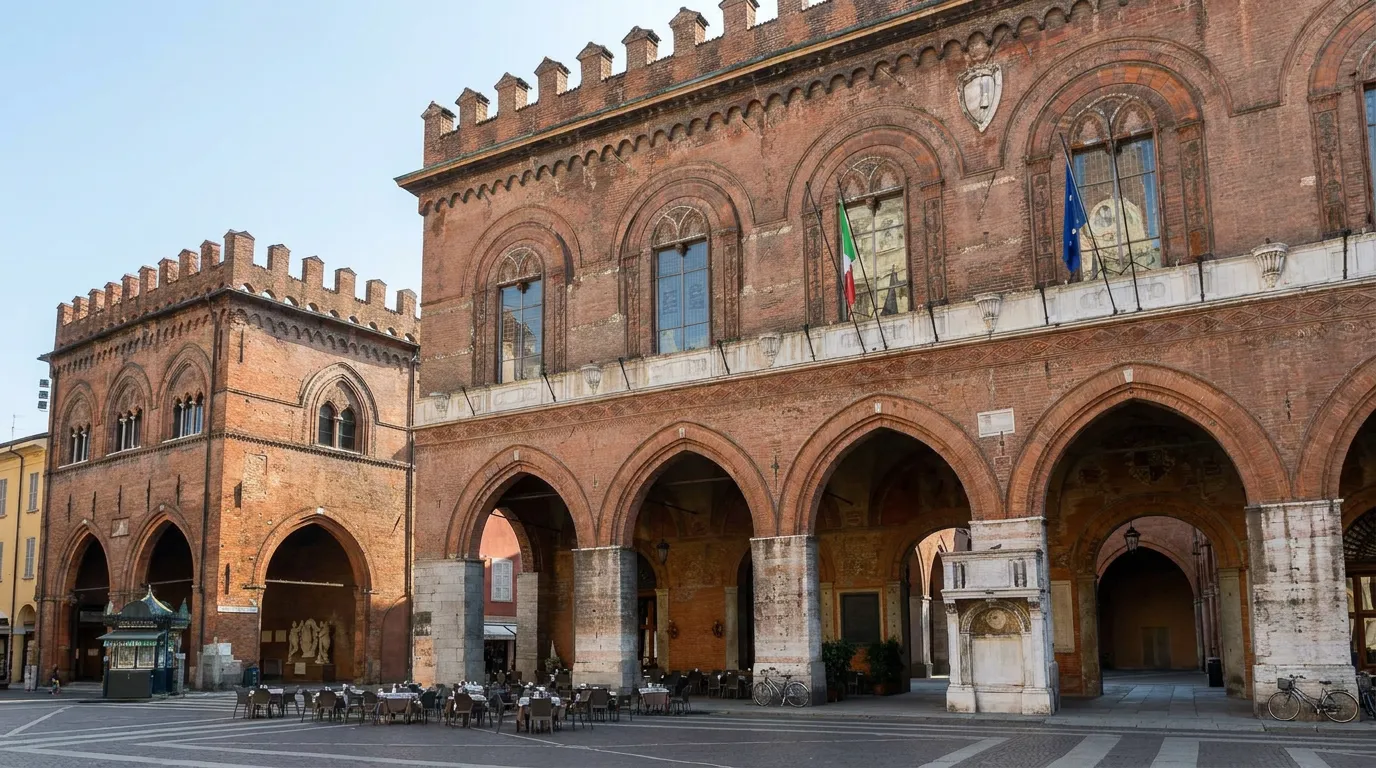
Almost every self-guided route through Cremona converges here, and with reason. On one square you have the cathedral, the Torrazzo bell tower, the baptistery, the town hall and the Loggia dei Militi. This is the Italian way of building a city: everything civic, religious and commercial pressed against each other, with the square itself as the living room.
The Cattedrale di Santa Maria Assunta has the marble front you photograph; the Torrazzo beside it is the brick tower you climb if your legs are willing. The Battistero, octagonal and far plainer inside than the cathedral, is the stop most visitors skip and the one that best shows how old this square really is.
The stop people walk straight past
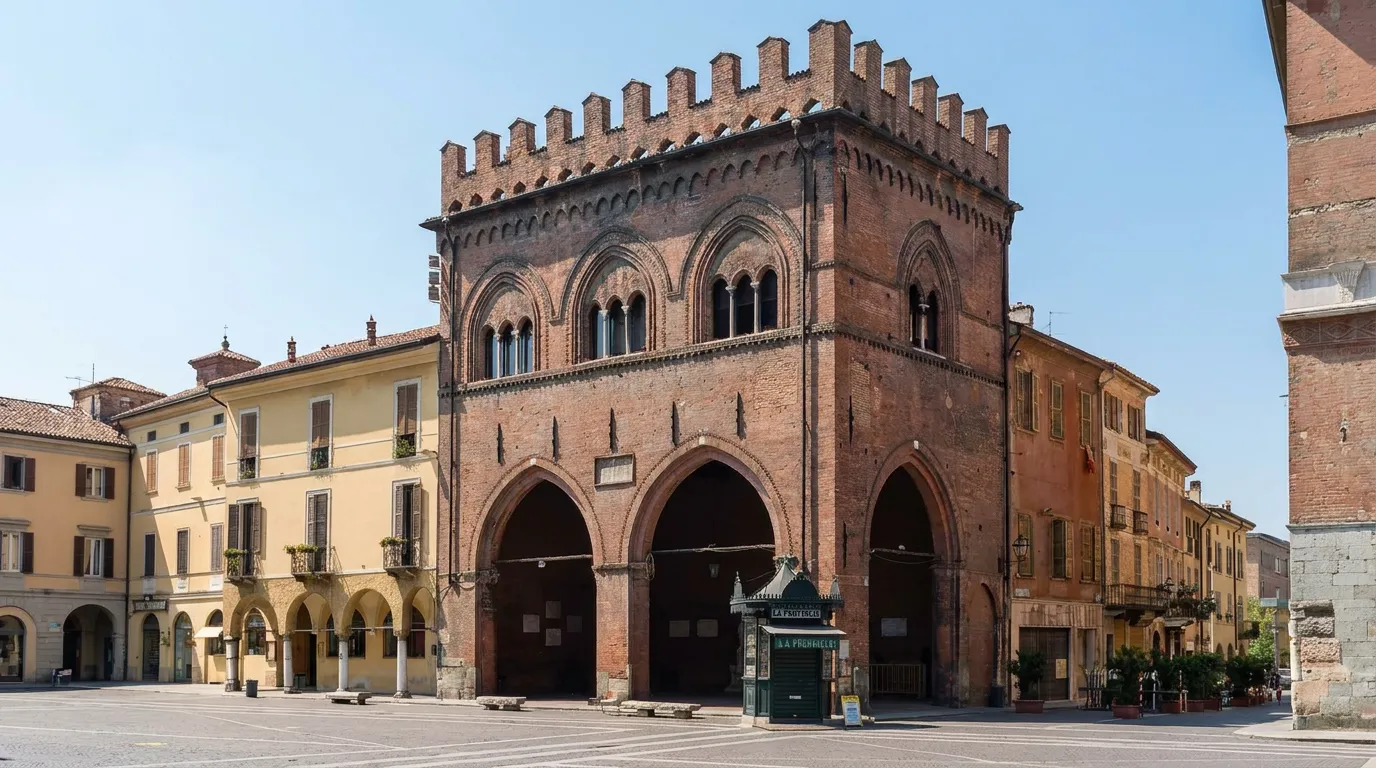
Look at the corner of the square opposite the cathedral and you find the Loggia dei Militi, a small medieval building with an open arcaded ground floor. It was the meeting place of the city's militia captains — a piece of civic Cremona rather than religious Cremona, and it is easy to miss because it does not announce itself.
Beyond the square
Walking west and north the city changes register: Palazzo Fodri with its terracotta decoration, and the Museo Civico Ala Ponzone, the civic art collection. These are residential streets, not a tourist strip, and that is the point of going a few blocks further.
The self-guided CityWalkGems route links these stops in a logical loop, with a question at each one so you actually look at what is in front of you instead of only walking between points. You set your own pace, and there is no group to keep up with — which is, more or less, the Italian way of doing it.

