
In Brazil, Curitiba is known as a city that does things differently. It sits on a plateau in the south, once covered in araucaria forest, and grew into a city of parks, university squares and plazas where history is still visible. If you're wondering what to do in Curitiba, it's best to start on foot: the historic centre is compact, and in a few hours you can walk past theatres, churches, a city hall with no barriers to entry and one of the oldest museums in the country.
Square, stage and park: where the modern city shows itself
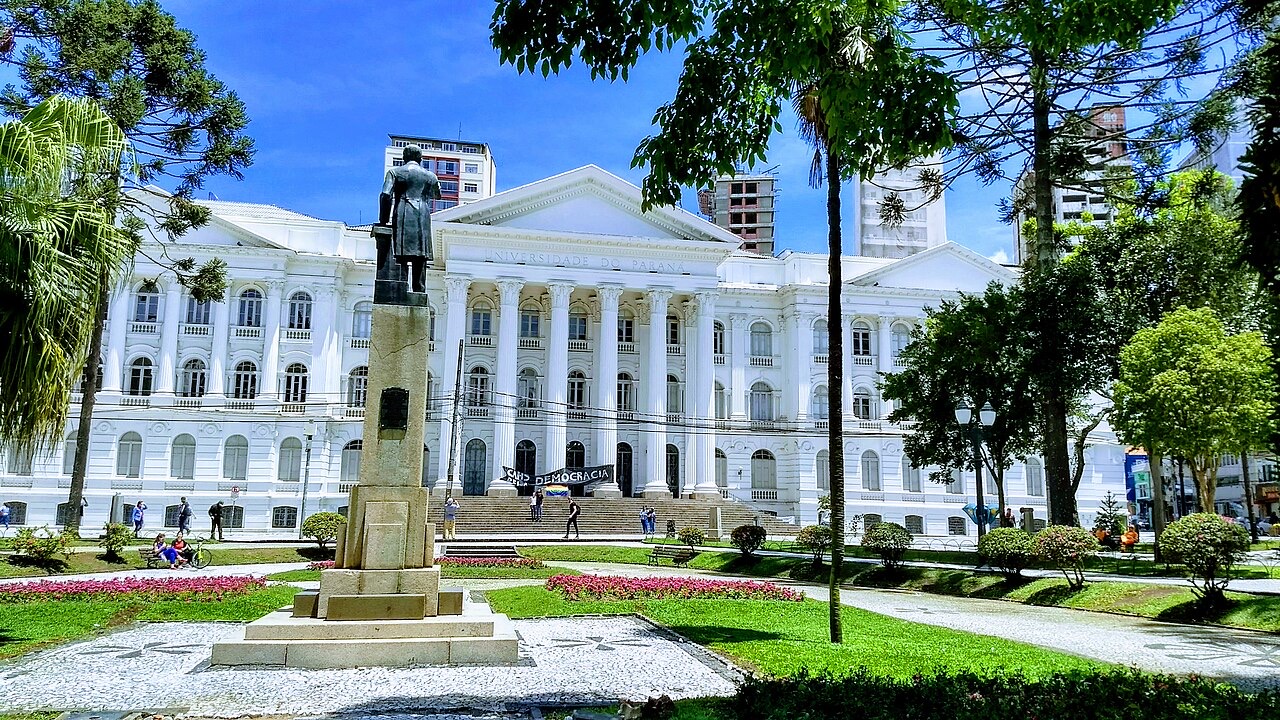
It begins at Praça Santos Andrade, where students hurry across the square. The building in front of it is the historic heart of the Universidade Federal do Paraná, founded more than a century ago. It is one of the oldest institutions in Brazil to have been set up as a true university. Since 2004 it has reserved places in every course for students from public schools and for Black and pardo (mixed-race) students.
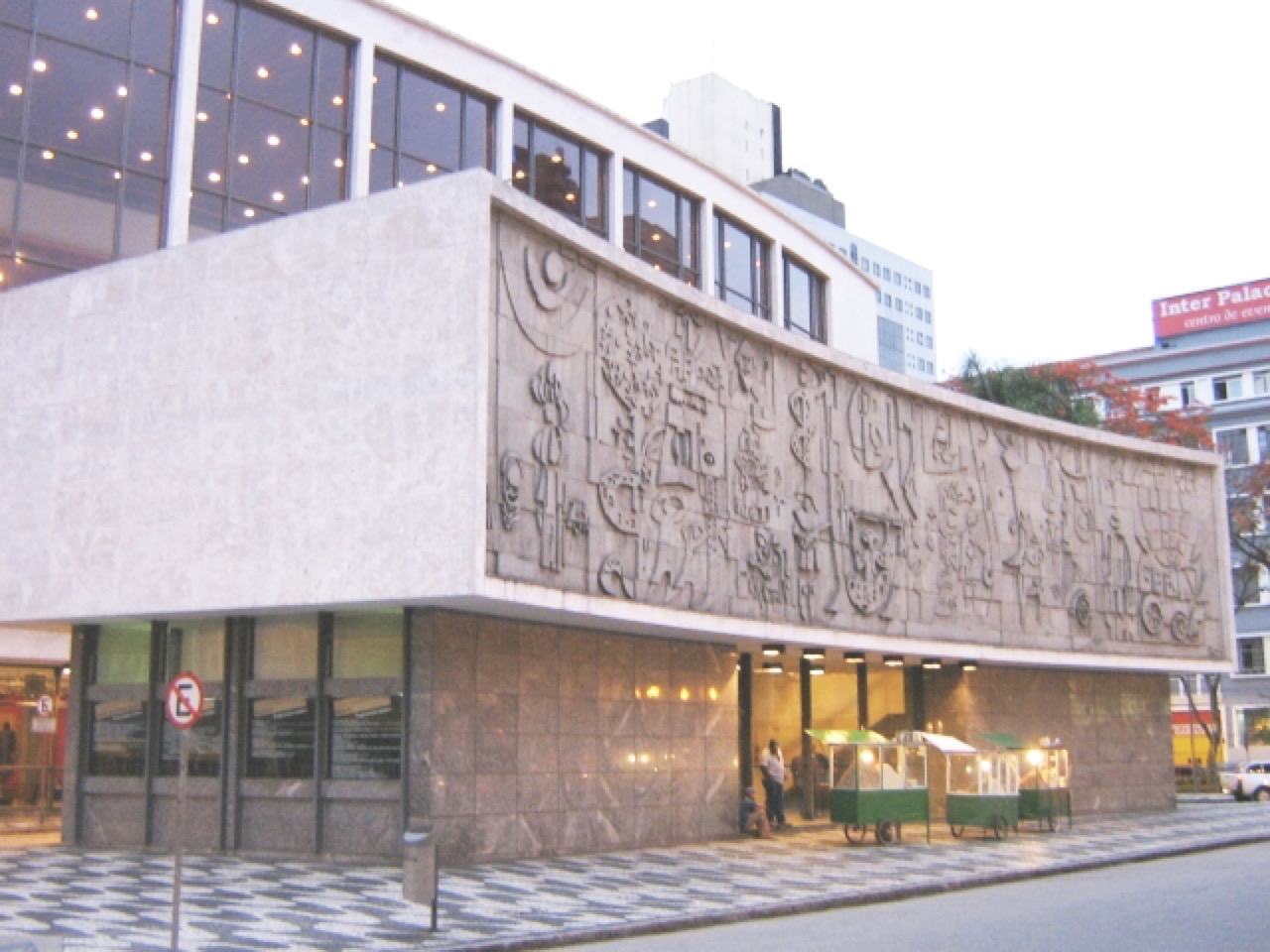
On the same square stands the Teatro Guaíra, a state-run complex that ranks among the largest theatres in Latin America. Under one roof it houses an orchestra, a ballet company, a dance school and a second dance group. The complex also coordinates the Teatro de Comédia do Paraná, a puppet theatre festival and the Troféu Gralha Azul, named after the azure jay, the symbolic bird of Paraná.
Just a little further on, the traffic of the Centro suddenly disappears: behind the gate of the Passeio Público, the trees close in around you. The park opened in 1886 and is the oldest in Curitiba. The city later became known as the city of parks, and it all began on this patch of green.
You can walk into a city hall without an appointment on Praça Generoso Marques. The Paço da Liberdade opened in 1916 as Curitiba's city hall, an Art Nouveau building for a fast-growing city. Today SESC manages the property, and the halls where mayors once governed are open to every passer-by.
Old Curitiba: churches, memory and a plateau full of history
The square where Curitiba began is Praça Tiradentes. Here the two pointed towers of the Catedral Basílica rise up. Its full name, Nossa Senhora da Luz dos Pinhais, echoes the original name of the little town and refers to the araucaria forests. The neo-Gothic church was consecrated in 1893.
A little further on stands the Igreja da Ordem, the oldest church in Curitiba, completed in 1737 as the church of Nossa Senhora do Terço. It received its current name after the Third Order of Saint Francis arrived in the city in 1746. On Sunday mornings the craft market of Largo da Ordem stretches almost to its doors. Part of the complex now houses the city's museum of religious art.
The name of the Igreja do Rosário, also known as «dos Pretos», tells you who built it: «of the Black people». The first church here was raised in colonial times by Curitiba's Black brotherhood, many of whose members had been enslaved. The current building is a twentieth-century reconstruction and also honours São Benedito, a saint born in Sicily to enslaved African parents.
The Solar do Barão calls for a different tone. Erva-mate, the bitter tea leaf of southern Brazil, made Ildefonso Pereira Correia rich and earned him the title Barão do Serro Azul. This mansion was his family home. In 1894, during the Federalist Revolution, he was executed by government troops. Today he is honoured as a national hero. His name returns near the cathedral.
If you want to know who lived here before Curitiba existed, you'll find answers in the Museu Paranaense. Founded in 1876, it is one of the oldest museums in Brazil. Its collections range from archaeology and anthropology to art, a crash course on the peoples who shaped Paraná.
Rua XV de Novembro and the avenue you can't miss
The walk ends on the pedestrian street Rua XV de Novembro, which begins right at Praça Osório. Around lunchtime the benches under the trees fill up quickly. The square honours Manuel Luís Osório, a celebrated cavalry commander of the Paraguayan War.
From here it's only a few steps to Avenida Luiz Xavier, often called the shortest avenue in Brazil. In December it is packed from end to end when the Christmas choir of the Palácio Avenida draws crowds from far beyond the city. The rest of the year, debate fills the Boca Maldita corner, as Curitibanos have done for decades over coffee and politics. Order a cafezinho and look up.
This is just a taste
What you've read here is a selection. The full walk through Curitiba includes more stops, a series of quiz questions and details you only notice when you look for them, such as the ruins with roofless walls close to Largo da Ordem. If you want to discover for yourself how everything fits together, choose the walk in the CityWalkGems app and follow the route at your own pace.
- 12 stops
- Start anywhere
- ~4,0 km route length
- ~718 m longest stretch
- about 1,5–2 h duration
- Free

