
Also known as: Firenze, Florenz, Florencia, Florença
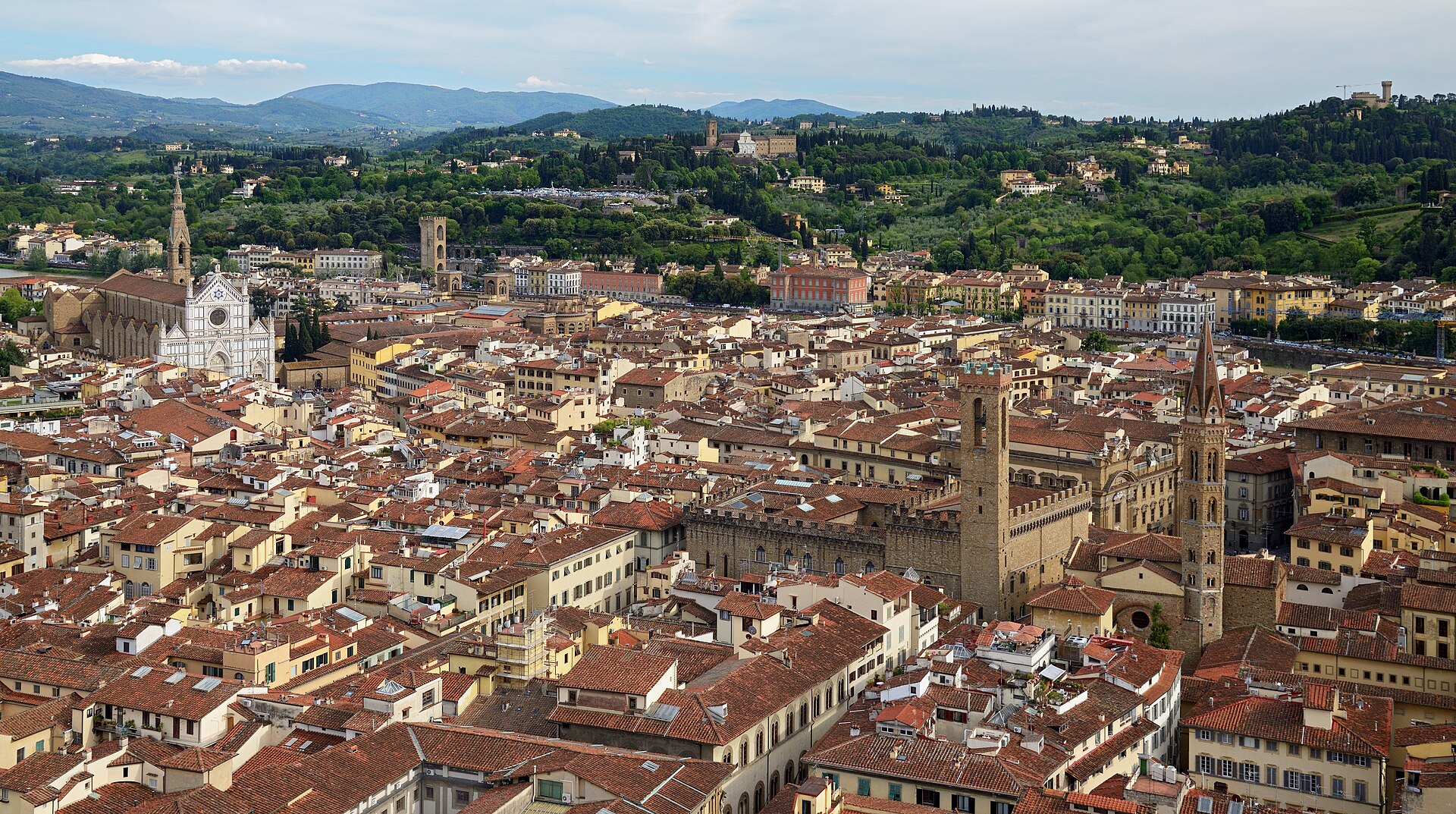
Florence, the city that gave the world the Renaissance, is an open-air museum where every cobblestone tells a story. It's a place where art, history, and innovation converge, and where the echoes of great thinkers and artists are still palpable. A walk through Florence is more than just sightseeing; it's a journey through time, past architectural masterpieces, hidden treasures, and places that shaped the course of history. Let's immerse ourselves in the unique atmosphere of this Tuscan gem.
The Renaissance Awakens: From Facade to Dome
Our exploration begins at the Basilica di Santa Maria Novella, an impressive example of how Gothic architecture and the clean geometry of the Renaissance merge. The facade is not only a work of art in itself but also houses astronomical instruments by Ignazio Danti from the 1570s, a rare combination of art, science, and faith. Nearby, behind a modest entrance, lies the Officina Profumo-Farmaceutica. This pharmacy and perfume shop continues a tradition dating back to the Dominicans of Santa Maria Novella in 1221. The pharmacy opened its doors to the public in 1612. Inside, frescoes, wooden display cases, and the scent of herbs and flowers reveal centuries of artisanal history.
Next, the route leads us to Florence's undisputed icon: the Duomo, or Santa Maria del Fiore. This cathedral is dominated by Brunelleschi's octagonal dome, a daring 15th-century construction feat consisting of two shells. The climb to the top involves 463 steps and offers not only a close-up view of the frescoes on the inside of the dome but also a panoramic vista over the city and the surrounding hills. It's a physical journey that makes the grandeur of Renaissance engineering tangible.
The Beating Heart of Florence: Squares, Poetry, and Commerce
Deeper into the historic center, we arrive at the Chiesa di Santa Margherita dei Cerchi, a tiny church known as 'Dante's church'. Although local tradition claims the meeting between Dante and Beatrice took place here, this is more a beloved story than a proven fact. The basket of letters by the altar, left by visitors, makes the place intimate and human.
The political heart of Florence beats in the Piazza della Signoria. Here, the Palazzo Vecchio overlooks a square filled with statues and symbols of power. The David in front of the palace is a replica; the original stands in the Galleria dell'Accademia. The Loggia dei Lanzi almost turns the square into an open-air museum with its collection of sculptures. This square breathes the history of Florentine politics and civil strife.
A little further on, we find the Loggia del Mercato Nuovo, a 16th-century loggia originally used for the trade of silk and luxury goods. Today, 'Il Porcellino', the bronze boar, particularly attracts attention. Its shiny snout reveals how many visitors touch it in the hope of good luck.
The route then leads us to the Ponte Vecchio, the medieval bridge spanning the Arno. The shops here hang like small houses over the water, and since the late 16th century, goldsmiths and jewelers have defined its appearance. This bridge is the only Florentine bridge that was spared in 1944, while the access roads around it were heavily destroyed. It is a unique structure that combines commerce and history in a special way.
Oltrarno: Where Power and Nature Converge
As we cross the Arno, we glance up along Via de' Bardi to the line of the Vasari Corridor. This elevated passageway was built in 1565 by Giorgio Vasari at the behest of Cosimo I de' Medici, allowing the family to move safely and unhindered between Palazzo Vecchio, the Uffizi, and Palazzo Pitti. It's a fascinating example of urban planning and a display of power.
On the other side of the river, in the Oltrarno district, lies the Basilica di Santo Spirito. Its austere facade conceals one of Florence's purest Renaissance interiors, closely linked to Brunelleschi's ideas about space, rhythm, and proportion. The square in front of the basilica feels less monumental and more local than the squares in the city center.
The walk culminates at the imposing Palazzo Pitti. Originally started as an ambitious banker's palace by Luca Pitti, it was purchased in 1550 by Cosimo I de' Medici and Eleonora di Toledo to serve as the grand ducal residence. The rough stonework of the exterior exudes deliberate power, while inside lies a world of art collections and court life.
The final stop is the Grotta del Buontalenti, one of the most theatrical corners of the Boboli Gardens. This Grotta Grande, once a water reservoir, was transformed into an artificial grotto with stalactite-like decoration, sculptures, and paintings. It's a special conclusion to a journey through Florence, where art and nature playfully intertwine.
This selection of sights offers only a glimpse of the richness Florence has to offer. The city is full of many more hidden alleys, surprising details, and ancient stories waiting to be discovered. If you want to delve deeper and truly experience Florence, we invite you to choose the full walking tour through this enchanting city in the CityWalkGems app. Let it guide you along even more stops, riddles, and unforgettable moments.
- 11 stops
- Officina Profumo-Farmaceutica start
- ~3,2 km route length
- ~555 m longest stretch
- about 1,5–2 h duration
- Paid

