
Most people know Florianópolis as an island city of beaches, but the historic centre on the Baía Sul tells a different story. Walking here, you can see in just a few hundred metres how a defensive outpost grew into a state capital. A walking tour of Florianópolis shows this through forts, churches, a theatre and the buildings where the government of Santa Catarina sits. Below is a selection of what you will come across along the way.
Where It Began: Salt, Water and a Fort
Along the way you reach the Forte de Santa Bárbara da Vila, on a small island opposite the former Praia do Canto. The fort defended the old town from which the present city grew. The spot was no accident: here the channel narrows on the side of the southern bay, ideal for keeping an eye on every ship. You can smell the salt in the wind off the Baía Sul and immediately understand why this point was strategic.
Further on stands the Hospital de Caridade, officially the Imperial Hospital de Caridade. The name points to a charitable institution, and it is still a working hospital, so keep it quiet here. Its location is symbolic, and the building holds a fixed place in the religious traditions of the city.
Play Florianópolis right in your browser →
Art, Theatre and Letters
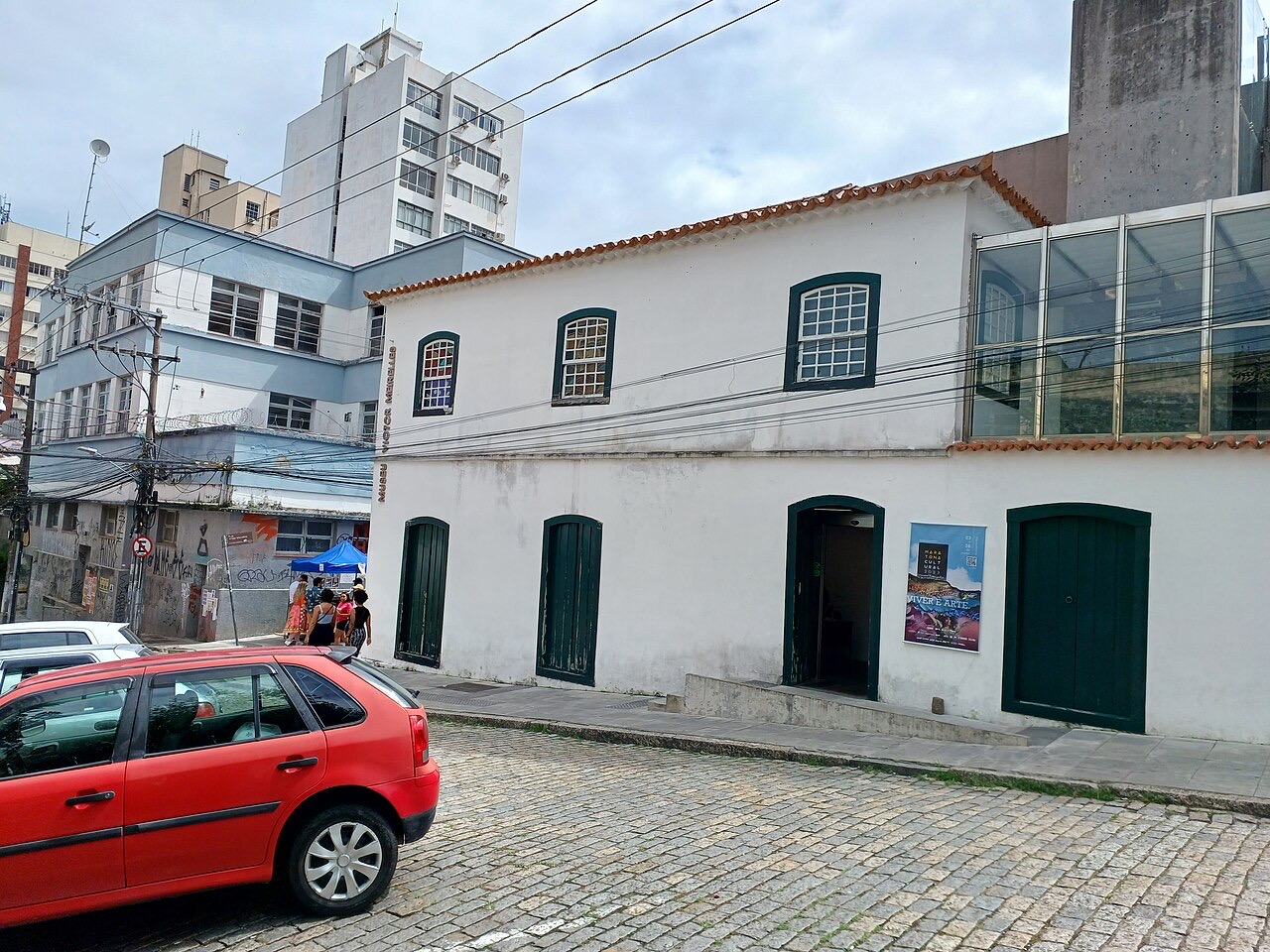
The Museu Victor Meirelles is dedicated to one of the most important painters of Brazilian Romanticism. The museum opened on 15 November 1952 and is part of the network of the Brazilian Institute of Museums, IBRAM.
A little further on is the Teatro Álvaro de Carvalho, where patience was needed before the hall was finished. After the first stone was laid in 1857, eighteen years of building and stoppages followed because of lack of funds. Today the hall seats 470 spectators. Since 1894 the theatre has borne the name of Álvaro de Carvalho, the city's first playwright. By the stairs, two stained-glass windows show popular and folkloric scenes.
A quieter world lies on the busy Avenida Hercílio Luz: the Academia Catarinense de Letras, the state's highest literary institution. The Alfândega, the customs complex in the Centro, is also part of this route. The word reached Portuguese via Arabic, and it is worth wondering what a building with that name once had to inspect.
Church and State Face to Face
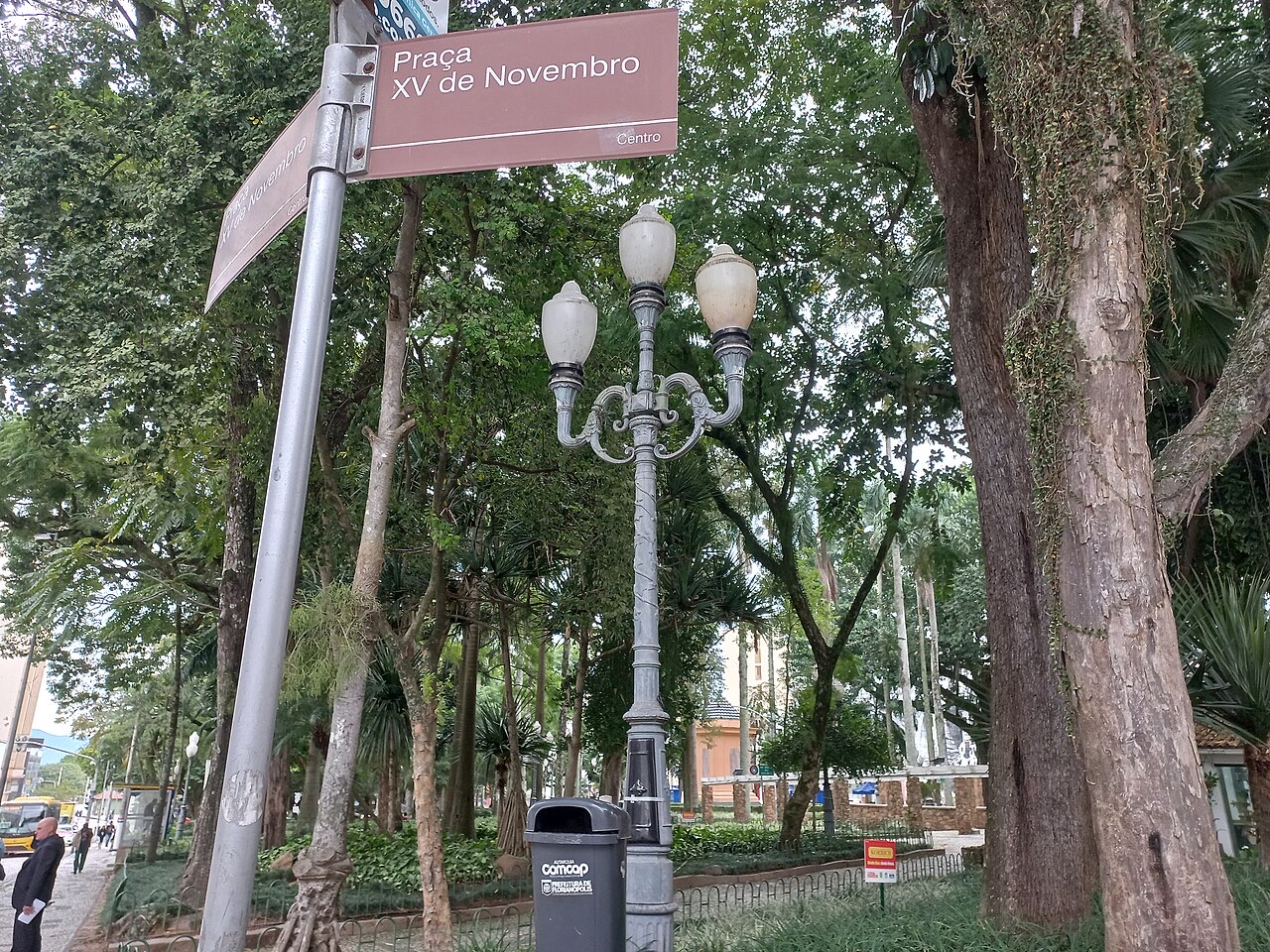
The heart of the walk is the Praça XV de Novembro, the city's main square. The old town that later became Florianópolis grew up around this square. A few streets away stands the Igreja São Francisco of the Third Order. Building that church took more than a century, from the first stone in 1802 to its consecration in 1915.
On the other side lies the Palácio Cruz e Sousa. It was once called the Palácio Rosado and served as the state's government palace. The rooms where governors once worked now house the Museu Histórico de Santa Catarina. Church and state stand directly opposite each other here, with only the open square between them.
To see modern government, look to the Edifício das Diretorias from 1961, one of the first examples of modern architecture in the city. It is still full of state secretariats and government offices. You are more likely to see civil servants carrying folders than tourists with cameras. You also pass the Palácio Barriga Verde, where the Assembleia Legislativa debates and votes on the laws of Santa Catarina. From a fort that guarded a young town to the parliament of an entire state: that is the line running through the centre, past lively, central places.
More Than This Article Tells
This is only a selection of what you will encounter in the centre of Florianópolis. The full walk contains more stops and details you only notice when you stand still. If you want to find that out for yourself, choose the Florianópolis walk in the CityWalkGems app and follow the route at your own pace.
- 12 stops
- Start anywhere
- ~3,2 km route length
- ~619 m longest stretch
- about 1,5–2 h duration
- Free

