
Geelong is often seen as the town you drive through on the way to the Great Ocean Road. That's a shame, because anyone who stays will find a port city with nineteenth-century architecture, a serious art collection and a waterfront that was deliberately created in the twentieth century. If you're wondering what to do in Geelong, just start walking. Within a few kilometres you'll find churches, a town hall, a wool museum and a beach with a history of its own.
Churches, Town Hall and Art: The City That Built Itself
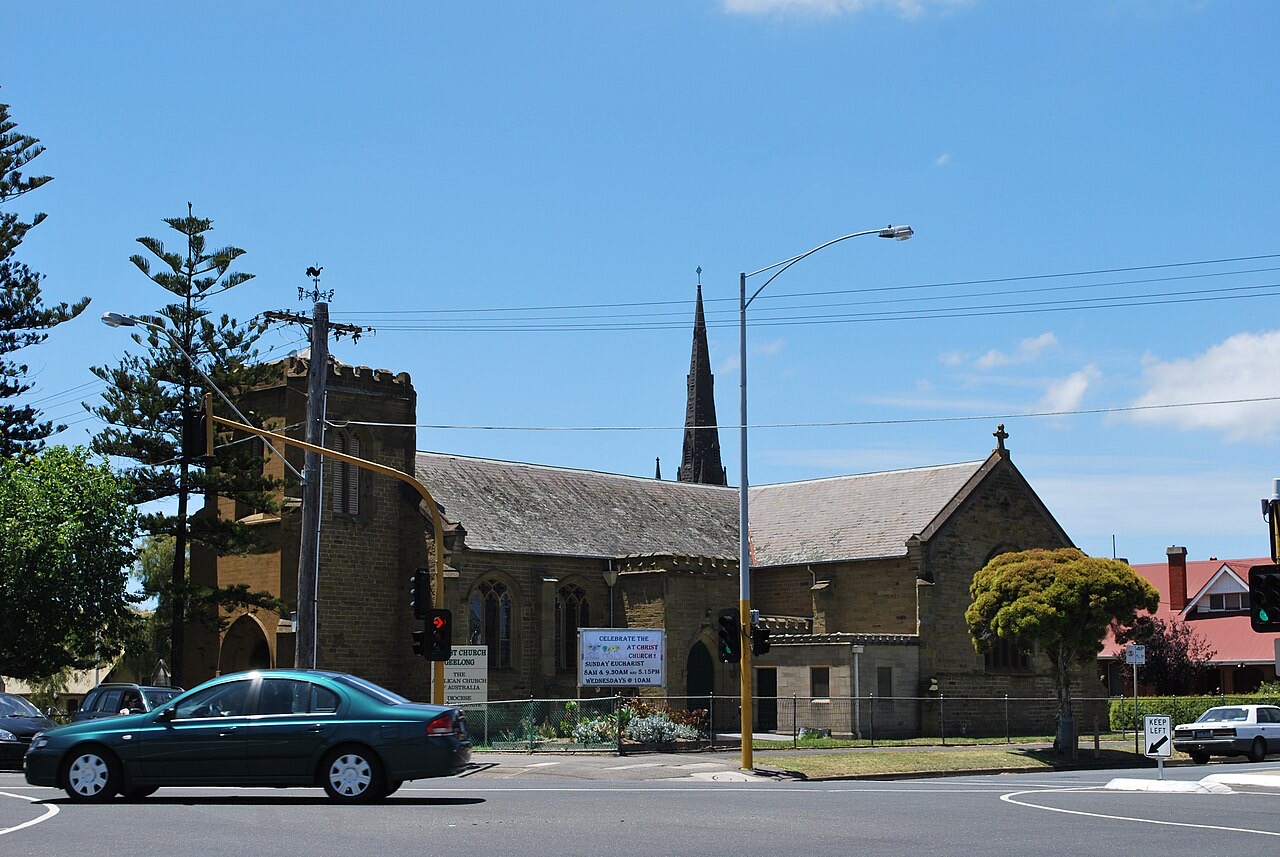
A good place to start is Christ Church. On 7 October 1843, William Grant Broughton, the Bishop of Australia, laid the foundation stone at the north-east corner of the nave. The church opened in June 1847, and in 1855 transepts and a chancel were added. What makes it special: it is the only church in Victoria designed by the colonial architect Edmund Blacket. It has been on the Victorian Heritage Register since 1974.
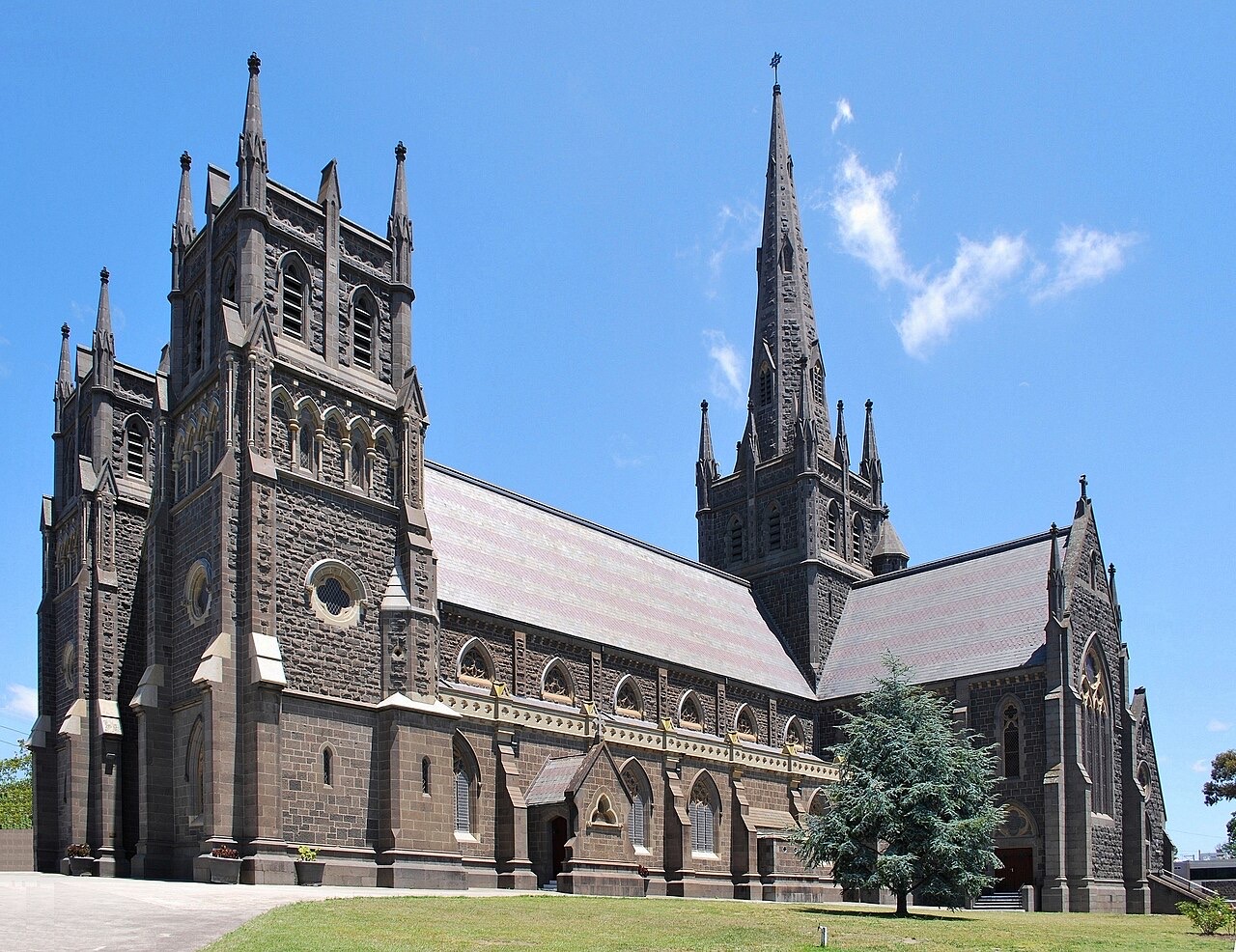
A little further on, a very different building rises up. The Basilica of Saint Mary of the Angels is 64 metres tall from pavement to top, the third-tallest building in Geelong. The neo-Gothic bluestone church was completed in 1937, and on 9 June 2004 Pope John Paul II raised it to a minor basilica. A few minutes along Yarra Street, at number 100, stands Wesley Church. It has belonged to the Uniting Church in Australia since 1977, when several Protestant churches merged.
The town hall tells a story about money, or the lack of it. In 1854 the council bought a half-hectare corner site and launched a design competition. The Melbourne architect Joseph Reed won out of twelve entries. But the budget fell short: after Mayor William Baylie laid the foundation stone on 9 April 1855, only the south wing along Little Malop Street was built. It stood alone for decades. A 1914 referendum to move the council elsewhere failed, and only in 1917 was the full design completed.
Just down the road, the Geelong Gallery has Australian art history hanging on its walls. The current building opened in 1915 as a memorial to George M. Hitchcock, and galleries were added in 1928, 1937 and 1938. One of its first acquisitions, in 1900, was A bush burial (1890) by Frederick McCubbin, bought for 100 guineas. The collection now numbers more than 6,000 works, including View of Geelong (1856) by Eugene von Guérard: a chance to see the city as it looked well over a century and a half ago.
Johnstone Park is close by, and its past is hard to guess. It was once Western Gully, a watercourse running towards Corio Bay. A dam built there in 1849 was fenced off in 1851 after at least one person and several horses had drowned. In March 1872 the gully became a park, named after former mayor Robert de Bruce Johnstone.
Wool and Water: The Harbour as Engine
Geelong grew rich on wool. On the corner of Moorabool and Brougham Streets stand the bluestone walls of the Dennys Lascelles wool store, built in 1872. Bales from all over Victoria's Western District were stored and auctioned here before being shipped from the quays. Since 1988 the National Wool Museum in the restored building has told the story of wool, from the farm to finished fabric.
From here it isn't far to the water. Cunningham Pier opened in the mid-1850s, was rebuilt in the late 1920s and has carried its present name since 1929. People still fish here, so give the rods some room. Turn around at the end and you'll see Geelong from the water, a very different view from the one on the street.
Nearby, a Victorian carousel turns behind the glass walls of a steel-framed pavilion. The council bought and restored it between 1996 and 2000 as part of the waterfront renewal, and it officially opened here on 14 October 2000. Since then the pavilion has been the symbol of that redevelopment.
Eastern Beach: A Coastline They Had to Make Beautiful
On the eastern side lies the part that Geelong locals love most. That was far from a given: this shore was once considered ugly, with steep cliffs running right down to Corio Bay. Plans from 1914 promised a sea wall and cut-back cliffs. Work began in 1927, and on 20 December 1929 the concrete steps, terraces and bathing boxes opened. Several of the buildings are now on the Victorian Heritage Register.
Along the water between Rippleside and Limeburners Point stand more than 100 painted figures, the Baywalk Bollards. The local artist Jan Mitchell made them in the mid-1990s. Each figure tells a piece of local history or shows a Geelong character. Take your time and pick your own favourite.
The finishing touch is the seawater pool. On 28 March 1939, Councillor Solomon Jacobs opened the semicircular Eastern Beach Swimming Enclosure, together with the children's pool beside it. It covered around 3.4 hectares and had room for 10,000 swimmers. From 1940 a tram line brought bathers here, until Geelong's trams stopped running in 1956. On a warm day, a dip is the natural way to finish.
There's More Than You Read Here
This is just a taste of what the route has to offer. On the full walk through Geelong you'll pass even more stops, with a quiz question at every stop and details you'll only notice if you look closely. Want to discover what else is hidden between the churches, the quay and the beach? Then choose the Geelong walk in the CityWalkGems app and walk the route yourself.
- 12 stops
- Christ Church Geelong start
- ~4,0 km route length
- ~712 m longest stretch
- about 1,5–2 h duration
- Free

