
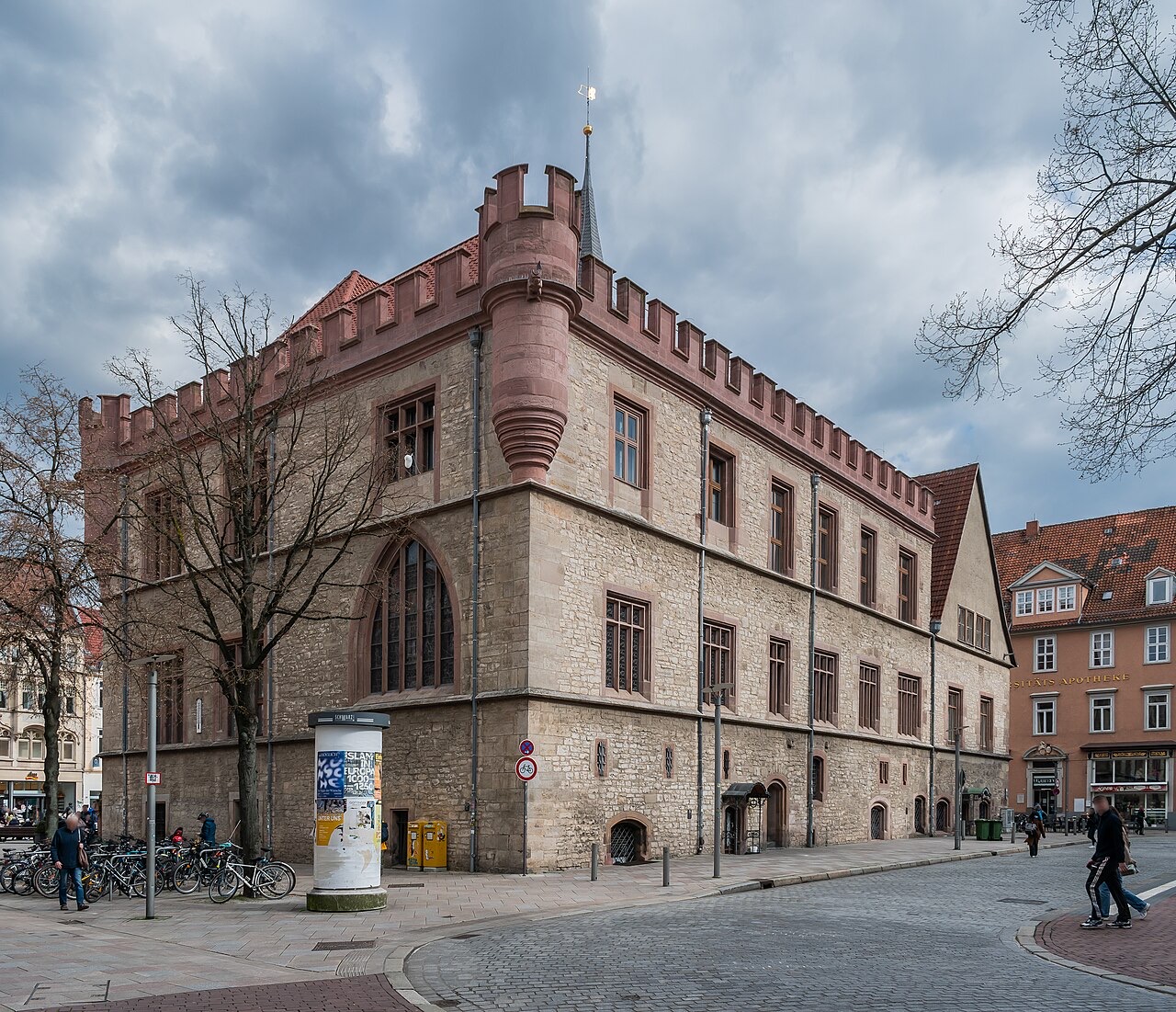
Some cities have a university. In Göttingen it is more the other way around: the town revolves around the Georg-August-Universität, and you see it everywhere. A botanical garden is part of the institute for plant sciences, and so many scholars lived in one half-timbered house that the house itself became part of university history. Anyone taking a walking tour of Göttingen therefore strolls through a compact old town where the Middle Ages and science constantly cross paths. Below is a selection of what you will come across along the way.
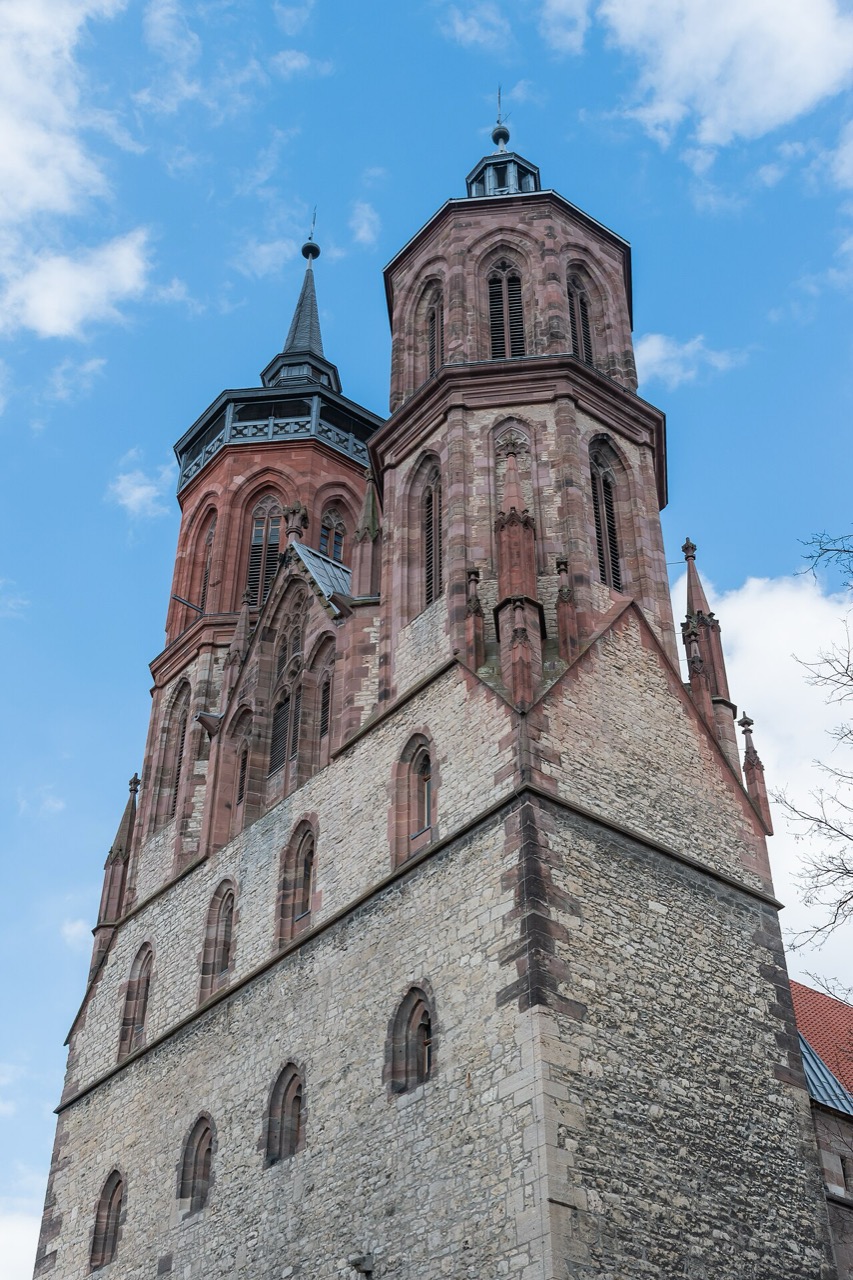
Churches and Towers That Shape the Skyline
Start at the Altes Rathaus. Work on this building began in 1270, and it rose in several phases. Until 1978 the council and city government met here. Today the old halls are used for receptions, events and exhibitions, so it is worth checking at the entrance to see whether anything is on show.
From the market square you can see the towers of the Johanniskirche from afar. They are among the town's landmarks. The church dates from the 14th century, has three naves of equal height under one roof, and is dedicated to John the Baptist.
The Jacobikirche reaches higher still. Its tower is 72 metres tall, making it the tallest building in the old town. Construction lasted from 1361 to 1433, more than seventy years. The church is dedicated to James the Greater.
Smaller, but interesting, is the Nikolaikirche. Linen and wool weavers from Flanders once settled in its quarter. Its roots are Romanesque, and from them grew the Gothic hall church you see today. If you look closely, you will find traces of both eras.
Where the University Becomes Visible
The Paulinerkirche was completed in 1304 as a minster church. It is no longer a church: the State and University Library uses the building for exhibitions, among other things. If the doors are open, you can feel inside the height of a medieval church with a new purpose.
Opposite the historic library building stands the Michaelishaus, built between 1735 and 1737. Take note of the half-timbering. From 1764 it was the home of Johann David Michaelis, after whom it is now named. So many important scholars lived and worked here that the history of the house is intertwined with that of the university.
Another tower tells a different story: the Bismarckhäuschen was part of the outer defences of medieval Göttingen, when walls and towers surrounded the town. Otto von Bismarck, the future chancellor of the German Empire, lived here during his student days.
The Aula is a neoclassical building that was inaugurated in September 1837, at the university's first centenary. In 1835 the King of Great Britain and Hanover donated an additional 3,000 pounds sterling toward its construction. As King of Hanover, he was formally also rector of the university.
A Moment of Silence, a Garden and a Fountain
The Alte Synagoge calls for a different tone. Between 1869 and 1872 a synagogue was built here for Göttingen's Jewish community. Take the time to pause and reflect on the building that once stood here and on the people who gathered in it.
Afterwards, the Alter Botanischer Garten offers room to catch your breath. More than 12,000 plant species grow on five hectares in the north-east of the medieval old town. On the south-east side lies the Deutsches Theater: plants and theatre, side by side.
Around mealtime the Junkernschänke stands out, a half-timbered house on the corner of Barfüßerstraße and Jüdenstraße. People have been eating and drinking here since 1883. Cross the street for a moment to take in all the timber framing at a glance.
Finish at the Gänseliesel, the market fountain with the little goose girl, dating from 1901 and now the symbol of the town. Locals arrange to meet «am Gänseliesel». Find a spot on the square and watch the people passing by.
More Than a Selection
This is only a selection of what the route has to offer. The full walking tour of Göttingen includes more stops, a series of quiz questions and details that are easy to miss if you walk past without a guide. If you want to explore the town this way, choose the Göttingen walk in the CityWalkGems app and walk the streets yourself.
- 12 stops
- Start anywhere
- ~3,9 km route length
- ~732 m longest stretch
- about 1,5–2 h duration
- Free

