
Iquique sits on a narrow strip of land between the Pacific Ocean and the coastal mountain range, on the edge of the Atacama Desert. It almost never rains here, but in the morning a sea mist often drifts in, which northern Chileans call camanchaca. If you are wondering what to do in Iquique, you will find a port city where, in just a few hours on foot, you can take in the whole story of the saltpeter boom, the War of the Pacific and the timber architecture of the pampa barons. Most of it lies close together, around the bay and the central square.
The Day Iquique Changed Countries
Everything here revolves around 21 May 1879. Iquique was still Peruvian then and was being blockaded by two old wooden Chilean ships: the corvette Esmeralda under Arturo Prat and the smaller schooner Covadonga under Carlos Condell. The Peruvian ironclad Huáscar, under Miguel Grau, attacked the Esmeralda and rammed her after about four hours of fighting. Prat leapt onto the enemy deck and fell. It was a Peruvian victory, and yet Prat became Chile's great naval hero.
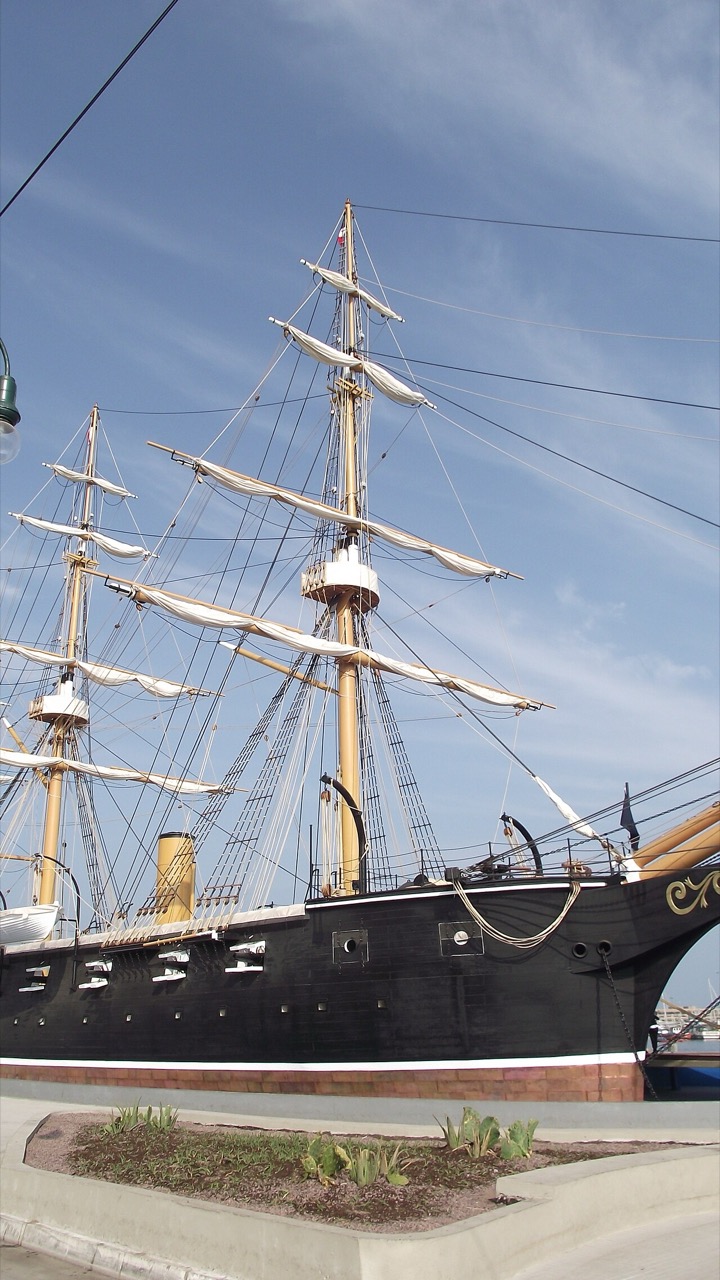
On the quay stands the Museo Corbeta Esmeralda, a full-size replica built by the Marco Chilena shipyard on the initiative of the mining company Collahuasi. Inside, thirteen scenes show life on board on 20 May 1879, the day before the battle. It is the most visited museum in the region.
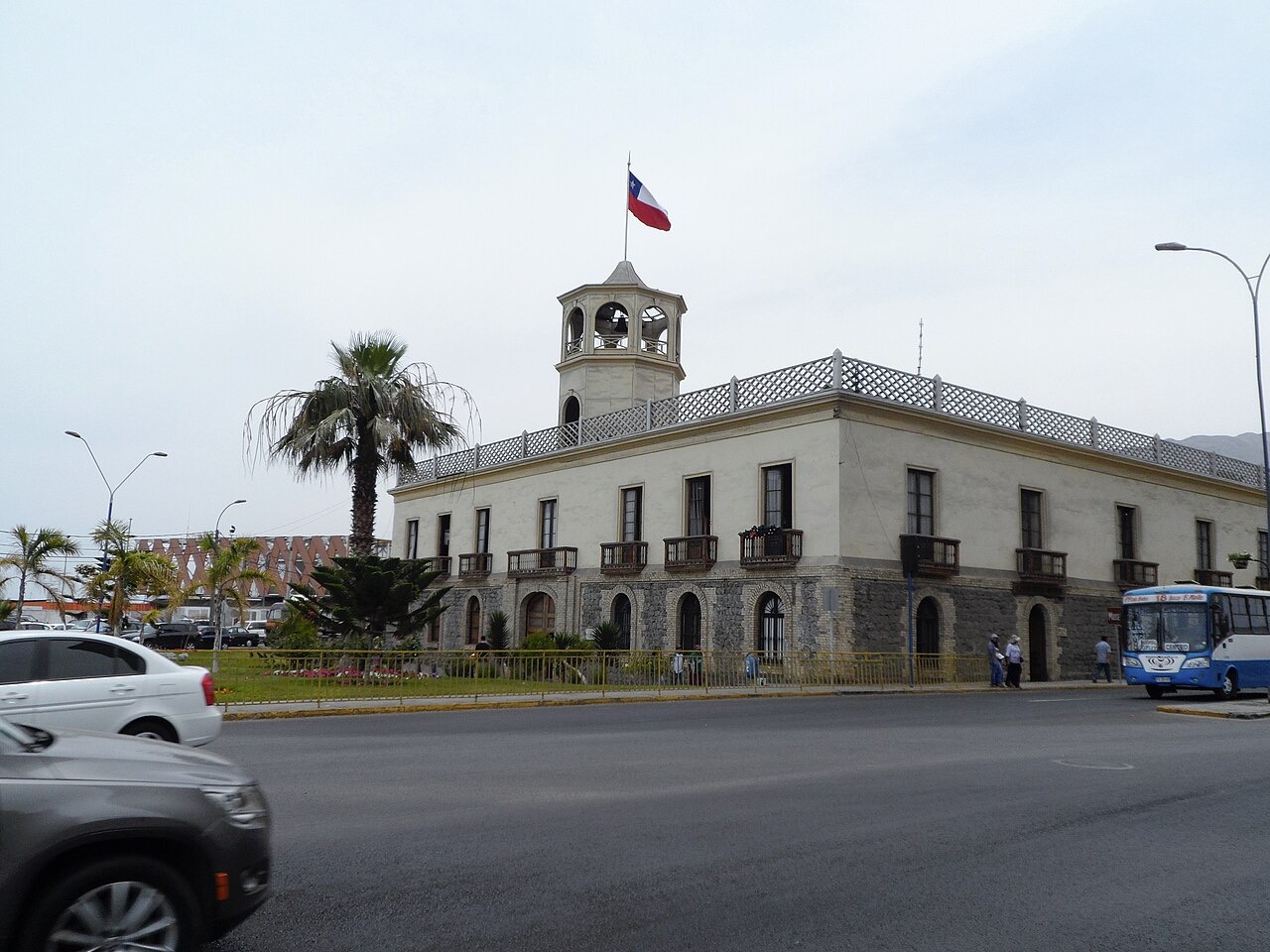
The story continues in the places around it. At Caleta Riquelme, the fishing cove where sea lions wait for scraps (watching is fine, feeding or petting is not), stands the Ex Aduana, which locals call the Palacio Rímac. Construction began in 1871 under Peruvian rule, commissioned by President José Balta, after the tsunami of 1868 destroyed the previous building. After the naval battle, 49 Chilean survivors were held prisoner here, and Prat's body lay at the door for several hours. His remains were taken in 1884 to the church that is now the Catedral de Iquique, where they stayed until 1888. The building only became a cathedral in 1929, when the diocese was established.
Condell has his own square too. He kept his shallow-draft Covadonga close to the shore while the much deeper Peruvian Independencia chased him and ran aground on a reef at Punta Gruesa. Condell, born in Valparaíso to a Scottish father and a Peruvian mother, died in 1887 at the age of 44.
Saltpeter: The Money Behind the Facades
Without saltpeter, Iquique would have remained a fishing village. During the boom, from the 1880s to 1900, dozens of steamships and sailing vessels lay in the bay to load cargo. Passengers were rowed to the Muelle Prat, the 1901 pier made of Oregon pine on metal piles. At that time about 36 percent of the inhabitants were foreigners. The pier kept its function until 1999, reopened in 2013 after restoration, was damaged by a tsunami in 2014 and has been repaired again. Today boats leave from here for tours of the bay.
The railway carried the white gold of the pampa to the sea. The old station, designed by the Spanish architect Miguel Retornano, opened on 28 July 1871 with the saltpeter line between Iquique and La Noria. The complex consists of an administration building and the engineer's house, in Georgian style and separated by a French garden. The last passenger train left on 13 June 1975.
The money can still be seen in wood. On Plaza Prat stands the Torre del Reloj, 25 metres tall and made entirely of Oregon pine. The municipal council decided to build it on 14 December 1877, still under Peru. The English clockwork arrived on 10 December 1878 aboard the steamship Ibis and has been running since January 1879. The tower survived the great fire of 1880 and received its present spot in the middle of the square in 1889. On the south side, the Teatro Municipal opened on 21 December 1889 with Verdi's Il trovatore.
Nearby is the Casino Español, opened in 1904 by Spanish immigrants and designed by the same Retornano. Between 1911 and 1914, Sixto Rojas Acosta hand-painted the interior, taking the Real Alcázar of Seville as his model. It now also houses a restaurant, so the halls are still in use.
Calle Baquedano and a Basque Merchant's House
The richest saltpeter families lived on Calle Baquedano. Most of the wooden houses went up between 1880 and 1920, with galleries, verandas and double roofs; since 1977 the street has been a protected historic area. The Museo Regional is at number 951, in the former courthouse, and displays archaeology and fossils from an oil exploration of 1936.
The Palacio Astoreca shows how far the money reached. Juan Higinio Astoreca, a Basque merchant with several saltpeter works, had it built in 1903 but died before it was completed. His widow sold it to the state in 1909, furniture included. It has 27 rooms across roughly 1,100 square metres, with an Art Nouveau stained-glass window above the hall. Today it is a museum of the Universidad Arturo Prat.
If you want to know in passing why the sea is so rich, step into the Mercado Centenario. The cold Humboldt Current brings nutrient-rich water to the surface, making this one of the richest fishing grounds in the world. The fruit comes from the valleys and oases of the interior, while the city itself lies in one of the driest places on Earth.
A Taste of the Route
This is only part of what the route along Iquique's lively central spots has to offer. The full walk includes more stops, quiz questions and details you only notice when you stop and look. Choose the walk through Iquique in the CityWalkGems app and discover for yourself what is not written here.
- 12 stops
- Museo Corbeta Esmeralda start
- ~3,8 km route length
- ~677 m longest stretch
- about 1,5–2 h duration
- Free

