
Also known as: القيروان, Cairuán
A Millennium of Faith and Heritage
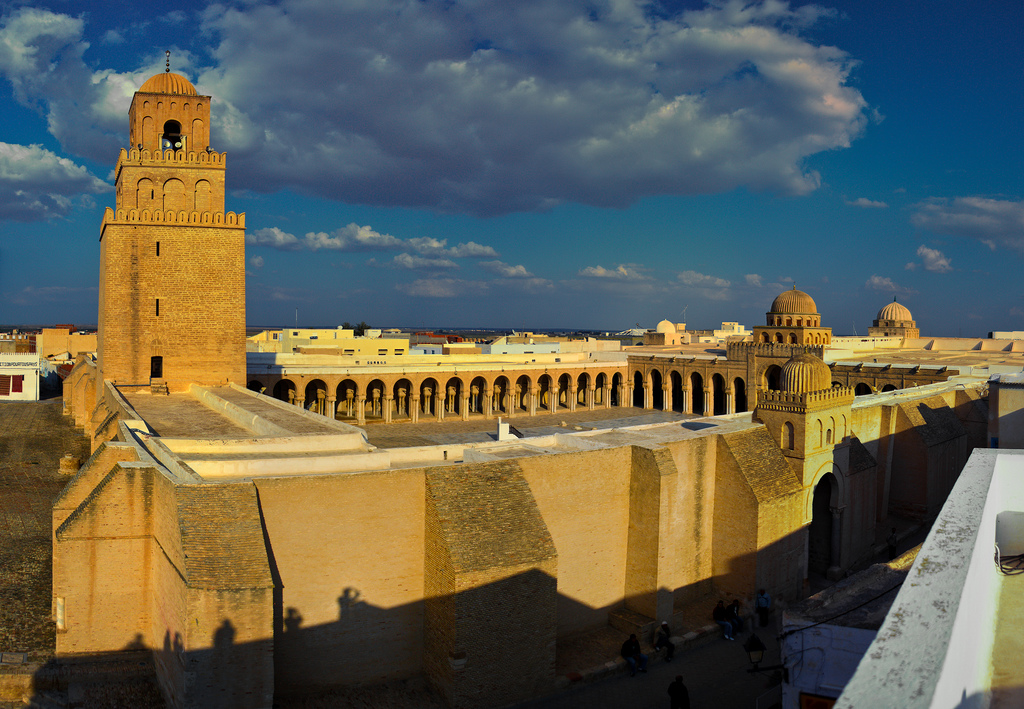
Your journey through Kairouan begins at the imposing Great Mosque, founded in the year 670. This is not only one of the oldest, but also one of the most impressive sanctuaries in the Islamic world. Inside, you'll find hundreds of antique columns, each lovingly repurposed from Roman and Byzantine ruins, each representing a millennium of faith and art. The architecture and serene tranquility make this a place of deep contemplation.
Not far from there stands the Mosque of the Three Doors, an architectural jewel from the 9th century. This mosque is famous for its beautifully decorated facade with three elegant arches and early Kufic inscriptions, a masterpiece of Islamic art. It is a tangible reminder of the craftsmanship of yesteryear. Another place of serene beauty is the Mausoleum of Sidi Abid el Ghariani, a tribute to one of Kairouan's most respected saints. The building stands out with its distinctive green dome and refined stucco work, inviting silence and admiration for its delicate decorations.
These historical sights together form the heart of ancient Kairouan, a city founded in the 7th century that grew into a center of Islamic scholarship and culture. Wandering through the old streets, you feel the echoes of caliphs, scholars, and merchants who lived here for centuries. The twin cannons, imposing pieces of artillery that once protected the city, remind us that Kairouan, despite its spiritual heart, was also a strategic stronghold.
Play Kairouan right in your browser →
The Vibrant Medina: Where Traditions Live On
The Tunis Gate, also known as Bab Tunis, has been a crucial connection between the medina and the outside world for centuries. This majestic gateway marks the entrance to the beating heart of Kairouan: the Medina. This UNESCO World Heritage site is a labyrinth of narrow alleys, lively souks, and hidden courtyards. Here, the scent of spices, leather, and freshly baked bread fills the air, while artisans continue their age-old traditions. It's a place where you feel immersed in the local culture.
Deep in the medina, you'll find Bir Barrouta, Kairouan's legendary well. Here you'll see a camel faithfully serving the well for centuries, a living tradition symbolizing the city's resilience. It is said that this well is connected underground to Mecca and that its water has healing powers, enveloping the place in mystery and history.
A visit to the Carpet Museum is a tribute to one of Kairouan's most famous crafts. Here you'll discover the rich history and refined art of carpet knotting, a tradition passed down from generation to generation. The vibrant patterns and soft textures tell stories of the region and its culture, showcasing the deep symbolism hidden in each woven piece. Even in the more modern parts of the city, such as the Subhan Allah roundabout, you experience the dynamism of daily life, where age-old traditions merge with contemporary reality. The monument commemorating Kairouan's designation as Capital of Islamic Culture in 2009 symbolizes the city's ongoing relevance and rich cultural heritage.
- 12 stops
- Start anywhere
- ~4,9 km route length
- ~731 m longest stretch
- about 2–2,5 h duration
- Free

