
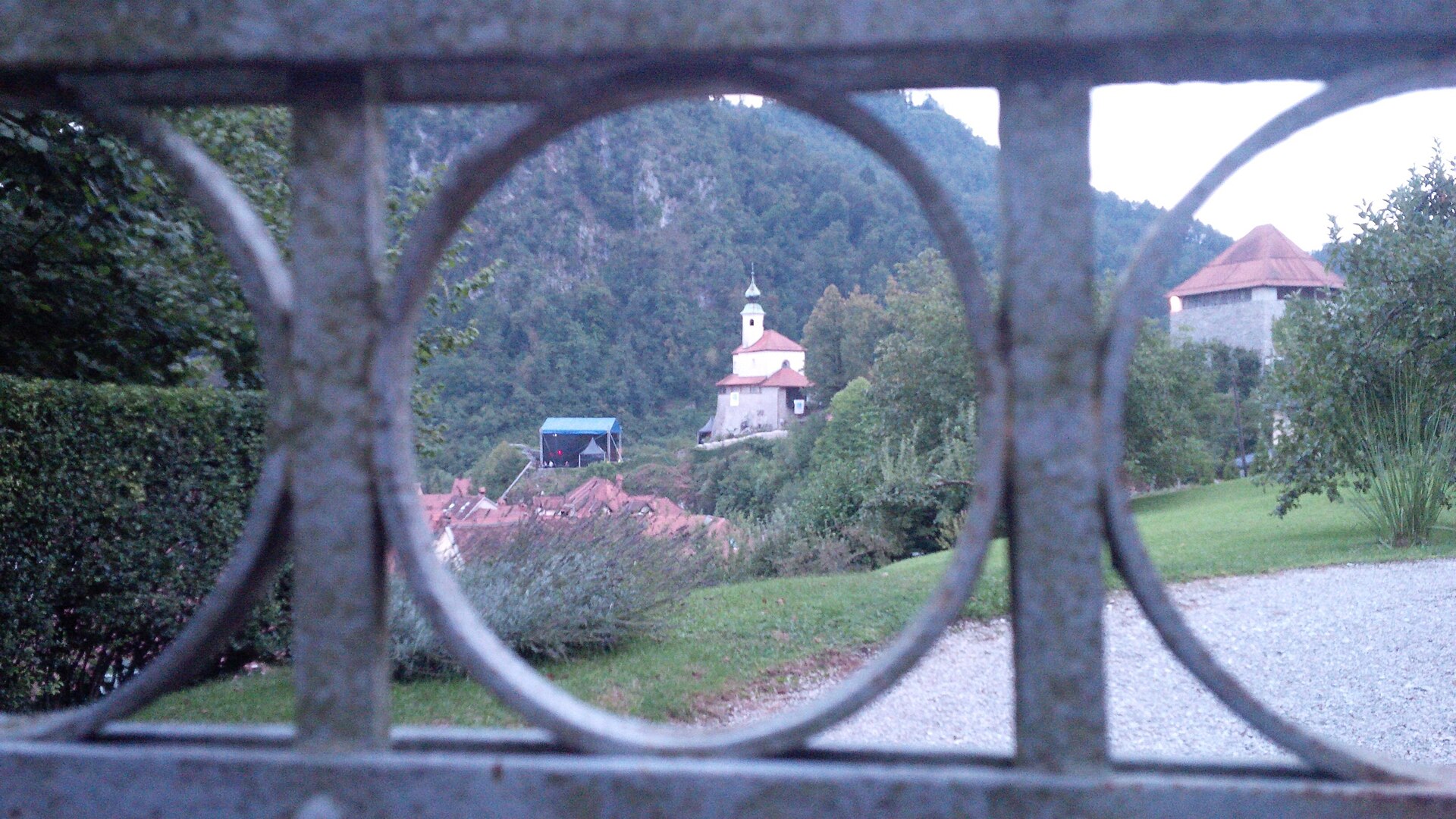
Nestled against the foothills of the Kamnik-Savinja Alps lies Kamnik, a historic town where medieval fortifications and the rural life of alpine valleys have intertwined for centuries. While many travelers head straight for Slovenia's more famous glacial lakes, this charming town on the Kamniška Bistrica River offers a tangible glimpse into a storied past. Walking through Kamnik reveals how seamlessly tales of medieval lords, celebrated poets, and resistance fighters blend into the dramatic mountain backdrop.
Between Countly Residences and Castle Ruins
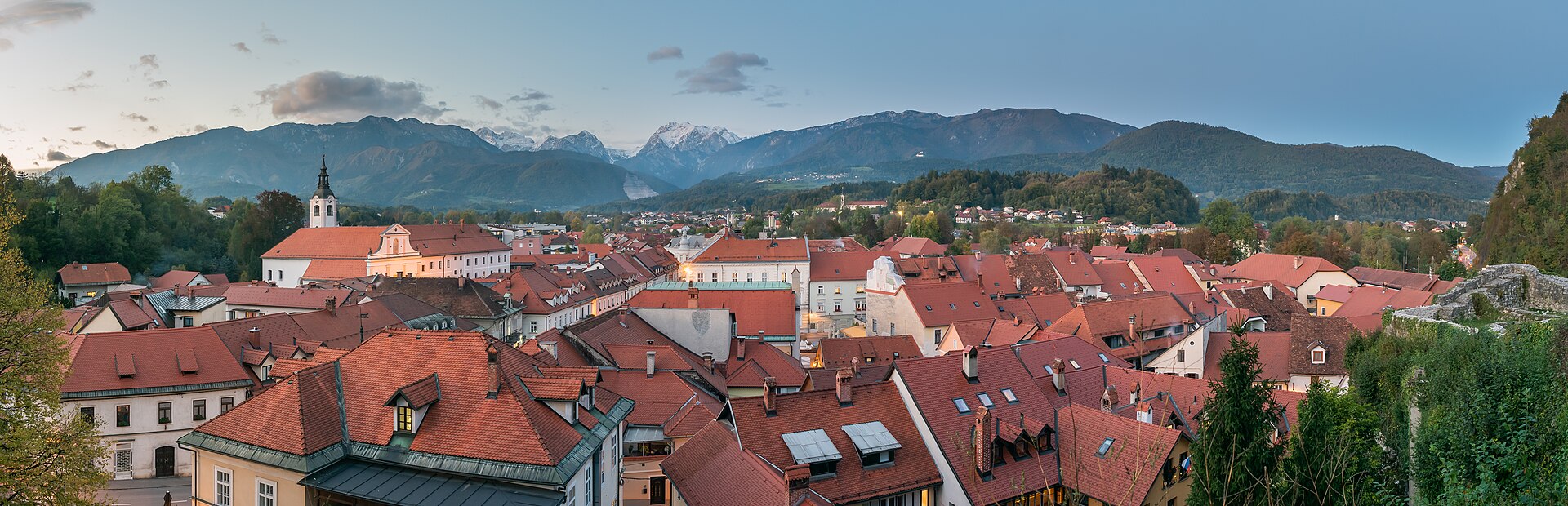
Kamnik’s silhouette is defined by striking hills crowned with ancient fortifications. Right in the town center, a steep rocky outcrop rises to hold Mali grad (Little Castle). In the twelfth century, this site served as the residence of the Counts of Andechs and the administrative heart of the medieval settlement. Today, the rare Romanesque double chapel stands as a testament to that golden era. From the plateau, you can gaze out over characteristic orange-tiled rooftops and the jagged alpine peaks beyond.
Higher up on Krniška gora, the weathered walls of Stari grad nad Kamnikom (Old Castle above Kamnik) keep watch over the valley. Also dating back to the twelfth century, this fortress was once considered one of the most formidable strongholds in Carniola. Devastating earthquakes reduced the complex to ruins over the centuries, yet the remaining ramparts can still be reached via a steep climb. At the top, sweeping vistas open up across the Ljubljana Basin and the summits of the Kamnik Alps.
On the nearby ridge of Zaprice stands a third castle complex: Zaprice Castle. Originally built as a medieval stronghold to ward off invasions, it was later transformed into an elegant aristocratic manor. Today, the castle houses the Kamnik Intermunicipal Museum, featuring rich archaeological and ethnological collections. In the castle grounds, traditional wooden granaries and barns showcase the region's historic rural architecture.
Play Kamnik right in your browser →
The Literary and Military Heritage of Šutna
The winding street of Šutna forms the historical spine of the lower town. Its pastel-colored facades and traditional wrought-iron guild signs give the street an unmistakable charm. Rudolf Maister was born in one of these burgher houses in 1874—the general and poet who played a decisive role in securing Slovenia's northern border after World War I. His carefully restored birthplace highlights his youth and literary legacy. Maister's national significance is also celebrated near Kamnik's railway station, where a large equestrian statue depicts him in full command. The monument commemorates November 1918, when Maister led volunteers to disarm the German civil guard in Maribor, securing the northeastern territories.
Kamnik also preserves the memories of other literary and historical luminaries. On the edge of Novi trg stands a bust of France Balantič, one of Slovenia's most refined sonnet poets. Though he perished during World War II at just 22 years old, his poetry endures in his hometown, where the municipal library also bears his name.
The echoes of wartime history resonate elsewhere across the town. On the serene hill of Žale, a solemn monument commemorates the hundreds of local soldiers who fell during the First World War, notably on the Isonzo Front. Tucked away on Samostanska ulica, between ancient monastery walls, another memorial honors the decade following liberation and the bravery of local partisans who fought in the surrounding hills.
Local Market Days, Parks, and Forest Trails
Beyond its historic monuments, Kamnik retains an authentic community spirit, seen daily at the bustling market square along Maistrova ulica. Early in the morning, the square fills with the aromas of raw mountain honey, alpine cheeses, and freshly baked artisan sourdough bread. Here, farmers from surrounding highland pastures meet townspeople to trade seasonal goods, sustaining a tradition that has thrived for generations.
Along the banks of the Kamniška Bistrica, Keršmančev Park offers a tranquil, verdant escape. Shaded by mature trees and lined with wide lawns, it is a beloved gathering spot for locals and hosts vibrant open-air concerts throughout the summer.
Head toward the town's edge, and you will see how effortlessly Kamnik blurs into the wild outdoors. Just off Ljubljanska cesta, an intriguing path begins: during a nighttime trek equipped with UV torches, glowing minerals, plants, and trail markers illuminate what remains hidden by day. For daytime hikers, Zarjina klopca—a carved wooden bench set along a forest trail—is a rewarding destination. Sitting here, you can look out across the rooftops, the castle hills, and the snow-capped mountain walls, especially as the evening light bathes the valley in gold.
This article highlights just a fraction of what this alpine town has to offer; along the complete walk, you will uncover even more striking monuments, local lore, and hidden vantage points. Eager to explore Kamnik at your own pace and discover all its stories? Launch the route in the CityWalkGems app and set off through the town's historic highlights.
- 12 stops
- Nighttime Forest Trail start
- ~5,1 km route length
- ~787 m longest stretch
- about 2–2,5 h duration
- Free

