
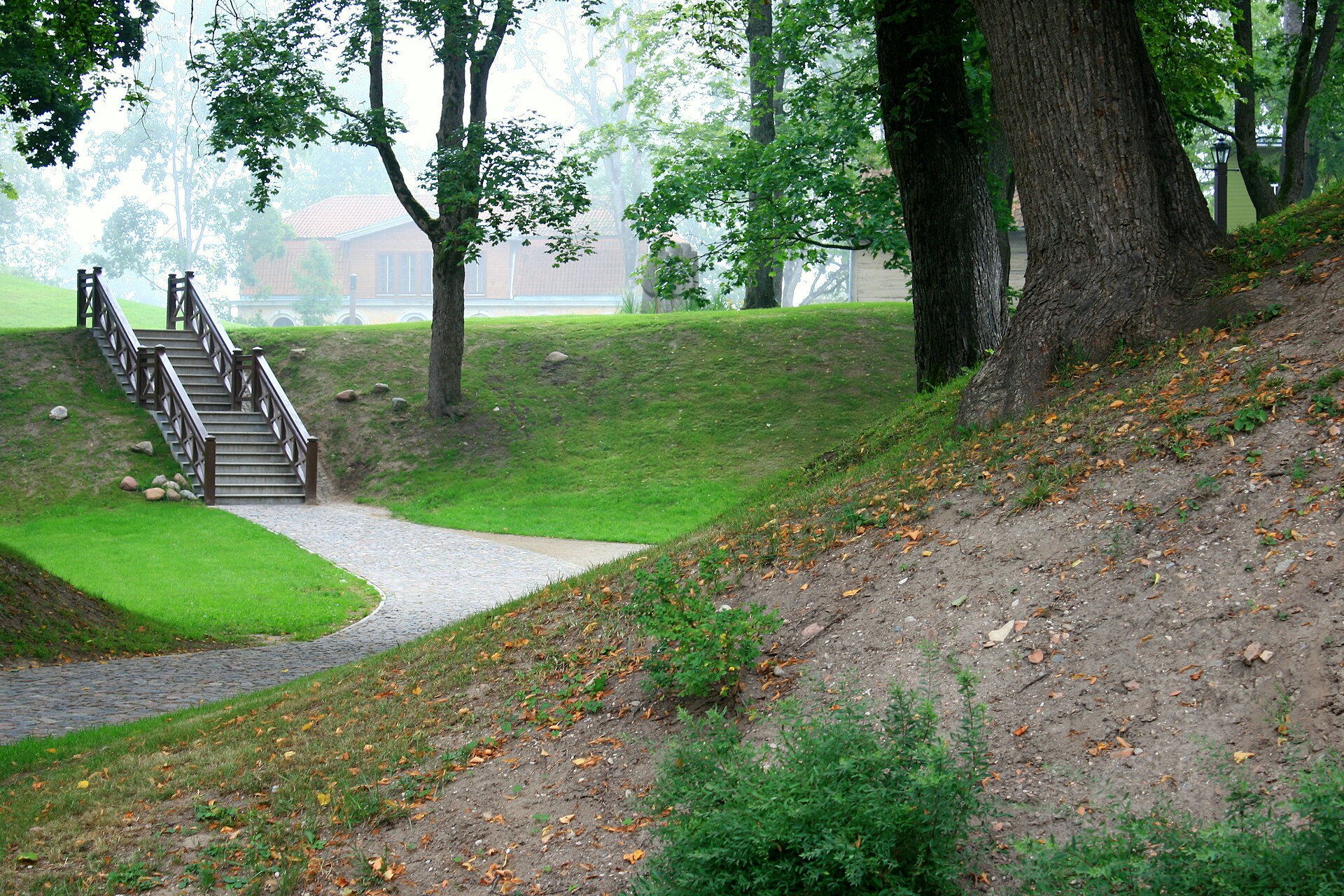
Anyone travelling through western Latvia into the historical region of Courland immediately notices the pace of life slow down as Kuldīga comes into view. This town exudes an atmosphere rarely found elsewhere in the Baltics: a harmonious interplay of intact wooden architecture, cobblestone streets, and flowing water. Over the centuries, the town has preserved its small-scale character and is now designated a UNESCO World Heritage site. Anyone embarking on an inspiring walking tour of Kuldīga will quickly discover that history here is not tucked away behind museum glass, but tangibly present in the everyday streetscape.
Cobblestones, Ducal Decrees, and Industrial Precision
The historic heart of Kuldīga unfolds at the central market square beside the old town hall. Rough field cobblestones echo beneath your feet, framed by meticulously preserved wooden facades with distinctive cornice mouldings. The seventeenth-century town hall stands as the anchor here: this was the very spot where the decrees of the Dukes of Courland were once solemnly proclaimed. The entire square feels remarkably untouched, as though modernity simply chose to pass it by.
Venture into the side streets off the square, and on Dzirnavu iela you will encounter a quiet corner where the scent of aged timber immediately catches your attention. In the local museum repository right beside the water, conservators care for thousands of regional historic artefacts. It stands as a reminder of the era when watermills provided the vital momentum for the town's early prosperity.
Just a short walk away, on Liepājas iela, Kuldīga reveals a very different facet of its heritage. Rising between residential buildings stands the strikingly slender Needle Tower. In 1854, the very first needle factory in the entire Russian Empire opened on this site. What began as a local venture evolved into a manufacture churning out millions of steel needles each year. The museum now housed within the tower illustrates how this precision engineering industry connected a seemingly remote provincial town with commercial markets thousands of kilometres away.
The Rhythm of Rushing Water and Nineteenth-Century Brick
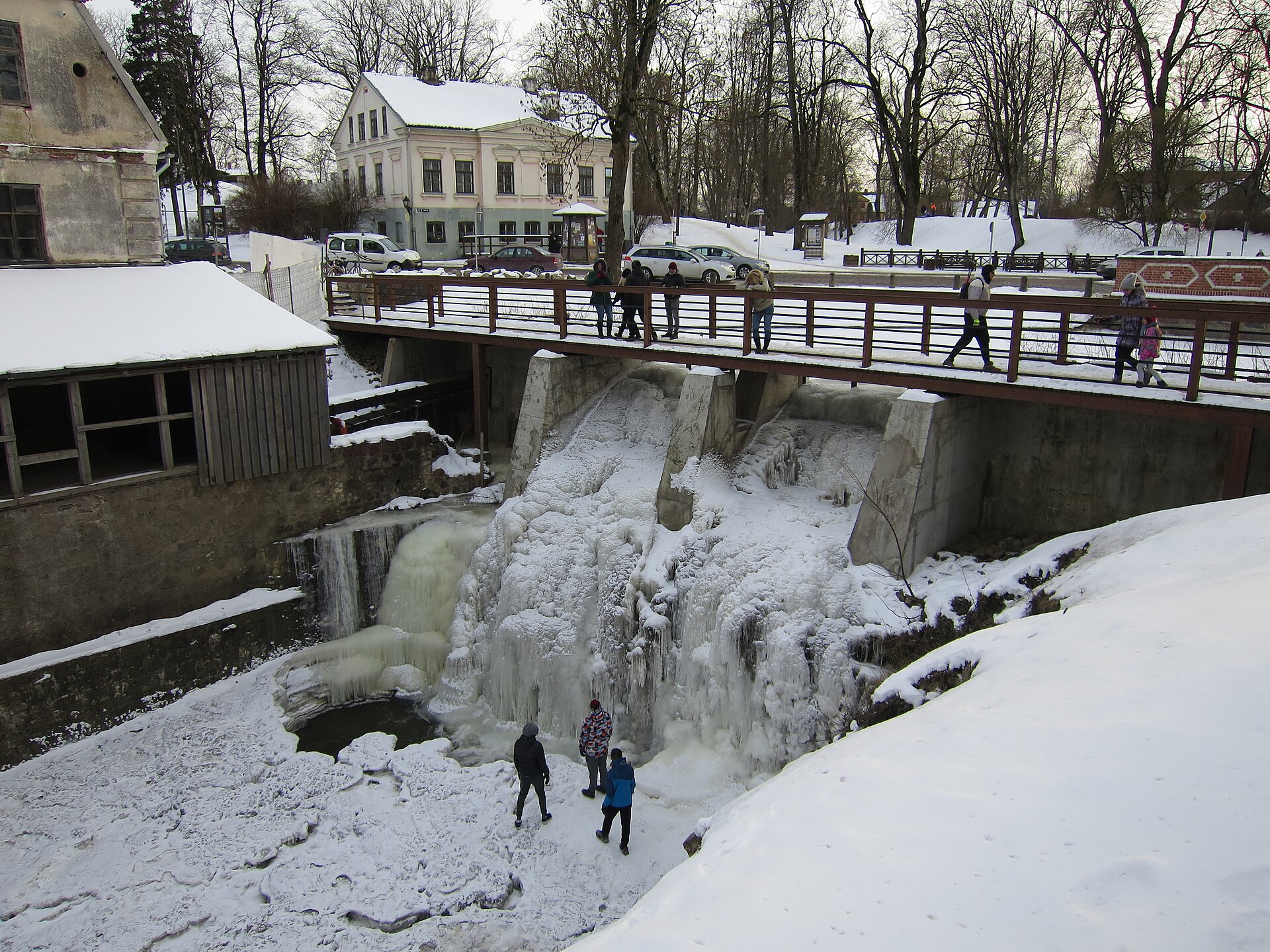
Water has always shaped the urban layout here. Right between seventeenth-century walls, the sudden roar of tumbling water breaks the silence: the Alekšupīte waterfall. Dropping over four metres, it is the highest waterfall in Latvia. For centuries, the currents of this little stream turned the heavy millstones that ground flour for the ducal kitchens. The dramatic contrast between the rushing water and the timber facades perched directly above it epitomises Kuldīga's unique urban character.
Just a brief stroll downstream, the stream empties into the broad Venta River. Here, an imposing red-brick arched bridge spans the waters. Built in 1874 according to strict nineteenth-century Tsarist standards, the crossing was engineered wide enough to allow two heavy horse-drawn carriages to pass each other comfortably. Strolling across its gentle arches, an expansive panorama of the river valley opens before you.
From the bridge, your gaze falls directly upon Ventas rumba, the widest natural waterfall in Europe. A limestone dolomite ledge stretches nearly two hundred and fifty metres across the riverbed. Although the water drops only a couple of metres, the immense width of the cascade is truly breathtaking. In spring, salmon and vimba migrate upstream, leaping against the current over the dolomite ledge—a remarkable natural spectacle that has drawn visitors to the banks of the Venta for generations.
Green Heritage and Sweeping Panoramas
On the far side of the river, the atmosphere shifts from historic cobblestones to tranquil nature. In Pārventa Park, fallen pine needles cushion your steps along the sandy woodland trails. Timber boardwalks offer uninterrupted views across to the brick arches of the bridge and the skyline of the historic town opposite.
To truly grasp the harmony of this landscape, the wooden observation tower of Kuldīga serves as the perfect vantage point. After climbing the timber steps, you look down from the top platform across the ancient Venta valley. Below lie the red-tiled roofs of the historic quarter, interspersed with leafy canopies and the shimmering spray of the waterfall. From up here, it becomes strikingly clear how seamlessly natural waterways and human craftsmanship have intertwined in Kuldīga for centuries.
This article only offers a glimpse of what Kuldīga has to offer. The full walking route reveals many more remarkable sights, architectural details, and fascinating stories that bring Courland's past vividly to life. To explore the town in depth and uncover all its hidden gems, check out the CityWalkGems app for the complete self-guided route with interactive highlights along the way.
- 12 stops
- Kuldiga Castle Park start
- ~4,6 km route length
- ~844 m longest stretch
- about 1,5–2,5 h duration
- Free

