
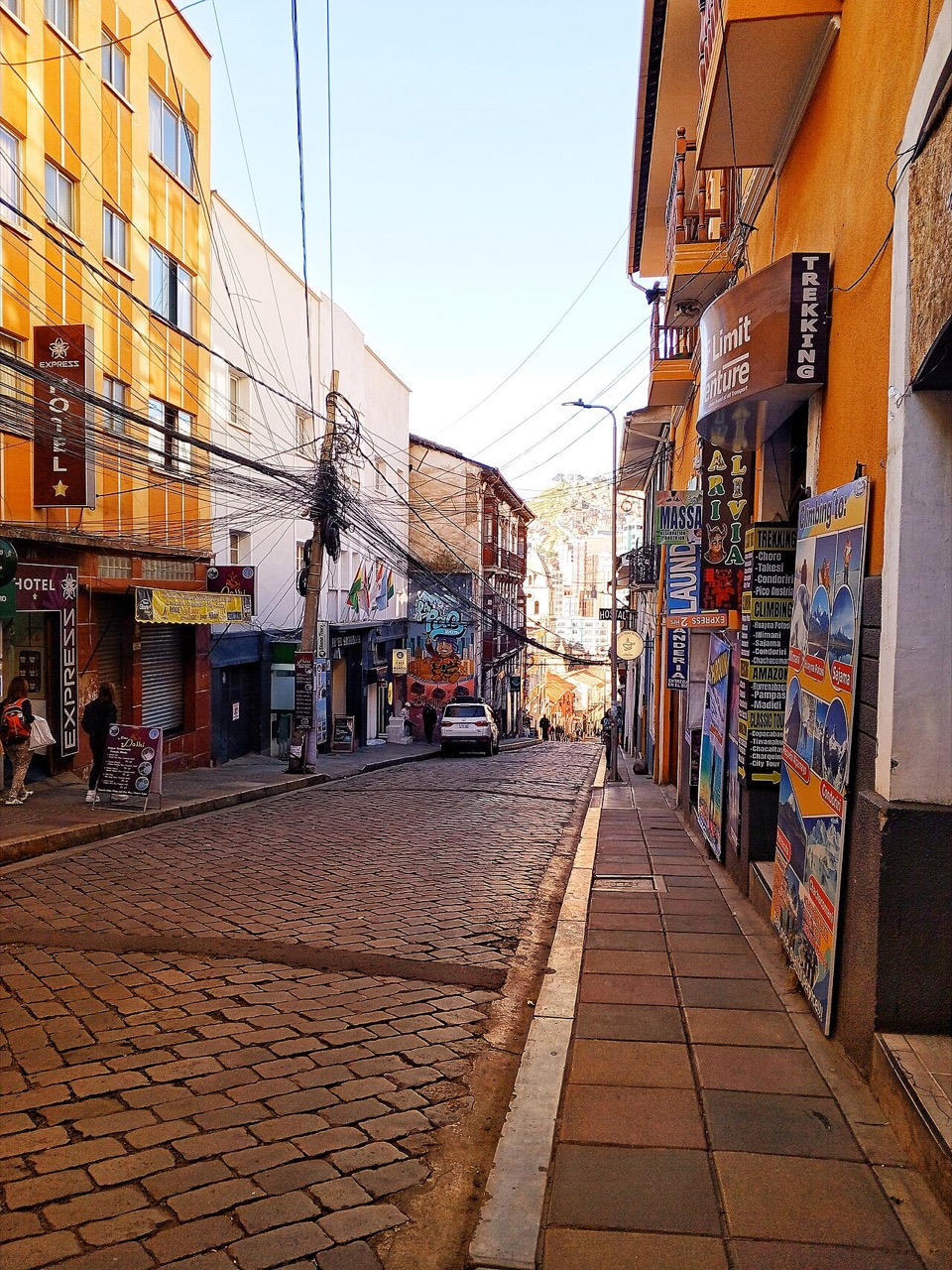
La Paz is not a city you stroll through unnoticed. At well over 3,600 metres above sea level you feel every slope in your lungs, so you walk more slowly here, look more closely and see more. Drink plenty of water and take breaks. If you are searching for the sights of La Paz, the centre offers a compact mix of markets, colonial churches, squares where politics is made and a modern tower that rises above everything. Here is a selection of what you will come across along the way.
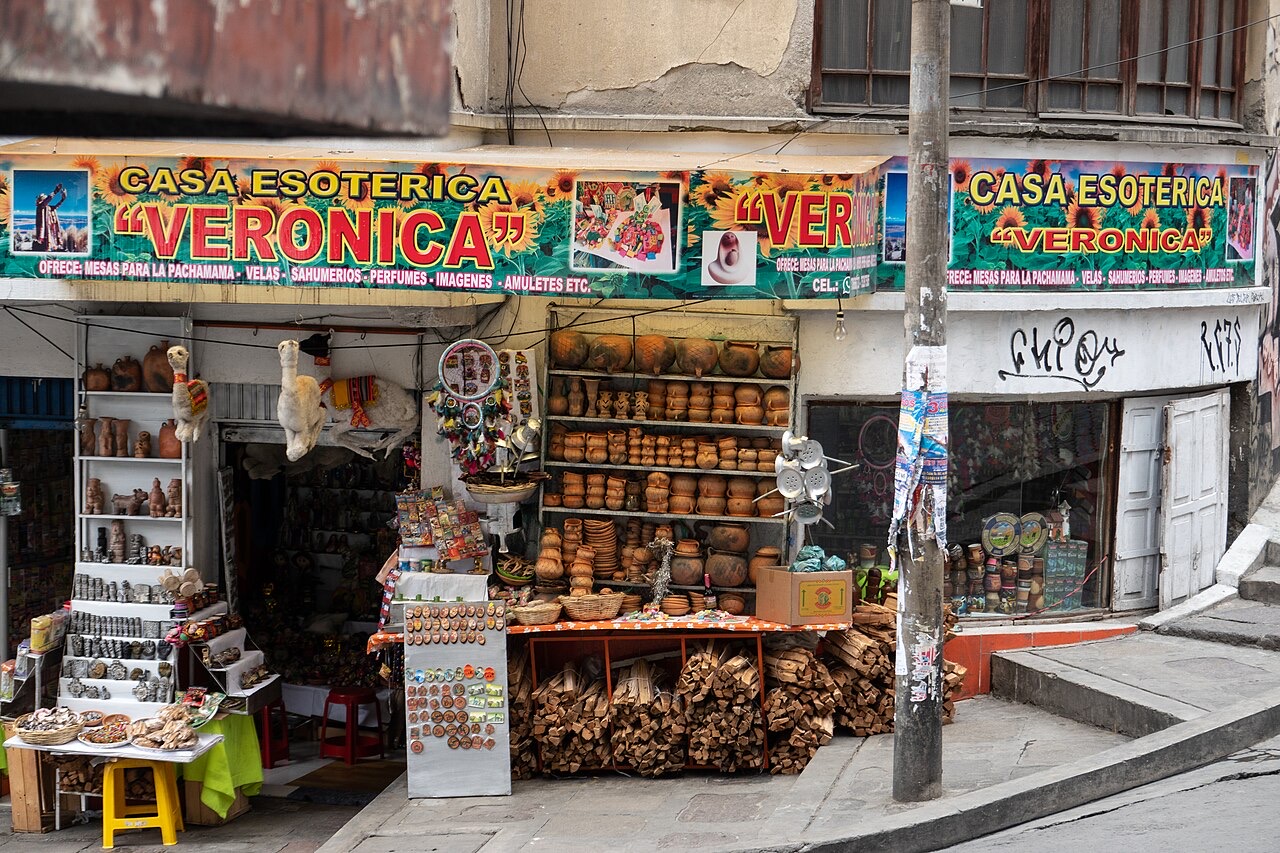
Market Streets and Rituals: Start at Sagarnaga
Calle Sagarnaga is the street every visitor ends up on sooner or later. Woollen hats, ponchos and woven bags hang above the doorways, and the street climbs steeply up from the church square. Take your time: with so little oxygen in the air, a slow pace is not a luxury but a necessity.
Right nearby lies the Witches' Market. The stalls are full of dried herbs, incense and amulets, and dried llama fetuses dangle overhead. These are meant as an offering to Pachamama, Mother Earth. They are often buried beneath the foundations of a new house as a wish for good luck. It is everyday practice, not a tourist show, so always ask first before taking a photo.
Not far from there stands the Basilica of San Francisco. The Franciscans were here from the city's earliest years; the present church was begun in 1743 and consecrated in 1784, and its carved stone front was finished in 1790. It is decorated with Andean plants and figures, a style known as mestizo Baroque. The church gives its name to Plaza San Francisco, where the people of La Paz have gathered for generations.
Play La Paz right in your browser →
Stone, Power and an Uprising: Around Plaza Murillo
The political heart of Bolivia beats around Plaza Murillo. Hundreds of pigeons pick their way between the benches and take off all at once the moment a child runs after them. All around stand the cathedral and the Plurinational Legislative Assembly, and few places are so closely bound up with Bolivian politics. The square is named after Pedro Domingo Murillo, leader of the 1809 uprising. He was hanged here in 1810.
The cathedral on the square tells a story of patience. Construction started in 1835 and it was inaugurated in 1925, exactly one hundred years after the founding of the republic; the two side towers only opened in 1989. Inside, the remains of Marshal Andrés de Santa Cruz rest in a chapel.
Then look up. At 131 metres, the Casa Grande del Pueblo towers above the colonial rooftops. This "Great House of the People" was inaugurated in 2018 as the new seat of the presidency, and its use has changed with each government since. And so, in the middle of the old city centre, a modern tower of power stands beside centuries-old squares and church towers.
A small detour brings some peace. The Merced church bears the title Our Lady of Mercy, a devotion to Mary promoted by the Mercedarians, a medieval order that ransomed prisoners. After the ministries and the crush around the square, it is remarkably quiet inside.
Cobblestones, Masks and a Broad Avenue
Calle Jaén offers a different rhythm. Colourful colonial houses stand close together on the cobblestones, and small museums are hidden behind several doors. After the noise of the centre, the street feels much quieter. Be sure to look up at the balconies too.
Culture can be found indoors here as well. The National Museum of Ethnography and Folklore is housed in a stately colonial mansion on Calle Ingavi, close to Plaza Murillo. There you will see masks with menacing horns and textiles from the Andes, which suddenly bring the dancers of the great parades up close. If you still have energy in the evening, you can check whether the municipal theatre on Calle Indaburo has something on the programme.
Then comes the city's broad, busy artery: El Prado, officially Avenida 16 de Julio. Here the traffic flows around the monument to Simón Bolívar, the liberator after whom the whole country of Bolivia is named. Car horns, buses and street vendors form the backdrop. At the end, Plaza del Estudiante closes off the avenue, where students from the Universidad Mayor de San Andrés cross with books under their arms. The cafés and terraces of Sopocachi are within walking distance from there.
This Is Just a Taste
What you read here is only part of what the route has to offer. The full walk through La Paz has more stops, and along the way there are quiz questions and details you only notice once you are standing there yourself. Want to find out? Choose the walk in the CityWalkGems app and discover the city step by step, at your own pace.
- 12 stops
- Calle Sagárnaga start
- ~3,6 km route length
- ~627 m longest stretch
- about 1,5–2 h duration
- Free

