
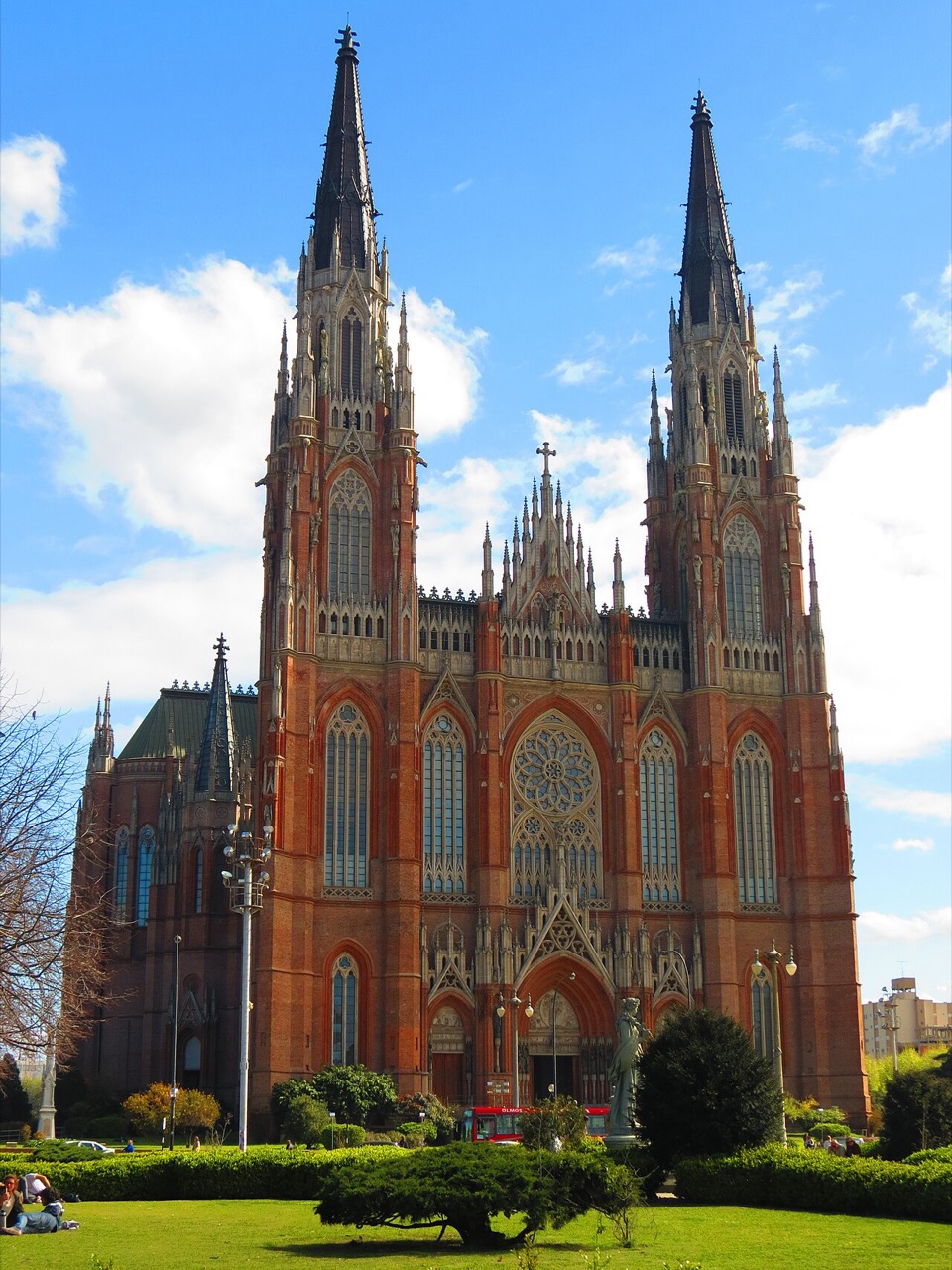
Many Argentine cities grew slowly into what they are today. La Plata did not. On 19 November 1882, the city was formally founded on Plaza Moreno, and everything you see here today follows from that starting date. A walking tour of La Plata therefore takes you past a remarkably coherent series of squares, palaces and government buildings, ending in a large park. A city made for walking, with plenty to read on its facades.
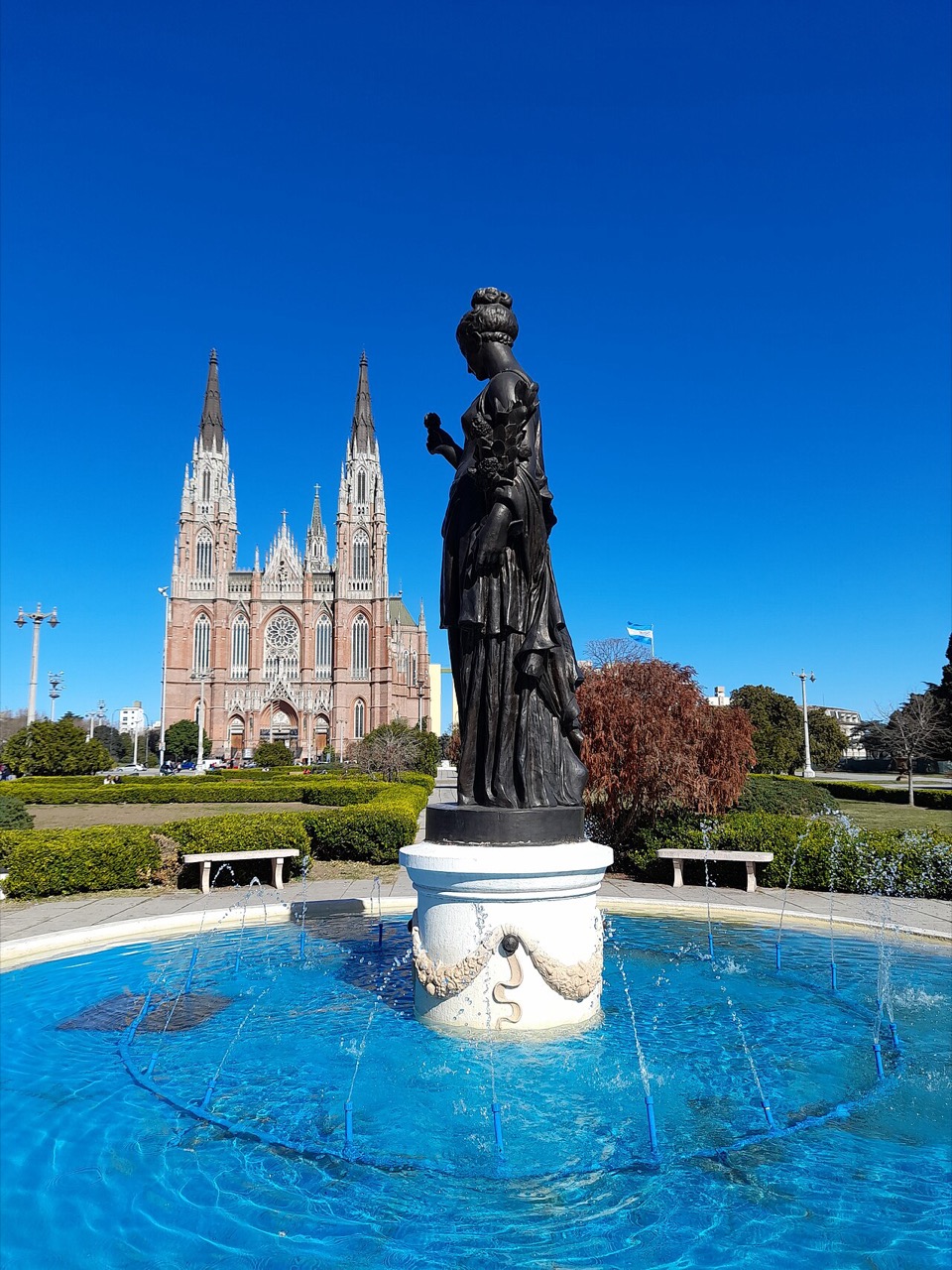
The Square Where It All Began
Start at Plaza Moreno, because this is where the city literally begins. The Catedral de La Plata stands on one side and the Palacio Municipal on the other: church and city hall face each other, with almost 8 hectares of lawn and paths in between. That fits the way the city was laid out: religious and secular power in a single line of sight.
On the square itself, the details are worth a closer look. In 1912 four fountains were added, one per quadrant, representing the Four Seasons. They are made of cast iron and were created by the French artist Mathurin Moreau. The statue of Mariano Moreno, after whom the square is named, was less fortunate. The first one was sent off to Pergamino in 1910 and still stands there today. It was not until 1999 that a new Moreno returned, made by the sculptor Ricardo Dalla Lasta.
The city hall is not a backdrop but a working building. People who go inside usually carry an errand rather than a camera. From the front, you look across the square straight to the cathedral.
Government, Opera and an 85-Metre Hall
A few blocks further on, it becomes clear why La Plata is the capital of Buenos Aires Province. The Teatro Argentino has more than 135 years of history, 80 of them under provincial ownership. Singers, musicians, dancers and technicians build every production there themselves, and inside lies one of the most important opera houses in Latin America. The greatest names of every era have stood on this stage.
Somewhat less visited is the Legislatura. Few tourists stop here, yet this is where representatives from across the province, from the Atlantic coast to the wide pampas, gather to debate and vote.
One of the most striking interiors is that of Pasaje Dardo Rocha. The great hall is 85 metres long, runs from the ground floor to the second floor and ends beneath a glass roof. Exhibitions and fairs take place here, film and advertising crews have used the hall as a set more than once, and behind its walls various municipal departments are at work. The main entrance opens onto Plaza San Martín, a square where you can happily linger for a moment. Turn around once: on one side the former railway station, on another the Casa de Gobierno, the seat of the provincial government, which fills an entire city block.
Le Corbusier and the Paseo del Bosque
After all that government, the route heads towards the Paseo del Bosque park, where a surprise awaits. The Curutchet House is a design by Le Corbusier, one of his very few works in Latin America and a UNESCO World Heritage Site since 2016. In 1948 the surgeon Pedro Domingo Curutchet commissioned a house with a clinic on a plot of only 180 square metres. The clinic sits on the first floor, above the open ground floor, a ramp leads to the home at the back, and a tree grows right through the house.
The park itself is a welcome change after the pavement. By the water there is a corner where you can sit for a while and let go of the street grid, before reaching the final stop: the Museo de La Plata. The building has an oval floor plan, intended to represent the spiral of evolution. The style is neoclassical with Americanist ornamentation, it has been a National Historic Monument since 1997, and some 400,000 visitors walk through its doors each year.
This Is Just a Taste
What you read here is a selection. The complete walk through La Plata includes more stops, quiz questions along the way and details you only notice when you are standing there with a task to complete. If you want to discover the city that way, choose the La Plata walk in the CityWalkGems app and follow the route yourself, from square to park.
- 11 stops
- Catedral de La Plata start
- ~4,3 km route length
- ~729 m longest stretch
- about 1,5–2 h duration
- Free

