
La Serena lies on the Chilean coast, a few hours' drive north of Santiago, and you quickly realize this city has more to offer than a beach resort. The compact center is full of churches, museums and squares that each tell their own story, and on a walking tour of La Serena you pass through colonialism, fire, piracy and a surprising piece of Japan in just a few hours. Everything is close together, so you don't need to cover miles to see a lot.
A Seat of Government and a Japanese Garden
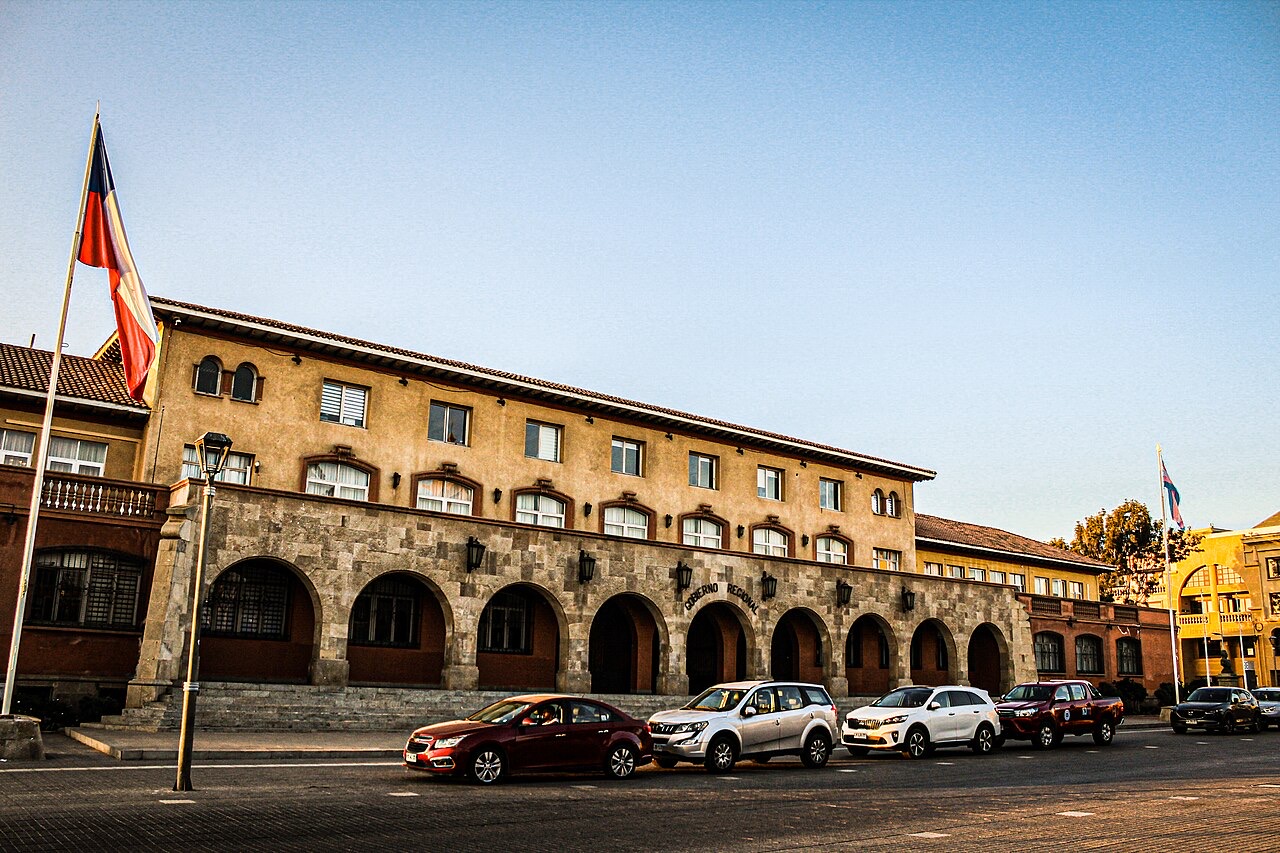
The walk begins at the Edificio de la Intendencia, the seat of the regional government of Coquimbo. Architect Edwin Weil built it in 1952 as part of the Plan Serena. Its predecessor stood on the west side of the main square. That older building was demolished after the earthquake of 1975.
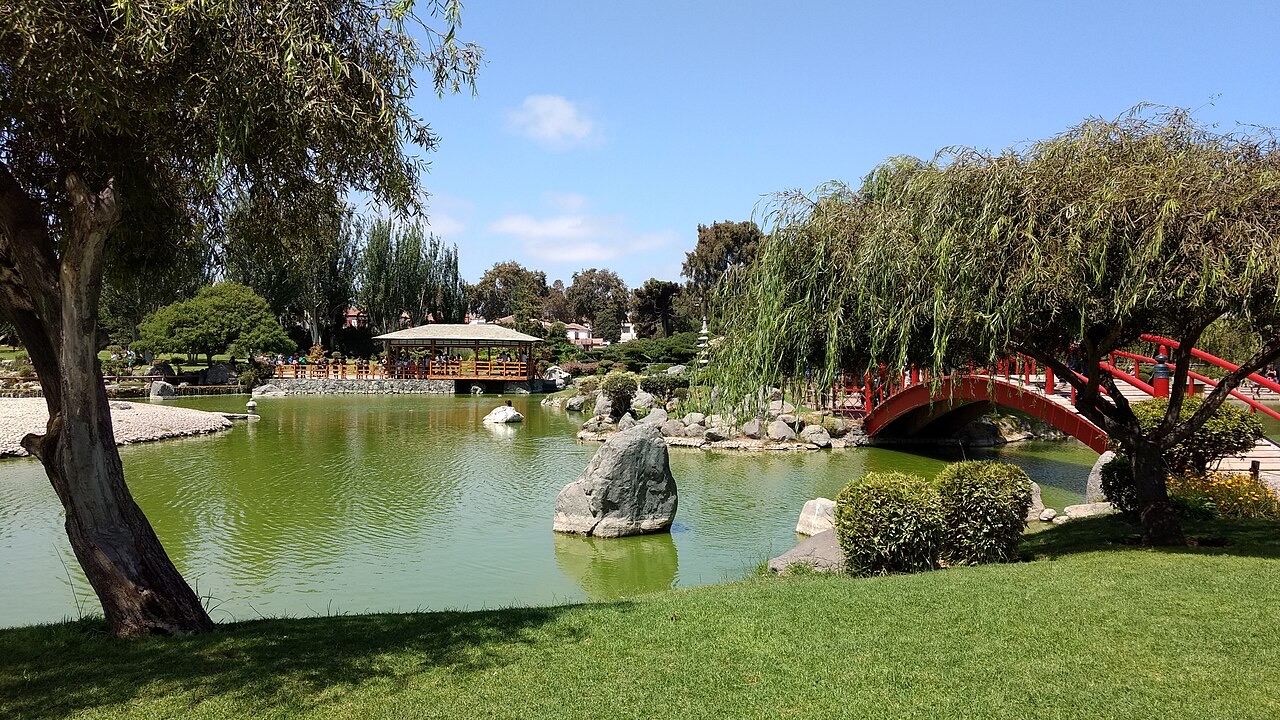
Just as striking is Parque Jardín del Corazón, also known as Kokoro no Niwa, the Garden of the Heart. At 26,000 square meters, it is the largest Japanese park in South America. It is a karesansui: a contemplative garden with a landscape of mountain and water. The garden was funded by Chilean and Japanese mining companies, chiefly Compañía Minera del Pacífico and Nippon Steel, as a tribute to the sister-city bond with Tenri. It is an unexpected contrast with the colonial city a few streets away, and precisely for that reason well worth the visit.
Play La Serena right in your browser →
A City of Churches
As you walk through the center, you soon see how strongly the churches shape the cityscape. The Iglesia Santo Domingo, at Calle Gregorio Cordovez 235, has limestone walls from the 17th and 18th centuries surrounding a single nave. It is one of the five colonial stone churches of La Serena, built in a sober classical-Mannerist style, and has been a National Historic Monument since May 16, 2001.
A few streets further on stands the Iglesia San Francisco, described by experts as a textbook example of Spanish-American architecture and one of the oldest religious buildings of its era. Walk slowly along its walls; few things in a city stay standing for so long.
The Iglesia de la Merced and the Iglesia San Agustín also belong to this group. The first bears the full title Nuestra Señora de las Mercedes, Our Lady of Mercy. The second is named after Augustine of Hippo, the North African bishop who wrote the Confessions. With Dominic, Francis and Augustine so close to one another, the center almost reads like a roll call of saints. And then there is the cathedral, the mother church of the diocese: La Serena has its own archdiocese.
Squares, Museums and What the Fire Left Behind
The heart of the city is the Plaza de Armas, where the town meets and where it is easy to linger for a while. On its edge stands the Museo Gabriel González Videla, a tribute to the former president of Chile who came from La Serena. Don't expect too much from a provincial museum like this, and then be surprised: the permanent exhibition includes work by Picasso and Miró.
The town hall on Calle Prat has a story of its own. In 1936 a fire destroyed the old council house on this site and the neighboring archbishop's palace. In 1938 the city received a neocolonial building by architect Enrique Benavente, a style that would later inspire the entire Plan Serena. Look on the facade for the old city coat of arms that once adorned the city gate, which was fortified against pirates in 1730.
Even more surprising is the Museo Arqueológico, founded on April 3, 1943 as a municipal museum. It tells the prehistory of the Coquimbo region, from the Paleo-Indian period to the influence of the Incas. In the room on the history of the museum itself stands a monumental Rapa Nui statue, a moai, indoors.
At the end of the route stands Casa Carmona, a neoclassical house from the second half of the 19th century, named after its last owner, Aurora Carmona de Woodward. It stood at the south gate of the old city. The gate is gone, but the house still marks that threshold, together with the chapel of the San Juan de Dios hospital.
This Is Only a Taste
This article covers only part of what you will come across along the way. The full walk through La Serena includes more stops, a series of quiz questions and details you only notice when you walk through with attention. If you want to discover them yourself, choose the La Serena walk in the CityWalkGems app and let the city tell its own story.
- 12 stops
- Edificio de la Intendencia start
- ~3,7 km route length
- ~659 m longest stretch
- about 1,5–2 h duration
- Free

