
Also known as: Lucques
Step into Lucca, a city that whispers ancient stories and where every cobblestone breathes a piece of history. Unlike many other Tuscan cities, Lucca has kept its imposing Renaissance city walls completely intact, giving it a unique, enclosed atmosphere. It's a place where the past seamlessly blends into the present, and where you immediately feel at home amidst the architectural splendor and lively squares. Prepare for a journey through time, past iconic towers, Roman foundations, and the birthplace of musical geniuses.
Echoes of Rome and Medieval Splendor
Our journey of discovery begins in a place that immediately transports you back to Roman times: the Piazza dell'Anfiteatro. This unique oval square is built on the foundations of a Roman amphitheater from the 1st or 2nd century. The houses surrounding it perfectly follow the curve of the old arena, creating an enclosed space where gladiators once fought and thousands of spectators cheered. It's a tangible reminder of Lucca's deep roots.
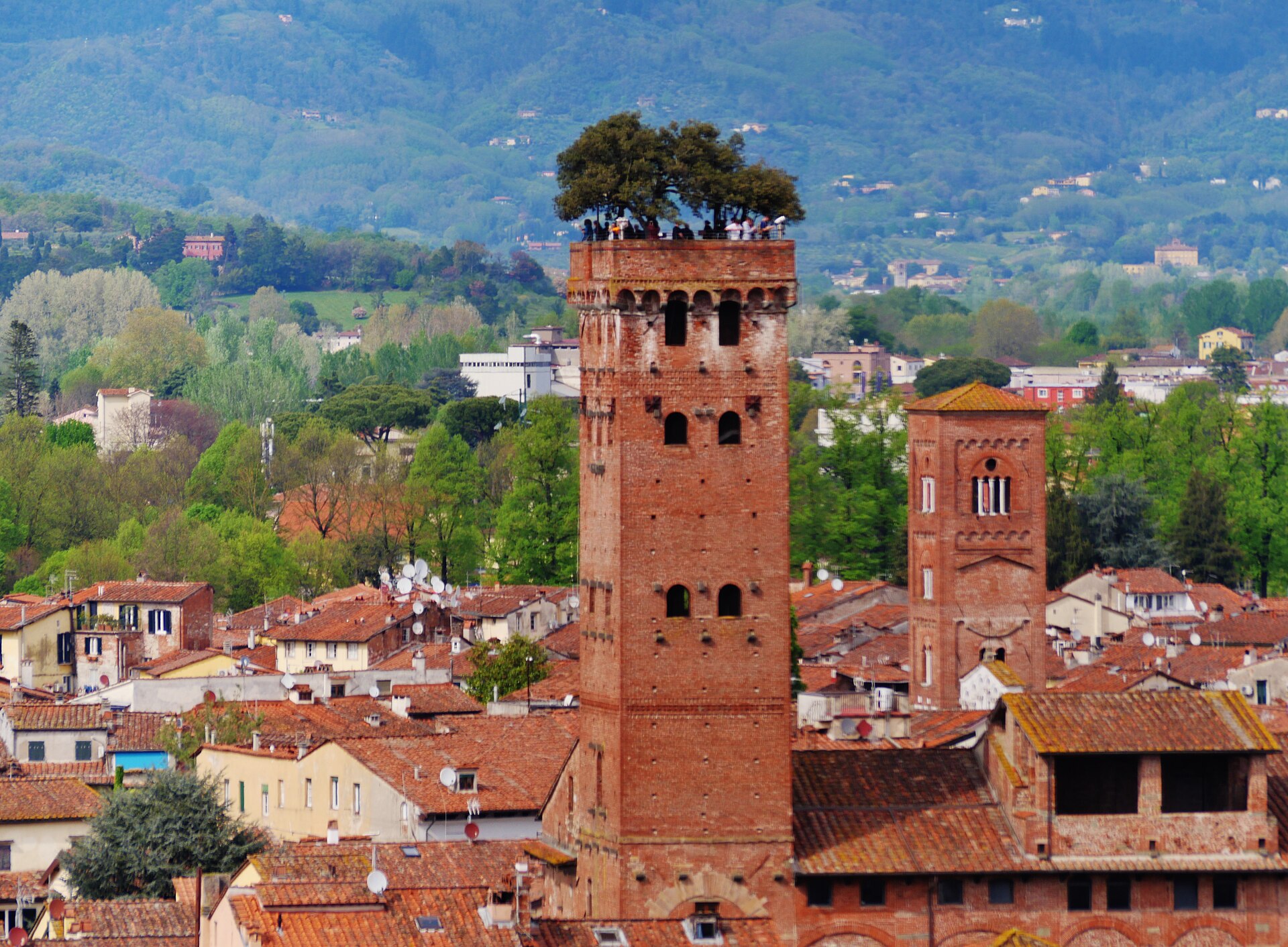
Not far from here, two of Lucca's most recognizable symbols rise. The Guinigi Tower, famous for its hanging garden with trees on top, was a status symbol for the powerful Guinigi family in the 14th century. It's a striking sight that has adorned the skyline for centuries. Nearby stands the Torre delle Ore, Lucca's oldest public clock, which has been striking the hours since 1390. Inside, a fascinating manual mechanism still works, a testament to early mechanical ingenuity.
Another architectural highlight is the Chiesa di San Michele in Foro, located on the site of the ancient Roman forum. Its facade is a masterpiece of Pisan-Romanesque architecture, richly adorned with arches and sculptures reaching up to the Archangel Michael at the top. Every detail of this facade tells a story and invites careful observation.
Art, Nobility, and Musical Heritage
Lucca is rich not only in architecture but also in art and culture. Step inside the Puccini Museum, the birthplace of Giacomo Puccini, the legendary composer of operas like 'La Bohème' and 'Madama Butterfly'. Here he breathed his first notes and began his musical journey. It's a pilgrimage for every opera fan, where you can still feel the master's presence.
For a glimpse into the opulence of the Lucchese nobility, visit the Museo Nazionale di Palazzo Mansi. This 17th-century palace is a beautiful example of grandeur, with lavish frescoes, silk tapestries, and an impressive art collection. The bride's bedroom, with its original furniture, offers an authentic insight into the life of the aristocracy of yesteryear.
The Duomo di San Martino, Lucca's cathedral, is a treasure trove of art and history. Its unique asymmetrical facade houses the legendary Volto Santo, a wooden crucifix said to have been carved by Nicodemus. The facade alone is a book full of stories, and the labyrinth on the facade is a mystery in itself.
The Green Embrace of the City Walls
What truly makes Lucca unique are the Mura di Lucca. These completely intact Renaissance city walls are unique in Europe. They were never used for warfare and are now a green promenade where you can walk and cycle, enjoying views over the city and the surrounding hills. It's like walking on a giant green ribbon around the city, a perfect way to experience Lucca.
Along the walls, you'll find bastions like the Baluardo San Paolino, which once offered protection against invaders and is now a peaceful spot. The city walls are punctuated by majestic gates. Porta San Pietro is one of the three original gates of the 16th-century city walls, an impressive entrance that symbolized the city's strength. Later, in the 19th century, Porta Elisa was built, named after Elisa Baciocchi, Napoleon's sister. This gate showcases the grandeur of the new regime with its stately and elegant architecture.
The influence of Elisa Baciocchi is also visible in the expansive Piazza Napoleone, also known as Piazza Grande. This square was laid out in the early 19th century at the behest of Napoleon's sister, who had entire blocks of houses demolished to make way for this imposing square and the Ducale Palace. The square exudes the grandeur of an imperial past and offers a wide perspective on the city.
This article offers just a taste of the treasures Lucca has to offer. The full walk through this city, filled with more stops, riddles, and hidden details, awaits you in the CityWalkGems app. Discover Lucca at your own pace and let yourself be surprised by every corner of this timeless city, where history and beauty go hand in hand.
- 12 stops
- Start anywhere
- ~3,7 km route length
- ~740 m longest stretch
- about 1,5–2 h duration
- Free

