
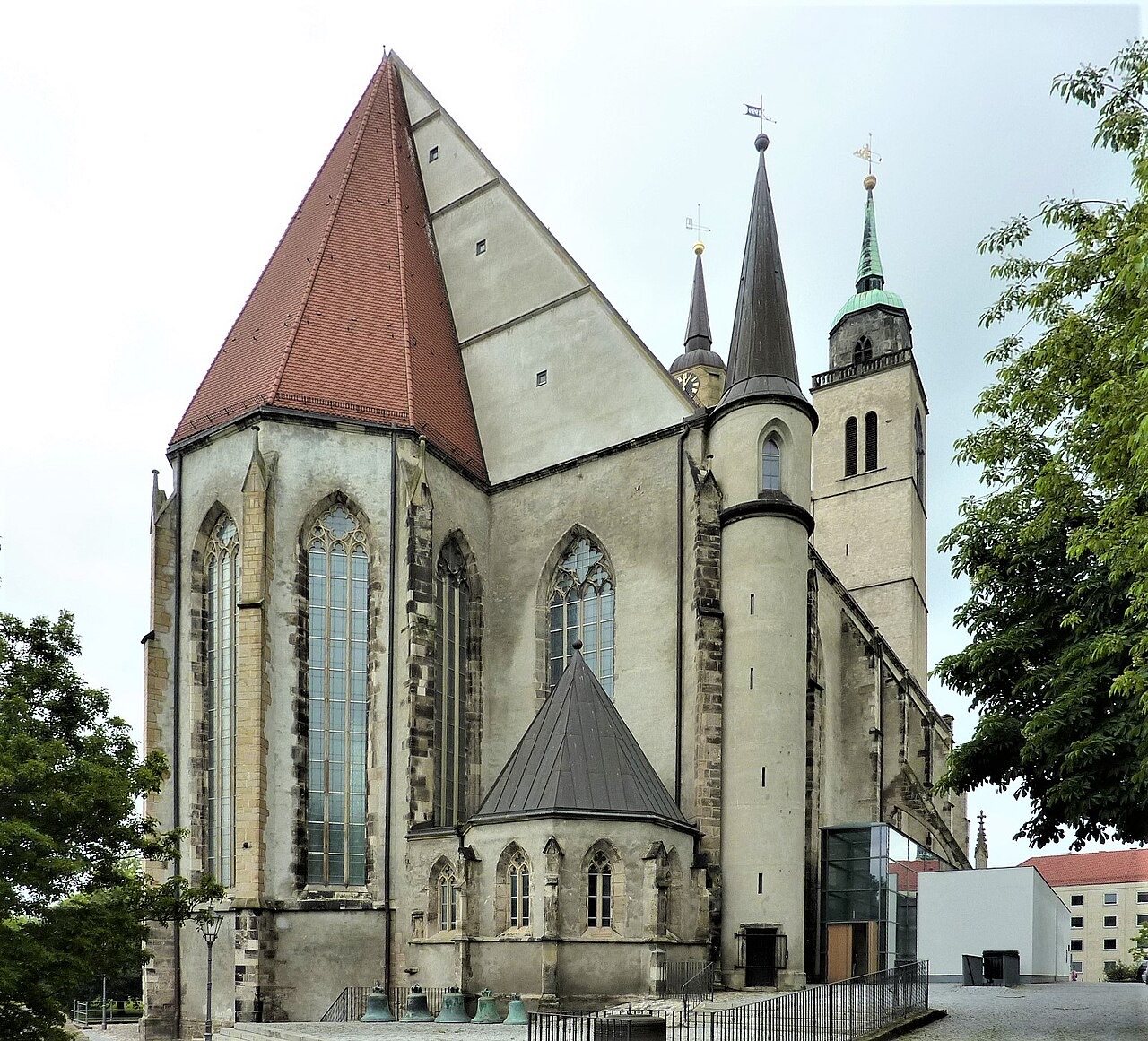
Magdeburg rarely tops a German bucket list, and that is exactly what makes it interesting. This is a city where you piece the story together yourself: a church where Luther preached, the earliest Gothic cathedral finished in Germany, a parliament, a Hundertwasser house and the remains of a fortress that once surrounded it all. If you wonder what to do in Magdeburg, start by walking. Within about 3.6 kilometres you cross a thousand years of history.
From Luther's Pulpit to Eulenspiegel's Fountain
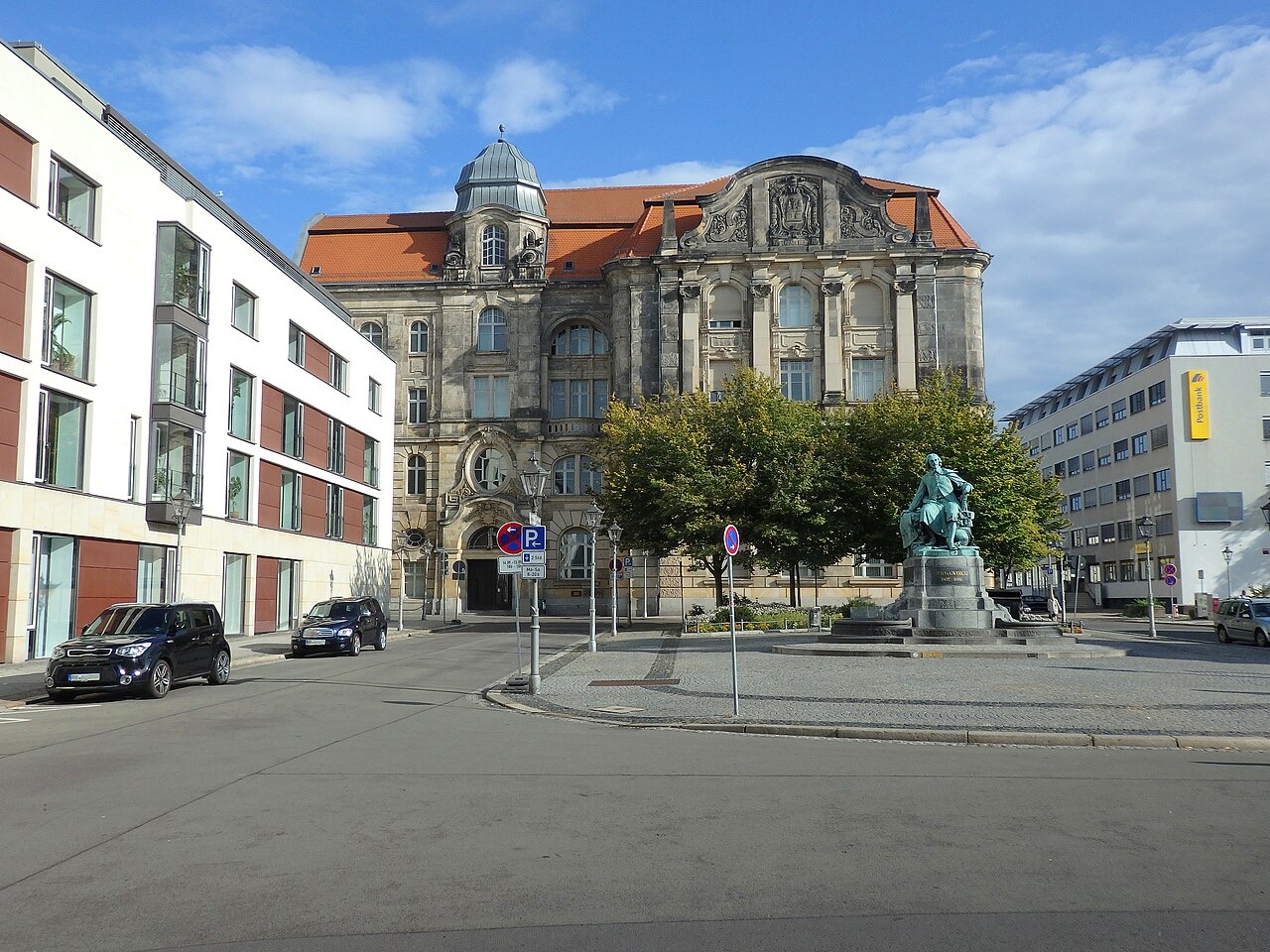
You start at the St.-Johannis-Kirche, a former church that serves as a ceremonial and concert hall today. In 1524 Martin Luther preached here to a large crowd. A few steps on, the Otto-von-Guericke-Denkmal honours the scientist and mayor Otto von Guericke, famous for his experiments with air pressure. The neo-baroque monument by Carl Echtermeier was erected in 1907.
At the Alter Markt stands the Magdeburger Reiter, a copy of a group carved around 1240. The original is kept in the Kulturhistorisches Museum. Right beside it, the Eulenspiegelbrunnen from 1970 recalls the jester Till Eulenspiegel, who is said to have fooled the people of Magdeburg.
Then comes the Kloster Unser Lieben Frauen, one of the most important Romanesque complexes in Germany. Premonstratensians lived here from 1129. Today the municipal art museum uses the buildings, and the church was secularised in 1977.
A short walk away rises the Grüne Zitadelle, designed by Friedensreich Hundertwasser and finished in 2005. Until 1959 the Nikolaikirche stood on this spot. Just beyond sits the Landtag of Saxony-Anhalt, whose facade joins four former houses from the 1720s.
Play Magdeburg right in your browser →
Cathedral, Gates and Fortress
The second half of the route is quieter and asks more of your attention. Magdeburg was a fortress city, and you can still read that history if you know where to look.
The Magdeburger Dom is the landmark of the city. Work began in 1209 and the west towers were finished in 1520. Allied bombs damaged it badly in 1944, and it reopened in 1955.
Very little remains of the gates. Of the Altes Sudenburger Tor only small remains of the foundation survive. It counted as Magdeburg's earliest Renaissance building and survived the destruction of 1631. Close to the cathedral stands the Alte Möllenvogtei, built in 1600 on a late medieval core. Today it is the Haus der Romanik. At the Bastion Cleve you reach the south-eastern end of the former fortress. Its core is a medieval tower.
A Lift Bridge over the Elbe
The walk ends at the Hubbrücke, a bridge over the Elbe that counts among the oldest and largest lift bridges in Germany. It is 220 metres long and a protected monument. Pedestrians may cross it today.
It is a good place to finish, with the river in front of you and the Domfelsen behind you.
There Is More Than This
This article is just a taste of what the route has to offer. The full walk through Magdeburg has twelve stops, includes questions you answer on the spot and reveals details that are easy to miss on an ordinary stroll. If you want to discover the city that way, choose the Magdeburg walk in the CityWalkGems app and walk from the Johanniskirche to the lift bridge yourself.
- 12 stops
- St.-Johannis-Kirche start
- ~3,6 km route length
- ~600 m longest stretch
- about 1,5–2 h duration
- Free

