

Also known as: Mantova, Mantoue, Mântua
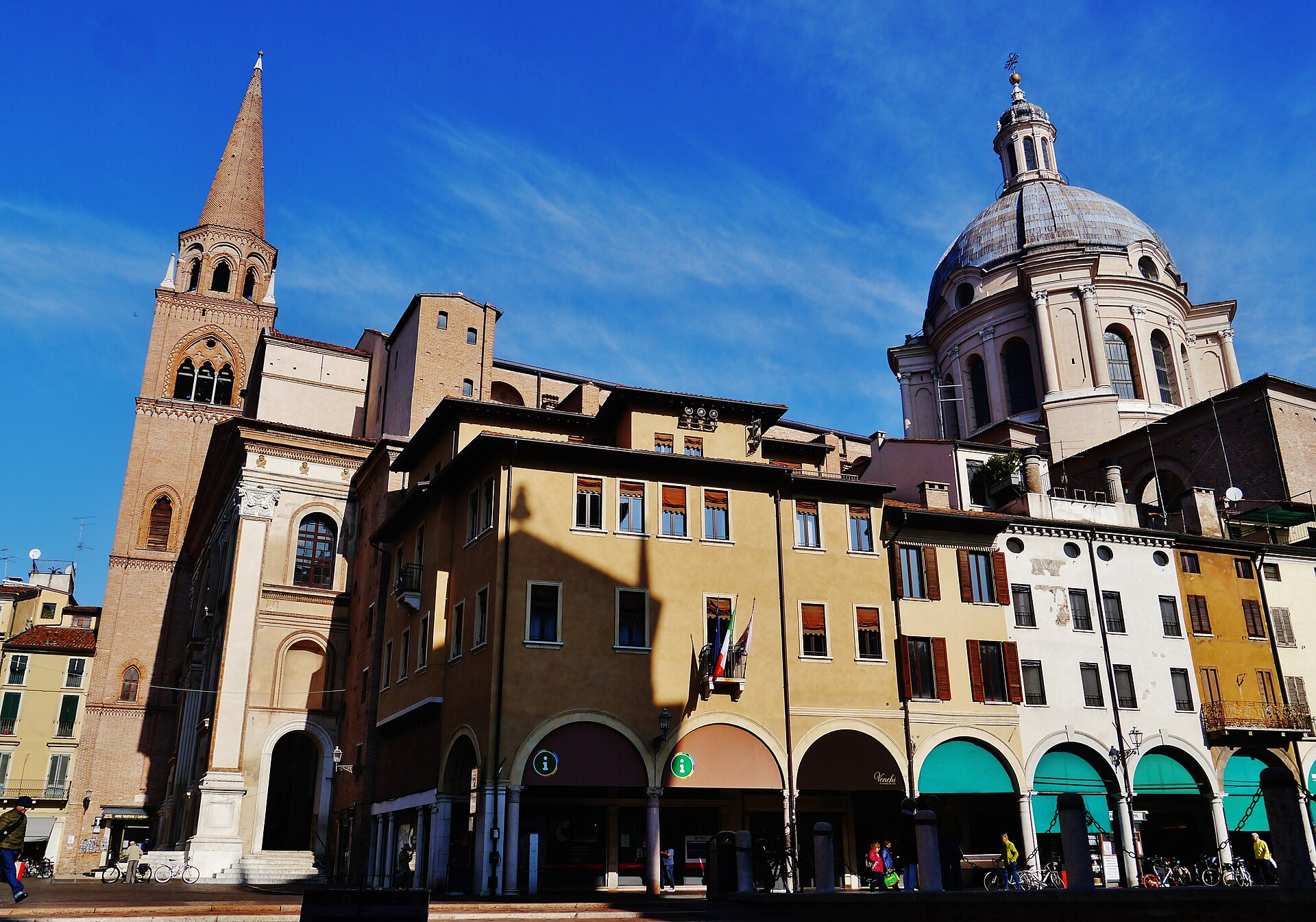
Mantua, a city surrounded by lakes in the heart of Lombardy, is a destination that whispers of ancient history and artistic splendor. Less known than some of its Italian sisters, Mantua offers an authentic and profound experience for travelers looking to venture beyond the beaten path. Here unfolds a story of powerful dynasties, visionary architects, and immortal art, woven into the streets and squares that give the city its unique character. A walk through Mantua is a journey through time, with every corner revealing a new chapter of a rich past.
The Beating Heart of Mantua's History
Our journey of discovery begins in the lively Piazza delle Erbe, which has been Mantua's bustling marketplace for centuries. Under the watchful eye of the impressive Clock Tower, a marvel of Renaissance engineering, stories and goods were exchanged here. Nearby is the Rotonda di San Lorenzo. This oldest church in Mantua, a fascinating circular structure, was buried and built over for centuries, only to be recently rediscovered and restored. Its ancient masonry bears witness to a distant past.
The city's medieval heart is dominated by the Palazzo del Podestà. This grand building once housed Mantua's chief magistrate, who oversaw justice and civic life. Above the facade, the statue of Virgil, Mantua's most famous poet, watches over the square. A little further on, the imposing Torre della Gabbia, the 'Tower of the Cage', rises. Its name refers to the iron cage that once hung from its side, a reminder of medieval justice. This tower, part of the Ducal Palace complex, has witnessed countless historical events.
The route then leads us to Piazza Sordello, the grand stage of the Gonzaga dynasty. This immense square is flanked by the Ducal Palace and the Duomo, showcasing centuries of power, art, and faith. Here, parades and tournaments once took place, with the footsteps of dukes and courtiers echoing through the space.
The Grandeur of the Gonzaga Dynasty
The absolute highlight of Mantua's grandeur is the Palazzo Ducale, an extensive complex comprising over 500 rooms, courtyards, and gardens. It is a true 'city within a city', built by the powerful Gonzaga family. This palace houses some of Italy's most remarkable artworks, including Mantegna's famous Camera degli Sposi. Within the embrace of the Ducal Palace is also the National Archaeological Museum, a fascinating window into Mantua's deep history. Here, artifacts from the Etruscan, Roman, and Lombard periods, excavated from beneath the ground where we now stand, are on display.
The mighty Castello di San Giorgio, with its robust towers and walls, forms the ancient heart of Mantua's power. Once a crucial defensive stronghold, it was later transformed into a ducal residence. It is in this castle that Andrea Mantegna painted his iconic Camera degli Sposi, a masterpiece of the Renaissance.
Mantua's Cultural and Spiritual Heritage
Beyond the palaces and squares, Mantua also offers serene places and profound cultural experiences. Piazza Virgiliana is a peaceful green oasis with a majestic statue of Virgil, a tribute to Mantua's immortal poet. It is a place to reflect on the lasting legacy of a man whose words shaped an empire.
Step into the opulent world of the Museo di Palazzo d'Arco, a house museum that transports you back to the 18th century. This aristocratic residence is perfectly preserved, from its elegant furniture to its art collections. The incredible Zodiac Room, with frescoes depicting a celestial map including a rare comet, is a particular highlight.
A treasure trove of faith and art can be found in the Museo Diocesano "Francesco Gonzaga". Housed in a former monastery, this museum displays an extraordinary collection of sacred art, including precious vestments, reliquaries, and paintings. Pieces like Mantegna's 'Madonna della Vittoria' stand out, offering a profound journey through Mantua's spiritual heritage.
Finally, there is the Basilica di Sant'Andrea, a towering achievement of Renaissance architecture, designed by the brilliant Leon Battista Alberti. This church houses the revered relic of the Holy Blood, making it an important pilgrimage site and an architectural wonder.
Conclusion
This description is merely a glimpse of the richness Mantua has to offer. The Mantua city walk reveals many more hidden details, fascinating stories, and unexpected sights that further deepen the understanding of this historic city. For a complete and interactive experience, full of extra stops and intriguing riddles, we invite you to choose the Mantua walk in the CityWalkGems app.
- 12 stops
- Start anywhere
- ~3,1 km route length
- ~571 m longest stretch
- about 1,5–2 h duration
- Free

