

Also known as: Πέτρα, Pétra
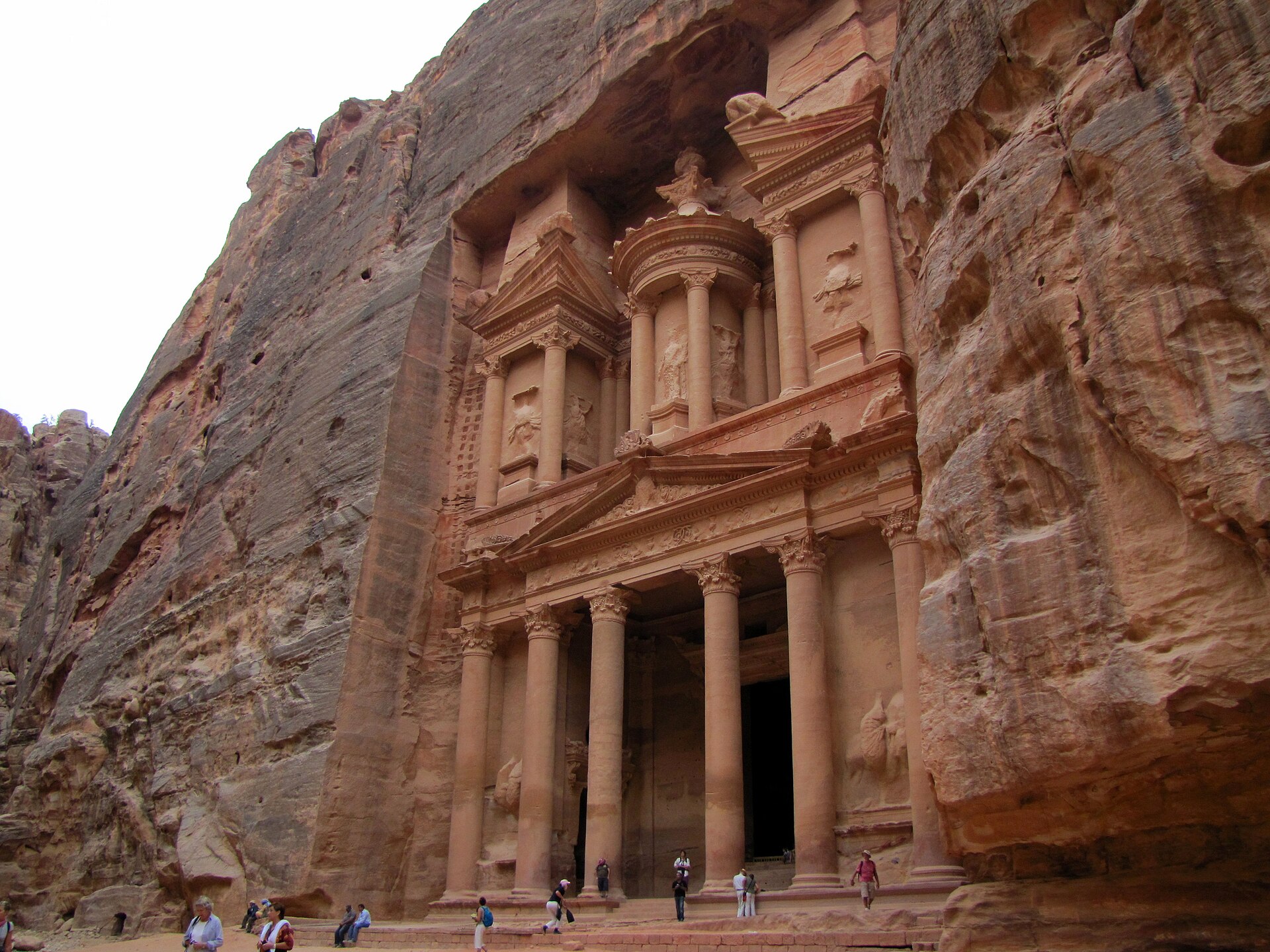
Imagine a city hidden for centuries, its secrets guarded by desert winds and towering sandstone cliffs. A place where human ingenuity and nature's artistry merge into an unforgettable spectacle. Welcome to Petra, Jordan's legendary 'Rose City,' a destination every traveler must experience. A city walk in Petra is more than a journey past ancient ruins; it's a trip through time, taking you to the heart of a lost civilization.
The First Impression: Masterpieces Carved from Rock
The experience often begins with a breathtaking moment: the appearance of The Treasury (Al-Khazneh). After a journey through the narrow Siq, this facade suddenly explodes into view, carved directly into the sandstone cliff. It is an absolute masterpiece. Look up at the gigantic urn at the top; it is riddled with bullet holes, left by Bedouins who believed it contained pharaohs' gold. It is a powerful introduction to the unprecedented scale and detail of Petra's architecture.
Further along the route, you come to the Nabatean Theatre. Carved directly into the living rock, this theatre testifies to Petra's enduring importance. It was originally built by the Nabataeans and later expanded by the Romans after Petra's annexation. The different building styles are still visible, a silent witness to the cultural fusion that took place here.
Play Petra right in your browser →
A City of Kings and Gods: Nabataean Splendor
Petra was not only a trading city but also a center of power and religion. The Royal Tombs, a breathtaking series of monumental facades carved into the Jabal al-Khubtha cliff face, speak volumes about the wealth of the Nabataeans. These grandiose structures, including the Palace Tomb and the Urn Tomb, were likely intended for royalty and high-ranking officials. The Palace Tomb, with its monumental facade resembling a Roman palace, shows an unfinished section at the top, offering a rare glimpse into the ancient carving process.
Among these royal monuments, you'll find the Corinthian Tomb, a beautiful example of Petra's architectural fusion. Its facade is dominated by Corinthian columns, but a closer look reveals a fascinating mix of Nabataean and Roman influences. Closer to nature's artworks, the Silk Tomb is a highlight. While the architecture is impressive, it is the incredible, swirling patterns of naturally colored sandstone – pink, orange, red, and yellow hues merging like a painter's palette – that give this tomb its name and make it utterly unique. Here, Petra truly earns its nickname 'Rose City'.
In the heart of the city, where the legendary 'Rose City' unfolds, you feel the sheer scale of the rock-cut architecture and the vibrant hues of the sandstone. Here once stood the Great Temple, a monumental complex that dominated the center of ancient Petra. Although its exact function is still debated, its enormous dimensions speak volumes about Nabataean power. Look for the sculpted elephant heads that once adorned the capitals, a unique detail. Nearby stands Qasr al-Bint, one of the few freestanding structures in Petra, and powerful evidence of Nabataean engineering. This grand temple was dedicated to Dushara, the principal male god of the Nabataeans. Unlike many other rock-cut structures, Qasr al-Bint was built stone by stone and has remarkably withstood earthquakes for centuries. The Winged Lion Temple was another important religious complex, dedicated to the Nabataean goddess Atargatis, where archaeologists have unearthed fragments of the winged lions that gave the temple its name. These sites offer a profound insight into Nabataean religious practices.
The Ingenuity of a Desert People and Breathtaking Views
The Nabataeans were not only masters of architecture but also of managing their environment. A short break at the Nymphaeum, a public fountain, reminds us of Petra's incredible secret: it was a desert city that mastered water. The Nabataeans were hydraulic geniuses, designing an extensive system of dams, cisterns, and ceramic pipes to bring precious water to the heart of their city. It is astounding to think that they built such an advanced system in this arid landscape.
For a truly unforgettable conclusion to your exploration, the Al-Khubtha Trail is highly recommended. This path leads you high above the Royal Tombs and offers a panoramic perspective of the entire city, including a breathtaking view of the Treasury from above. It is a journey that reveals the sheer scale of this ancient metropolis and offers a moment of deep connection with the grandeur of Petra.
This article offers only a glimpse of the wonders Petra has to offer. The full walk through this fascinating city reveals many more stops, hidden details, and riddles waiting to be discovered. To experience your own adventure through the Rose City and unravel all its secrets, choose the Petra walk in the CityWalkGems app.
- 12 stops
- Start anywhere
- ~4,0 km route length
- ~989 m longest stretch
- about 1,5–2 h duration
- Free

