
Most people know Mauritius for its beaches and resorts, and skip the capital. That's a missed opportunity. Port Louis is a compact harbour city where French, British, Indian and Creole history run into one another, often within a single street. If you're looking for the sights of Port Louis, you'll find them close together: a racecourse, two cathedrals, an early 19th-century theatre and a market where lunch is being prepared. The route passes through lively, central spots, and you don't need to set aside hours for it.
Power, Prayer and a Racecourse
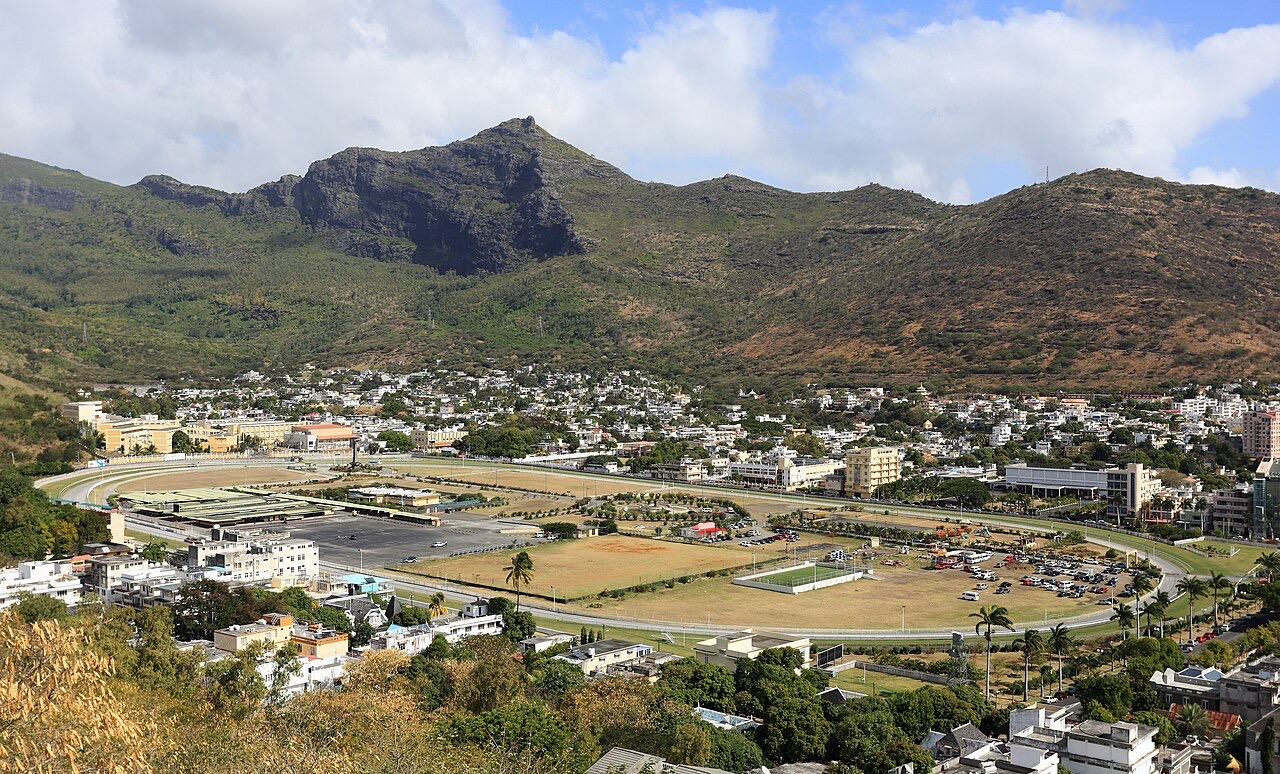
Start at the Champ de Mars and you'll immediately see how tight the oval is: 1,298 metres around and only 12 to 14 metres wide. The Mauritius Turf Club opened the racecourse on 25 June 1812 and is considered the oldest horse racing club in the Southern Hemisphere. On 12 March 1968 the flag of independent Mauritius was raised here, so the site is more than a sports ground.
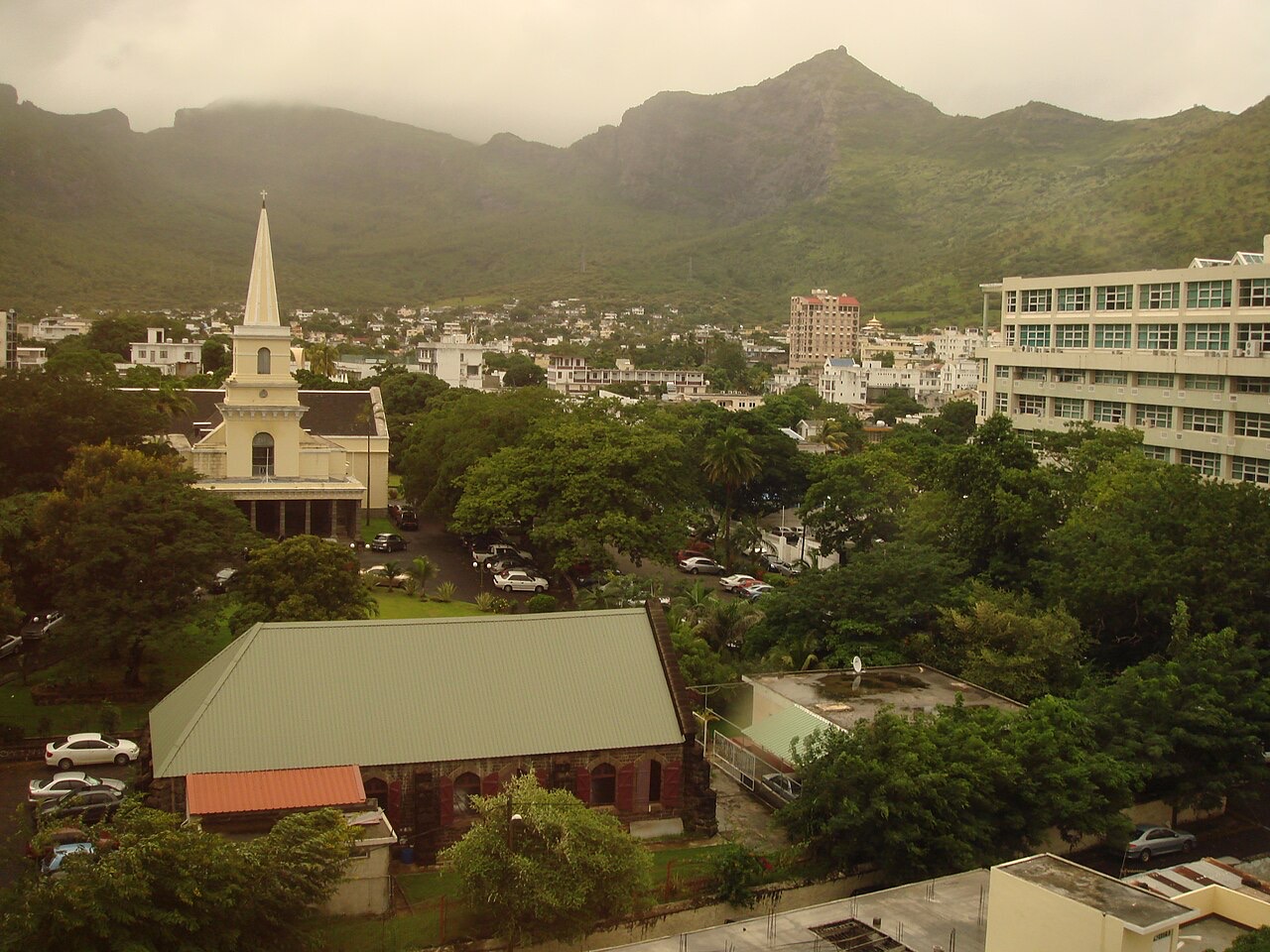
A little further on stands St James Cathedral, the Anglican cathedral. There's a reason for its massive walls: in the French period a gunpowder magazine stood here, and the street alongside is still called Poudrière Street. After the British capture of Mauritius in 1810, the building became a church for the new English community. Old photographs show that it remained standing after the cyclone of 1892, which destroyed a large part of the city.
The Port Louis Theatre, built in 1820-1822 and designed by the French architect Poujade, is often called the oldest theatre in the Southern Hemisphere. Until independence in 1968, only French-language plays were staged there, and colonial families held season subscriptions. Between 1945 and 1950, Roger Jénoc, who directed the music, put on several operas there. Today the building is on the national heritage list.
Government House is older still: construction began in 1738 under the French governor Mahé de La Bourdonnais. French and later British governors extended it, and after 1810 the British governed the colony from here. From the building, Place d'Armes slopes down to the harbour, where the statue of La Bourdonnais stands. He arrived in 1735 and in less than ten years gave the city a port, granaries, a dry dock, an arsenal and a hospital. That work was largely carried out by enslaved labourers.
Play Port Louis right in your browser →
What the Harbour Brought In
Port Louis was built by people who came from overseas, and you can see it throughout the city. The Jummah Mosque began in 1853 as a small mosque for about 200 worshippers, after Muslim merchants bought two plots in 1852 on behalf of the island's entire Muslim community. Between 1857 and 1877 merchants bought seven more plots, and in 1878 the expansion began. Today the mosque occupies the entire block between Royal Street and Queen Street, in a blend of Indian, Creole and Islamic architecture. Next to the mosque, in a marble tomb, lies Jamal Shah, a holy man from Kutch in India.
At the Central Market, known to locals simply as the 'Bazaar', mountains of tropical fruit, vegetables and spices are piled up beneath iron roofs. The spice sellers claim to have a remedy for almost every ailment. If you're hungry, look for dholl puri: a thin flatbread with split peas and curry, the island's best-known street food. Go in the morning, when it's busiest and everything is at its freshest.
A Place of Remembrance: Aapravasi Ghat
By the harbour lies Aapravasi Ghat, a place that calls for a different tone. After the abolition of slavery in 1835, plantation owners looked for new workers. Between 1849 and 1923, around half a million indentured labourers, most of them from India, passed through this immigration depot. They worked on the sugar plantations of Mauritius or travelled on to other colonies. Until the 1970s the site was called 'Coolie Ghat'; today it bears a Hindi name meaning immigration depot. In 2006 the remains became a UNESCO World Heritage Site. Roughly two in three Mauritians have Indian roots, and the site is remembered as the beginning of that history.
Stamps and Views on the Quayside
Mauritius is famous among collectors. The Mauritius Postal Museum is housed in the building that went up between 1865 and 1870 as the main post office, next to the customs house. In September 1847 the island issued two 'Post Office' stamps, an orange-red one penny and a deep blue two pence, engraved by Joseph Osmond Barnard. Only 500 of each were printed.
The prize pieces can be seen at the Blue Penny Museum at Le Caudan Waterfront, in the former dock office, which opened in 2001. Mauritian companies bought the two stamps back in 1993 for 2 million dollars, after almost 150 years abroad. The Indian Ocean's first weather observatory now houses a food court here. Finish with the view across the harbour to the mountains.
This Is Only a Taste
What you've just read is a selection. The full walk through Port Louis includes more stops, quiz questions along the way and details you only notice when you stop and look, such as the statues in the Jardin de la Compagnie. If you'd like to discover them yourself, choose the walk in the 'CityWalkGems' app and explore the city at your own pace.
- 12 stops
- Champ de Mars start
- ~4,0 km route length
- ~692 m longest stretch
- about 1,5–2 h duration
- Free

