
When people think of Argentina, they think of Buenos Aires, Patagonia or the Andes. Rosario, on the broad Paraná, often stays out of the picture. That's a shame, because this is where Manuel Belgrano first raised the Argentine flag in 1812, where a port city grew with newcomers from all over Europe, and where Che Guevara was born. If you're looking for things to do in Rosario, you'll find a compact centre where river, history and architecture all lie within walking distance of each other. A walk from the riverbank to the city's commercial heart shows this well.
The story begins at the water
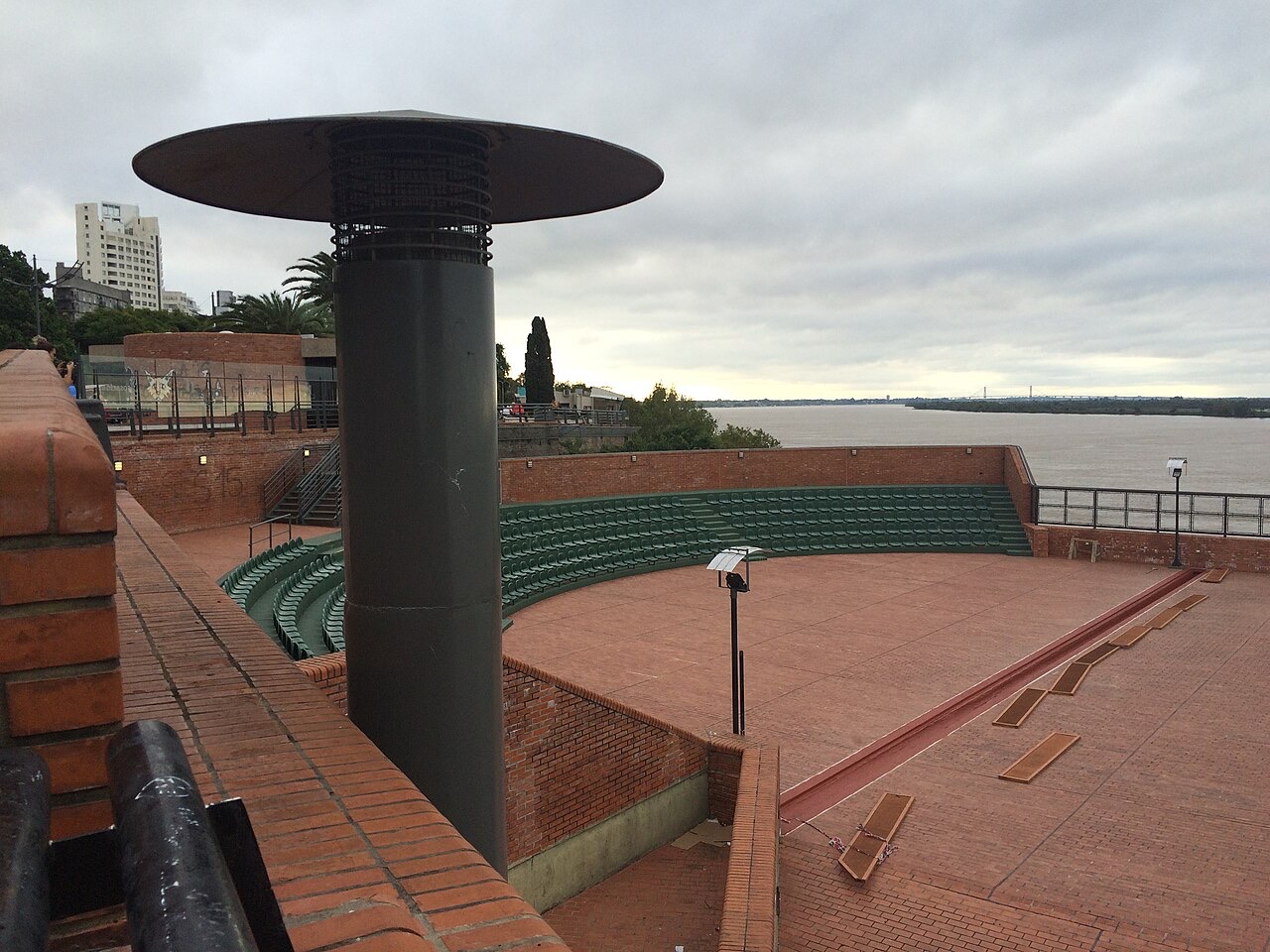
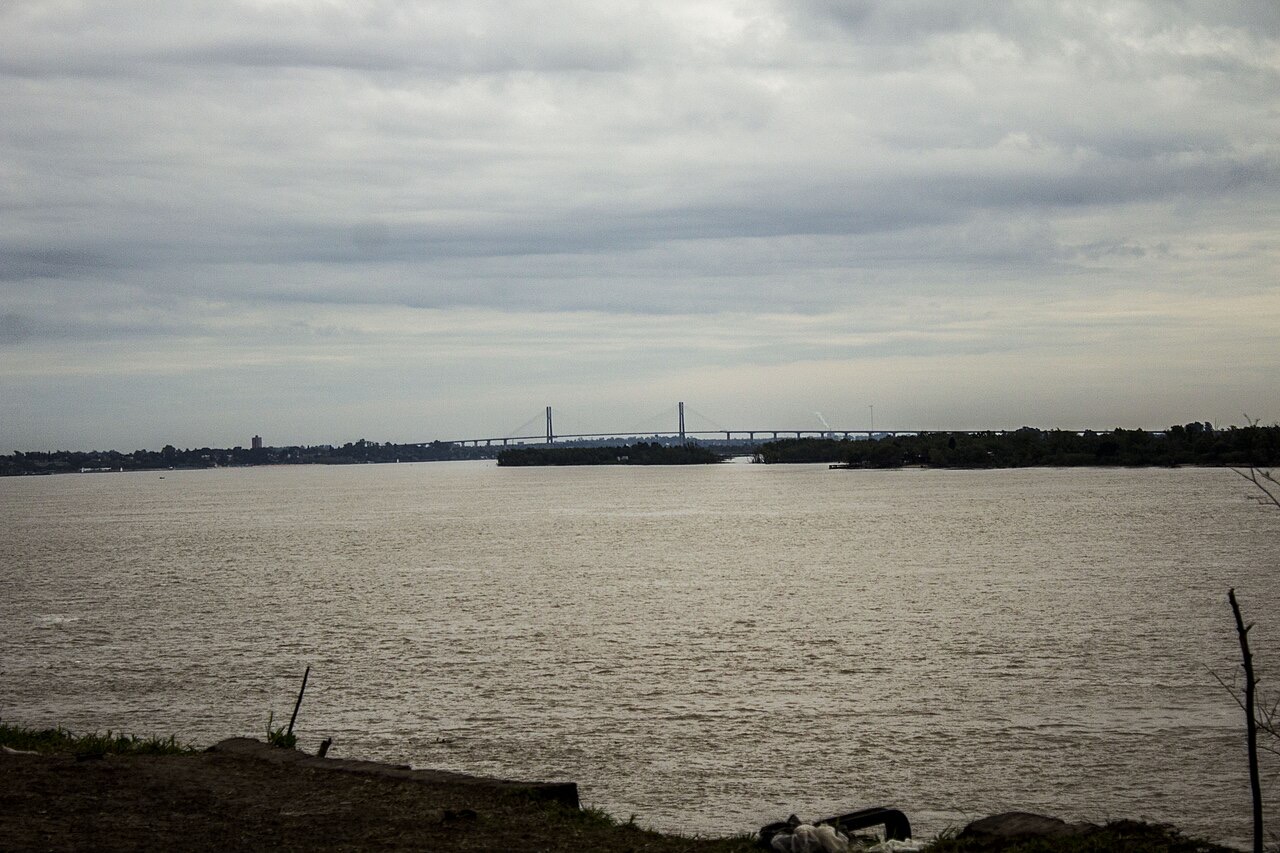
It begins at the Parque de España, a park and Spanish cultural centre that opened in 1992, with exhibition halls inside old railway tunnels dug into the riverbank. Next comes the Costanera, the bank of the Paraná. The river is so wide that the far side looks like a green stripe of islands. In February 1812 Manuel Belgrano set up two gun batteries here to guard the river, 'Libertad' on this bank and 'Independencia' across the water.
The link with the flag is even stronger a little further on. The National Flag Memorial is a seventy-metre tower, with Belgrano's crypt at its foot. It was inaugurated on 20 June 1957, the anniversary of his death. Most of the stone comes from the Andes. The Patio Cívico between the tower and the Propylaeum still fills up for big open-air shows.
Play Rosario right in your browser →
The square and the buildings around it
From the monument you walk to the old centre, which revolves around Plaza 25 de Mayo. This square is the core of the original settlement. Until 1852 it was simply called Plaza Principal. The current name refers to 25 May 1810, the May Revolution. Turn once around your axis and you see the cathedral, the city hall, the post office and, through the passage, the stone tower of the Flag Memorial.
The cathedral tells how small Rosario once was. A parish church has stood on this spot since 1731, and in 1773 the image of the Virgin of the Rosary arrived from Cádiz; the city takes its name from her. The present church dates from the late 19th century, its high altar of Carrara marble came from Italy in 1898, and it only became a cathedral in 1934.
Right next to it stands the Palacio de los Leones, the seat of the city government. The Italian architect Gaetano Rezzara designed it in neo-Renaissance style, and it opened in the late 1890s. Its nickname comes from the two lions at the entrance stairs, copies of those at the cathedral of San Lorenzo in Genoa.
Immigrants built the city
The further you walk through the streets of the centre, the clearer it becomes that Rosario grew with newcomers from Europe. Many communities built their own clubs to gather, celebrate and pass on their culture. The Spanish club at Rioja 1052 is an example and still serves as a cultural centre and event venue.
The buildings tell the same story. The Palacio Cabanellas, on the corner of San Luis and Sarmiento, is one of the few clear examples of Catalan Modernisme left in the city. The Majorcan architect Francisco Roca Simó, a follower of Antoni Gaudí who settled in Rosario in 1910, designed it, and it was built in 1916. Look up at the dome, crowned with wrought iron and copper.
The Palacio Fuentes is a second example. The Spanish immigrant Juan Fuentes Echeverría had it designed by architect Juan B. Durand, and it was built from 1923 to 1927. Look closely at the entrance: the door of electrolytic bronze was made in Greece. The copper-coloured bronze lanterns once lit both Calle Santa Fe and Calle Sarmiento.
Among all these façades there is also a more modest address. When Ernesto Guevara was born in Rosario in 1928, his parents lived in an ordinary apartment building on Entre Ríos street, which is why it is known as Che Guevara's birthplace. The family did not stay long, but the city still remembers him here.
A tip for the road: in Argentine city centres, a galería is not an art gallery but an arcade hidden inside the city block. Step into one, and the street noise fades away.
A taste of the route
This article covers only part of what the route has to offer. The full walk through Rosario contains more stops, a few quiz questions and details you only notice when you look for them. If you want to discover for yourself what is missing here, choose the walk in the CityWalkGems app and walk the stretch from river to stock exchange at your own pace.
- 12 stops
- Parque de España start
- ~4,0 km route length
- ~728 m longest stretch
- about 1,5–2 h duration
- Free

