
Say Tenerife and most people think of Mount Teide, black sand beaches and hotel resorts. Santa Cruz de Tenerife, the island's capital, rarely makes that list. A shame, because this is exactly where you can see how a Canarian city works: squares named after saints, princes and generals, churches that belong to their neighbourhoods, and government buildings that stand right in the middle of everyday life. A walking tour of Santa Cruz de Tenerife takes you through all of those layers in a few hours, and much of it you can read from the names on the map and the facades.
Squares Named After People and Ideals
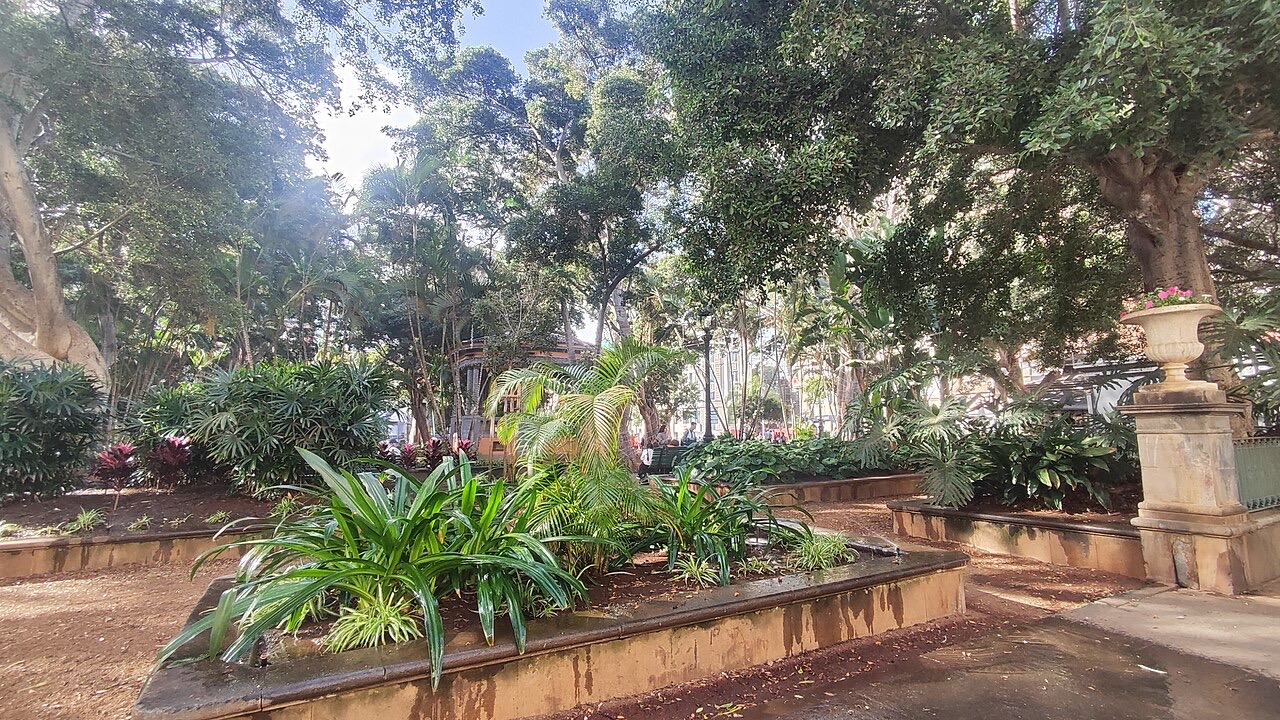
Start at Plaza del Príncipe. Locals simply call it el Príncipe, but its full name is Plaza del Príncipe de Asturias, after the title of the heir to the Spanish throne. It sits in the middle of the city, enclosed by streets on every side. The surroundings deserve a look: if you pay attention, you will notice that here the city explains itself in almost every street name.
The pattern continues. On Plaza Weyler everything revolves around Valeriano Weyler, who held the highest military post in the Canary Islands. The palace at the edge of the square was built under his command, and the city gave his name to the square right next to it. So in a single glance you see the man and his building.
Further on you reach Plaza de la Candelaria. The name goes back to an old church feast of light, and in the Canary Islands Candelaria has deep roots. Here an entire square received that name. Next comes Plaza de España, which carries the biggest name of all the squares: the whole country. You find squares like this in many Spanish cities, and this is the one in Santa Cruz. After saints, a prince and a general, it feels like a logical climax.
Play Santa Cruz de Tenerife for free →
Power and Government in One City Centre
Santa Cruz is also a seat of government, and you can see it in the buildings. The Ayuntamiento is a neoclassical building from 1902. It was meant to house the courts. By 1904 the city council had moved in instead. On 1 January 2025 about 212,800 people lived in the city. Since 1979 its councillors have been chosen in free elections again.
Not every building here was built for official power. In Calle San Lucas stands the Templo Masónico. It was built from 1899 to 1902 for the Masonic lodge Añaza. Until 1936 it was the largest Masonic centre in Spain. In that year it was seized. The city bought it in 2001. After a long restoration it reopened in October 2025.
Churches and a Museum with a Grand Name
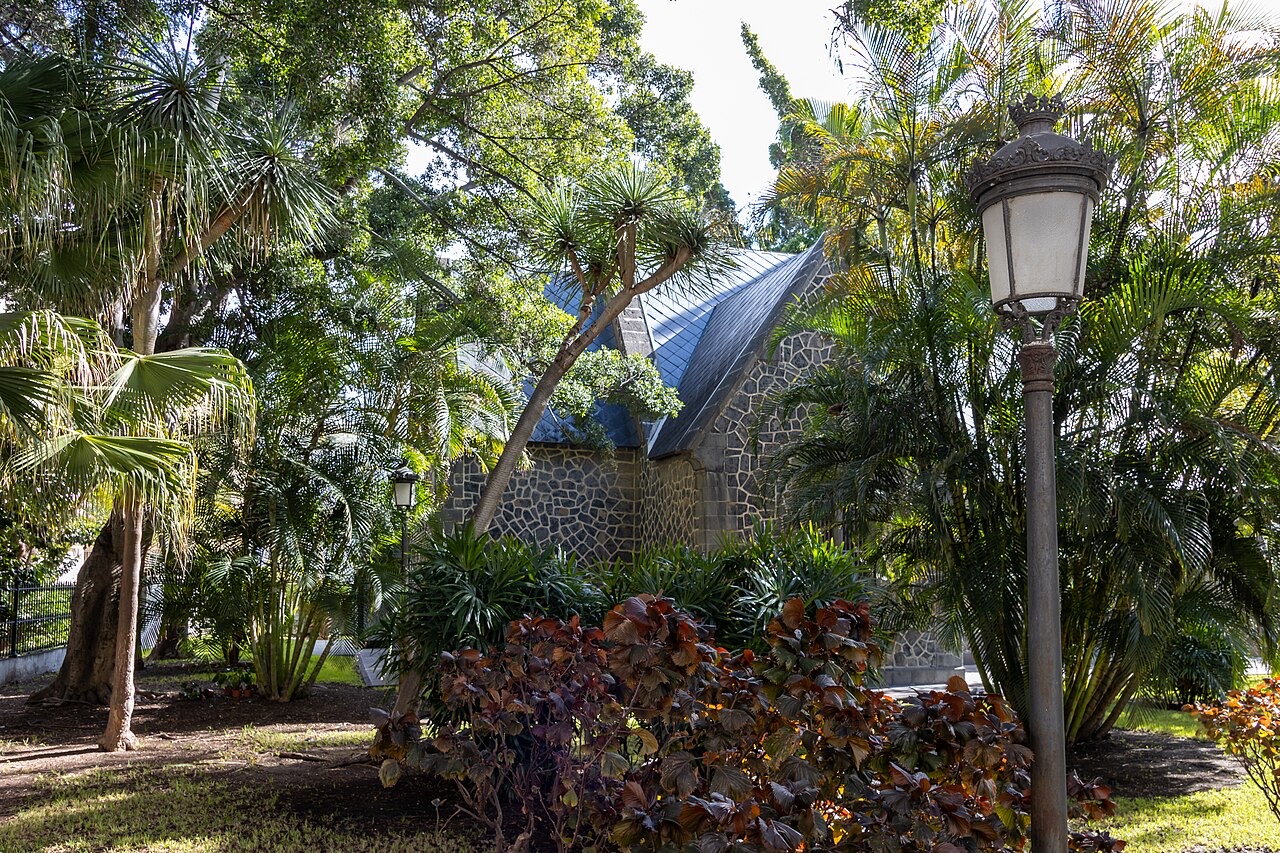
Between those squares stand churches that each tell their own story. The Iglesia de San Jorge was built for the Anglican community of the city. Its first stone was laid in 1897 and it has been a Catholic church since 1993. The Iglesia de San Sebastián is one of the oldest religious buildings in town. A hermitage stood there by around 1588 beside the old road to La Laguna. The Iglesia de la Concepción stands where the first hermitage of Santa Cruz was built. It is the only church in the Canary Islands with five naves.
The route ends at the Iglesia de San Francisco, where Francis keeps watch, the friar who gave everything away and is famous for his sermon to the birds. Linger there for a while and then have a coffee in the surrounding streets.
Along the way you will also find the Museo de la Naturaleza y el Hombre, the Museum of Nature and Man. Few museums pack so much ambition into one name: the living world and the people in it share the same building. And the Palacio de Carta reminds you that in Spanish "palacio" did not only mean royal residences, but also the town houses of rich and powerful families. Step far enough back to see it in its entirety.
More Than This Overview
This article picks out only a handful of places from the full route. Along the way you will find more stops, questions and details. You only notice them when you stand in front of the buildings yourself. Want to get to know Santa Cruz better than a quick stroll allows? Then choose the walk in the CityWalkGems app and go exploring.
- 12 stops
- Start anywhere
- ~4,7 km route length
- ~721 m longest stretch
- about 1,5–2,5 h duration
- Free

