
Santiago lies between the Andes and the Cordillera de la Costa, but if you really want to get to know the city, you don't even need to head into the mountains. The center is full of layers: colonial batteries, nineteenth-century mansions, a cultural center with a turbulent political past, and fountains cast in French foundries. A walking tour of Santiago de Chile shows how those layers sit on top of one another, and all you need is a good pair of shoes and a bit of curiosity.
A Hill, a Fountain and a Cannon Battery
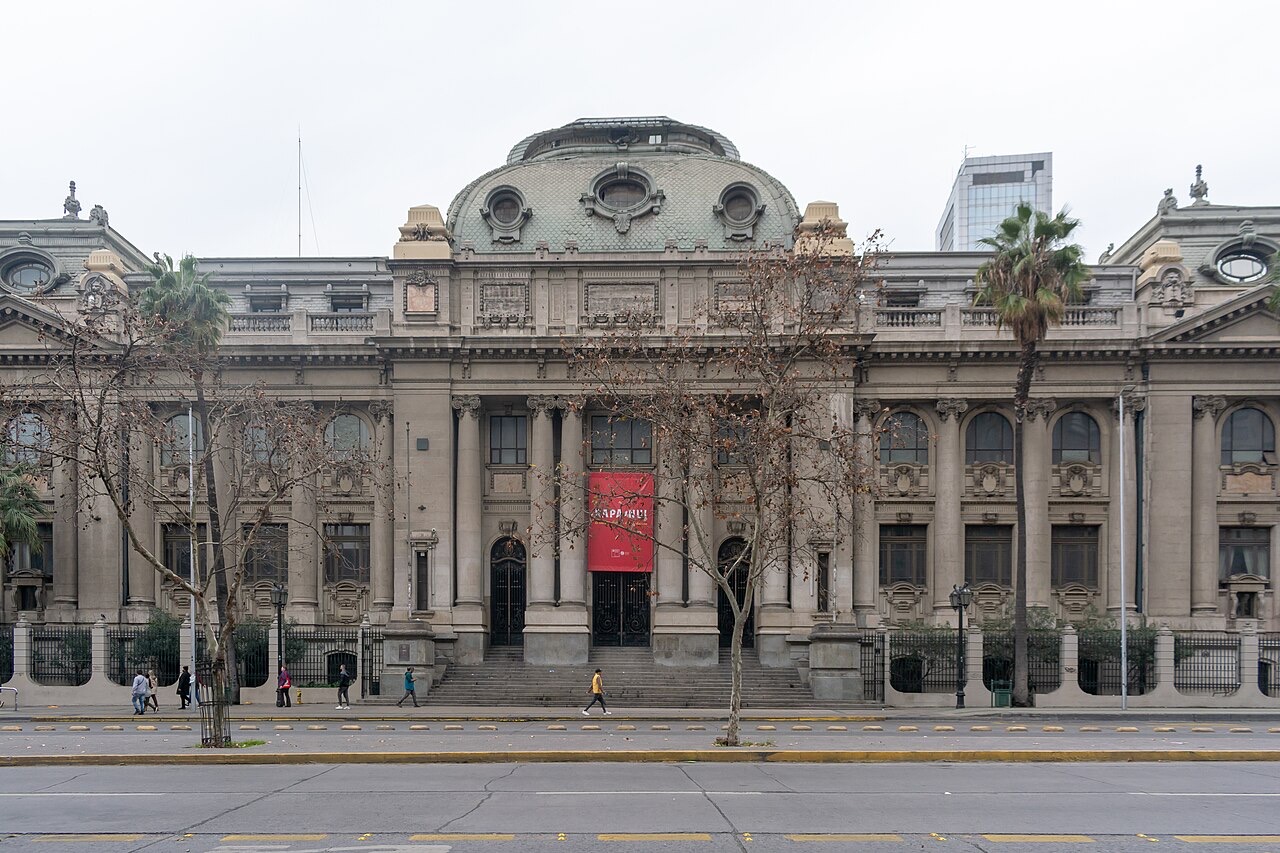
The route starts at the Biblioteca Nacional, right by a metro exit where commuters stream along the walls. The library was founded in 1813 and wandered around the city for more than a century, including through the old royal customs house that now holds the Chilean Museum of Pre-Columbian Art. In 1913 the state bought the land of a convent of the Poor Clares, and that is where the wandering came to an end.
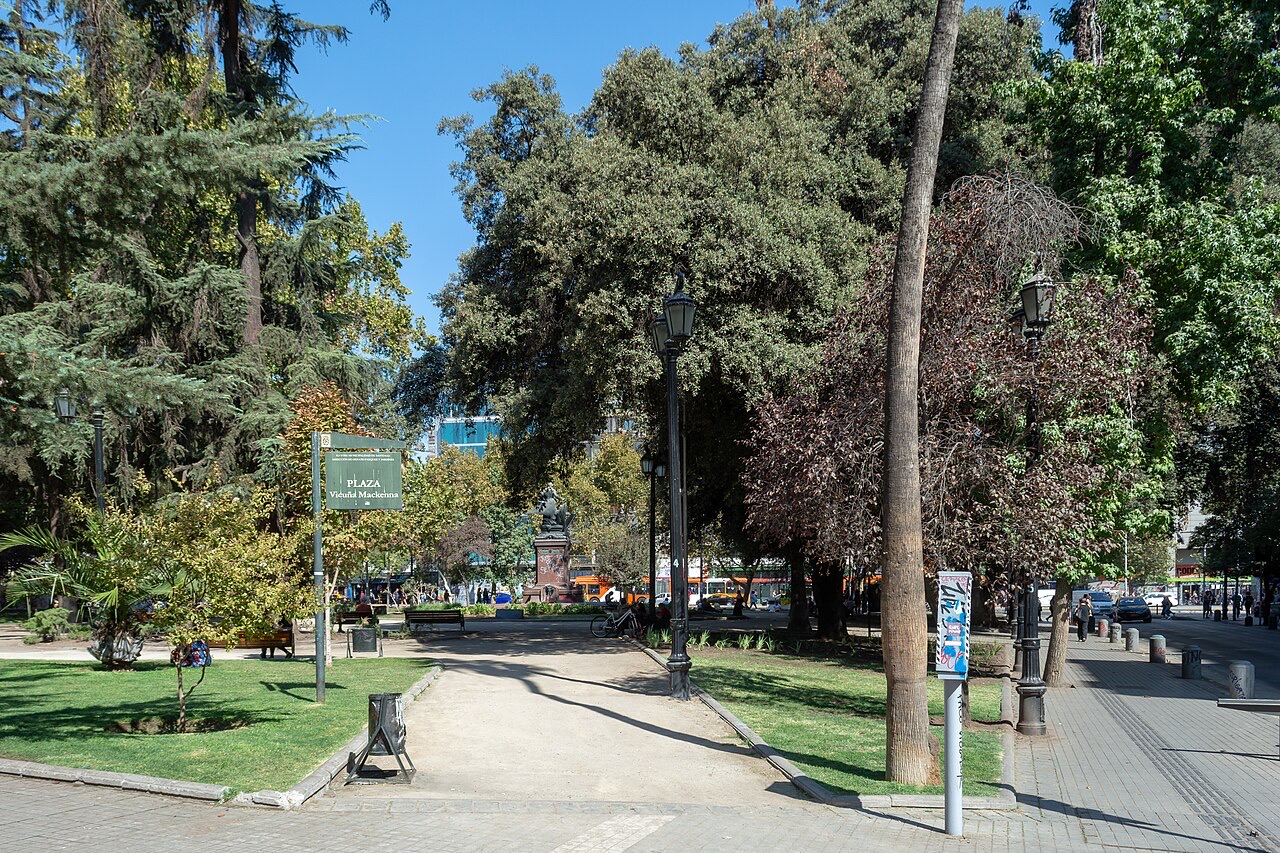
Just a little further on lies Cerro Santa Lucía, and this hill is less natural than it looks. In 1872 the intendant Benjamín Vicuña Mackenna, a politician and historian, began turning it into a park. In 1901 he was honored with a plaza, featuring a sculpture by the French sculptor Jules-Félix Coutan.
On the hill stands the Fuente de Neptuno, and this sea god has identical twin brothers elsewhere in the world. It is 'industrial sculpture': cast in series from a single mold by the French foundry Val d'Osne, after a model by Gabriel-Vital Dubray that became famous at the 1862 International Exhibition in London. A smaller Neptune stands together with his wife Amphitrite at another entrance to the hill.
The Castillo Hidalgo is of a completely different caliber. Governor Casimiro Marcó del Pont had the battery built in 1816, during the Reconquista, so that royalist cannons could guard the city. After independence it was named after Captain Manuel Hidalgo, who fell at the Battle of Chacabuco. It then served in turn as a history museum, a municipal storage depot and a folk art museum. Today it hosts events.
Play Santiago de Chile for free →
Barrio Lastarria: Coffee, Churches and a Controversial Building
Below the hill lies Barrio Lastarria, wedged between Plaza Italia, Parque Forestal and Cerro Santa Lucía. The streets are packed with cafés, bookshops, theaters and bars. The little square at Lastarria 305, Plaza Mulato Gil de Castro, is framed by a cultural center from 1982.
A little further on stands the Iglesia de la Veracruz, designed by Claude Brunet de Baines, who also founded the School of Architecture at the Universidad de Chile. The Catholic church was declared a historic monument in 1983. In 2019, during the social unrest, it was left badly damaged by masked perpetrators.
The Centro Cultural Gabriela Mistral perhaps says the most about modern Chile. Thousands of volunteers completed the complex in 275 days for the UNCTAD III conference of 1972, under the government of Salvador Allende. After the coup of 1973 it became a guarded military headquarters. A fire in 2006 led the government to return it to culture, and since 2010 it has borne the name of Gabriela Mistral.
Parque Forestal: Sculpture, Saltpeter and Painting
Things get a lot quieter at the Iglesia de San Francisco de Borja. Between the roar of the Alameda and the church stands the monument Gloria y Victoria by sculptor Héctor Román. Behind it hides a neo-Gothic church from 1876, once the chapel of the San Borja Hospital. Today it serves one of Chile's uniformed police corps.
In Parque Forestal stands the Fuente Alemana, designed by the German sculptor Gustavo Eberlein and first unveiled on October 13, 1912. After a year of restoration, in which graffiti disappeared and the bronze and granite were cleaned again, it was reinaugurated on October 17, 2025. The works on metro line 7 set the project in motion.
Further on you will find the Palacio Bruna at Calle Merced 230, a mansion in Italian Renaissance style. Augusto Bruna, who grew rich on Chilean saltpeter, commissioned the Chilean architect Julio Bertrand. On the northwest corner of the park stands the Castillo Forestal, which locals call El Castillito. Inside is the Brasserie du Castillo Forestal, handy for a coffee break.
Across the way stands the Museo Nacional de Bellas Artes, founded on September 18, 1880 as the Museo Nacional de Pinturas and thus the first art museum in Latin America. Since 1910 it has been housed in a building by Emile Jéquier, constructed for Chile's centennial. Inside hang more than 3,000 works, and you will find the most important collection of Chilean sculpture.
This Is Just a Taste
What you read here is only a part of what the route has to offer. The full walk through Santiago de Chile contains more stops, quiz questions and hidden details that you only discover when you are standing among the buildings yourself. If you want to unravel them for yourself, choose the walk in the CityWalkGems app and explore the city at your own pace.
- 12 stops
- Biblioteca Nacional de Chile start
- ~3,7 km route length
- ~605 m longest stretch
- about 1,5–2 h duration
- Free

