
Toowoomba is the kind of city where you walk through the centre and only after a while realise that the same hands worked on everything. Buildings from different decades are linked here by a handful of names: architects who kept returning to the same streets, builders who left their work behind. Anyone taking a Toowoomba city walk therefore gets not a random series of photo stops, but a story about how a Queensland city built itself, facade by facade. The whole story spans about a century, and some chapters of it took a century themselves.
From Station to Town Hall: A City Becomes Official
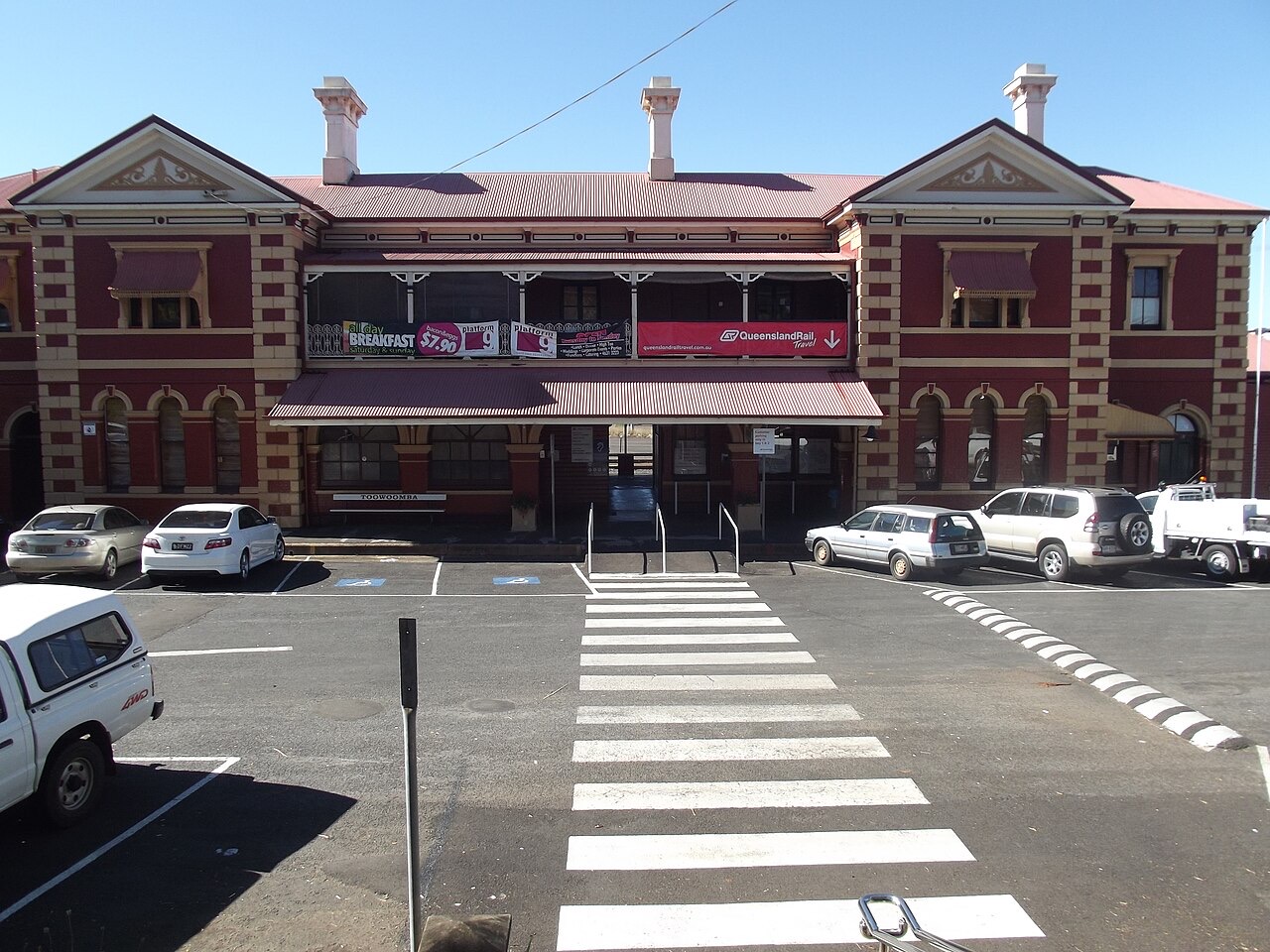
It begins at the railway station. One platform and a passing loop: with that modest setup it has served Toowoomba since it opened in 1867. The station building followed in 1873, designed by FDG Stanley and built by Richard Godsall. Remember that Stanley, because this won't be the last time you come across his work.
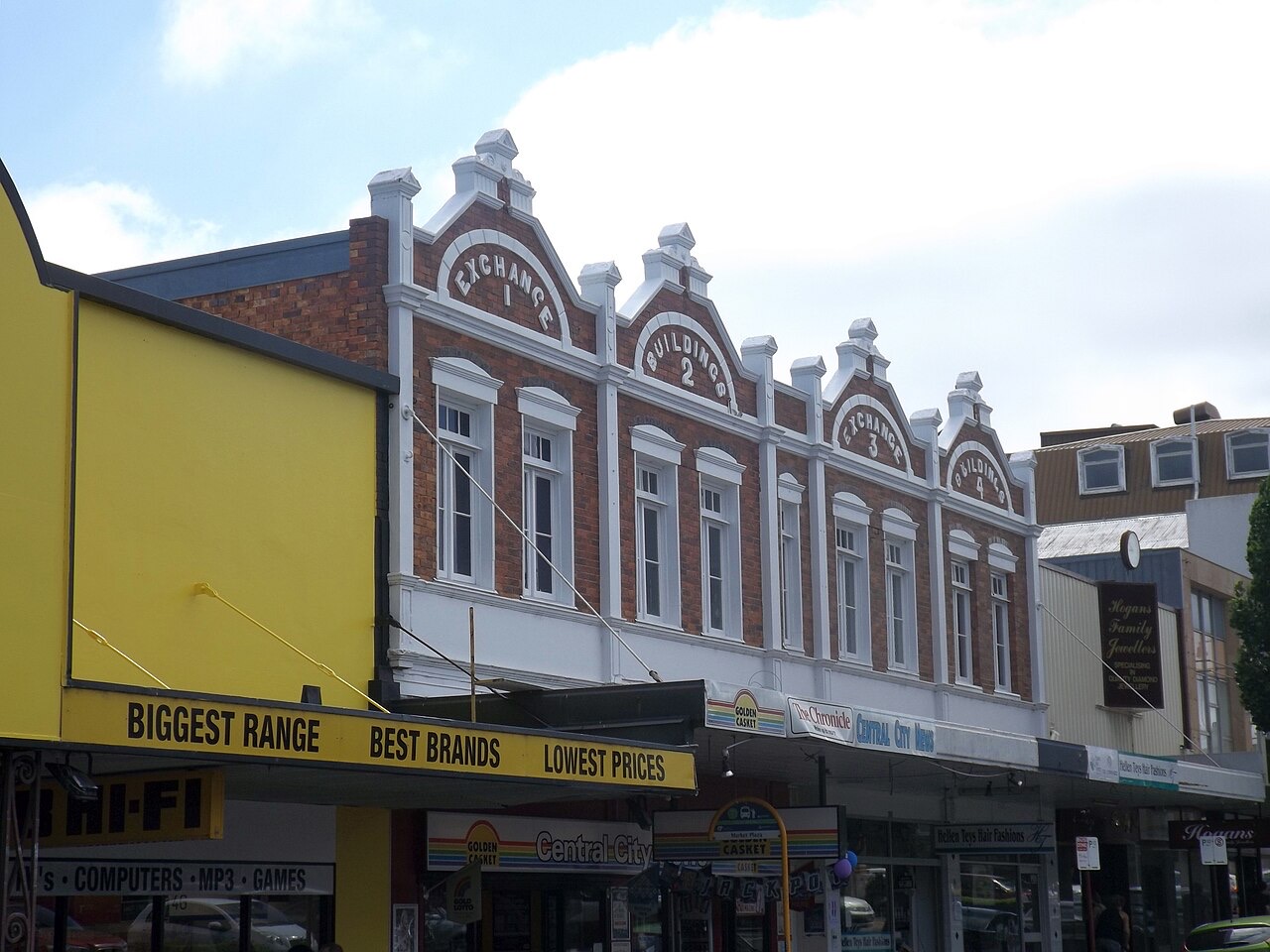
Commerce left its mark too. On Margaret Street stands the Exchange Building, two storeys with one long facade, designed by local architect Harry Marks and completed by 1905 at the latest. The heritage register calls it the surviving evidence of the early growth of the commercial centre. Marks turns up again a few minutes' walk away with the Alexandra Building, built in 1902 by James Renwick and listed on the Queensland Heritage Register since 2008. Two buildings, one designer: you are literally walking through a centre that he helped to draw.
A little further on is the White Horse Hotel, or what remains of it. A hotel of that name stood here as early as 1866, and drinks were served until 1986, when the doors closed for good. In 2009 the rooms where people once leaned on the bar housed clothing shops, a hair salon and an accountant.
The Town Hall is the logical climax of this stretch. This is where Toowoomba was proclaimed a city. The building, completed in 1900, was the very first purpose-built city hall in Queensland and already the third town hall Toowoomba had known. So the city didn't stand still: it had built twice before, and each time bigger.
Buildings That Took Decades
What makes Toowoomba special is how long some projects took. The Soldiers Memorial Hall took thirty-six years, from 1923 to 1959, a period that spans the entire Second World War. The plans came from Hodgen & Hodgen of Toowoomba; since 1999 the building has been on the Queensland Heritage Register.
The former courthouse on Neil Street tops even that. Construction began in 1876, and it was only in 1943, sixty-seven years later, that the work was finished. It was entered on the heritage register in October 1992, on the same day as the station and the town hall. Nearby stands the post office on Margaret Street, which shares its architect with the courthouse: FDG Stanley, the man behind the station. Contractor John Gargett put it up, and since 2003 it has been protected heritage.
St Luke's Church also fits this pattern of building on what came before. A church had previously stood on the site; the current building is the second, designed by John Hingeston Buckeridge and completed in 1897. In 2000 it was added to the Queensland Heritage Register. Thomas Pye's technical college, dating from 1911, shows where the city focused next: practical trades. It later became a campus of the Southern Queensland Institute of TAFE, and it has been on the heritage list since 1992.
Art Deco and Greenery for a Rest
Amid all that brick and history, the Empire Theatre stands out as a different kind of building. It is pure Art Deco, a nod to the golden age of Hollywood. In the foyer gold and bronze gleam, and two aquariums sit on pedestals. Inside awaits a grand proscenium arch and an orchestra pit that can rise hydraulically to stage level.
The route ends in Queens Park, where above all you get space: mown lawns, flower beds and open sky. Work on the park began in 1875 and continued for a century, into the 1970s. It suits the rest of the walk: Toowoomba was never made in one go, and the park is perhaps the gentlest proof of that. The route, incidentally, passes through central spots where there is always something going on, so you never have to go far from the bustle to find the history.
This Is Only a Taste
What you've just read is a selection. The full walk through Toowoomba contains more stops, a series of quiz questions along the way and details you only notice when you really stop to look. Want to discover for yourself what else is hidden in those facades? Choose the Toowoomba walk in the CityWalkGems app and explore the city at your own pace.
- 12 stops
- Railway Station start
- ~4,0 km route length
- ~955 m longest stretch
- about 1,5–2 h duration
- Free

