
Also known as: Trèves, Tréveris
Imagine a city where every cobblestone whispers a story, where the echoes of emperors and gladiators still linger in the air, and where the grandeur of a bygone empire seamlessly blends into a vibrant present. Welcome to Trier, Germany's oldest city, a place that takes you on an unforgettable journey through nearly two millennia of history. Trier is not a city that hides its past; it embraces it, proudly displays it, and invites you to become part of its timeless narrative. Here, you don't just feel history, you breathe it in.
A Gateway to the Past: Roman Trier
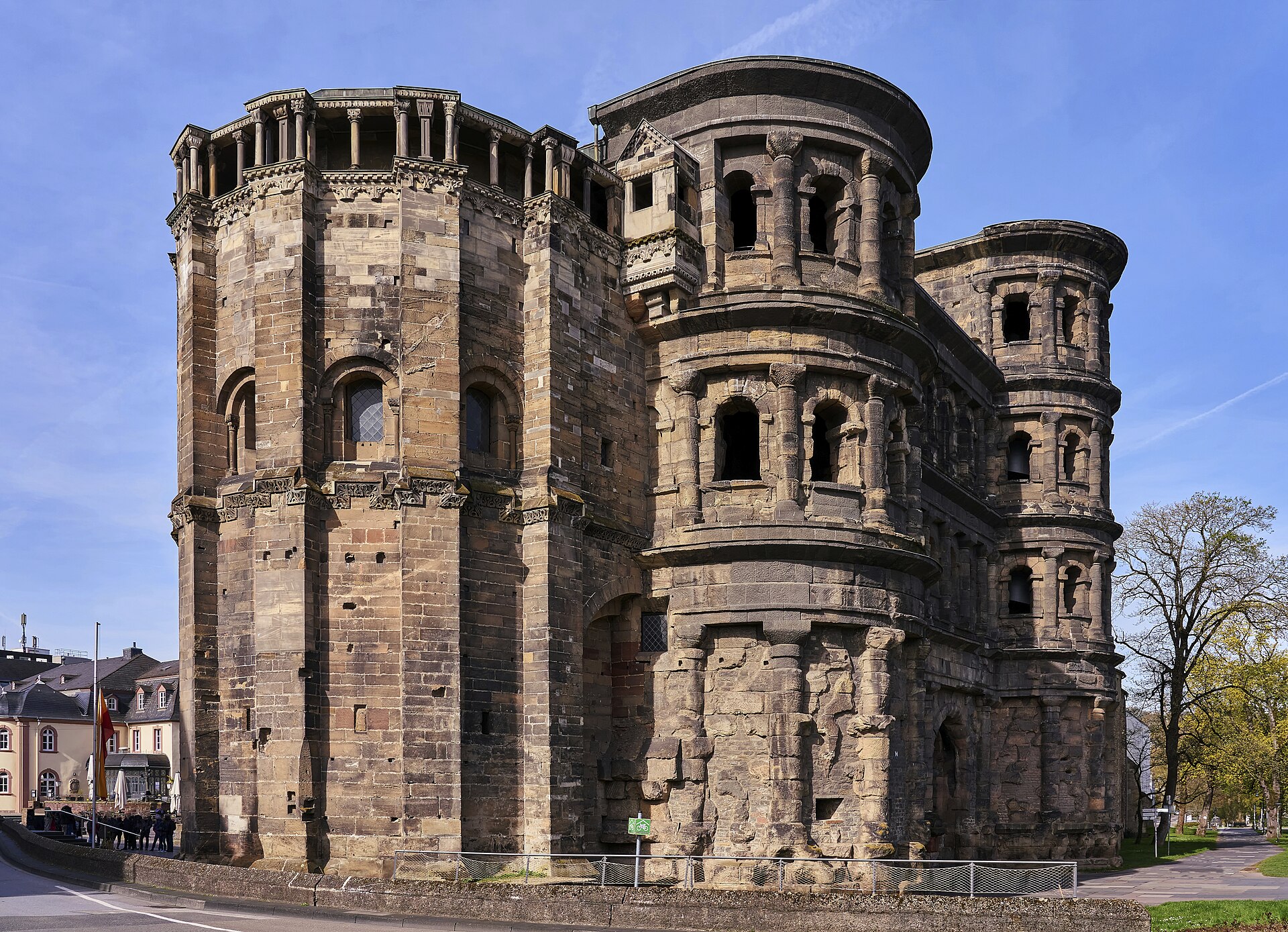
Your journey through Trier inevitably begins at the Porta Nigra, the 'Black Gate'. This colossal gate is much more than a ruin; it's a fortress, a church, and a testament to Roman engineering that has stood for nearly two millennia. Imagine the bustling city life that once flowed through its arches, the merchants, the soldiers, the citizens of Augusta Treverorum. The sheer scale of this structure, built without modern tools, is an impressive start to your exploration of Roman Trier.
The Roman presence in Trier is omnipresent. As you walk further, you'll pass remnants of the ancient city walls, which once embraced the flourishing Roman city. These walls were not only a defensive line but also a symbol of the power and prosperity of one of the most important cities of the Roman Empire. To truly grasp the richness of this period, a visit to the Rheinisches Landesmuseum is essential. Here, you step into a treasure trove of stories from Roman times. Emperors, gladiators, and ordinary citizens of Augusta Treverorum come back to life through breathtaking mosaics, sculptures, and everyday objects. Every hall is a revelation, showcasing the grandeur of Roman Trier.
The Romans were masters of public works, and nowhere is that clearer than at the bathhouses. The Kaiserthermen (Imperial Baths) were once a bustling center where Roman citizens gathered to bathe, exercise, and socialize in opulent halls and heated pools. Although now in ruins, you can still admire the enormous scale and advanced technology of this complex, with its ingenious underfloor heating and water pipes. Even more colossal are the ruins of the Barbara Thermen (Barbara Baths), once a vibrant hub of Roman life with enormous bathing halls, sports fields, and libraries. The remaining foundations and arches bear witness to an unprecedented scale and architectural ambition. Besides these grand complexes, there were also smaller ones, such as the Thermen am Viehmarkt (Baths at the Cattle Market), a hidden gem that reveals everyday Roman culture. These baths were essential for the social life and hygiene of the Romans, and their ingenious underground constructions and water supply are simply fascinating.
A living monument of Roman architecture is the Römerbrücke (Roman Bridge), the oldest bridge in Germany still in use. With its massive stone pillars that have withstood the currents of the Moselle for nearly 2000 years, this bridge is a testament to the unparalleled engineering of the Romans. It's incredible that this bridge still carries cars, a true connection between past and present.
From Emperors to Merchants: The Heart of the City
After the Roman grandeur, you dive into the vibrant heart of later Trier at the Hauptmarkt (Main Market). Here, you feel history come alive, surrounded by beautiful guild houses and the imposing St. Gangolf's Church. For centuries, this has been the place where trade, culture, and community converge. The Petrusbrunnen (St. Peter's Fountain), with its lively figures, tells stories of the city's rich artisanal traditions. It's easy to imagine how busy it once was here, and the atmosphere is still lively. Just a bit further, at the Handwerkerbrunnen (Craftsmen's Fountain), we honor the hardworking hands that built Trier through the centuries, a charming tribute to the guild traditions.
An architectural jewel that forms a beautiful contrast with the Roman ruins is the Electoral Palace. With its soft pink facade and opulent Rococo details, this palace exudes serene elegance. Once the residence of powerful prince-electors, it feels as if you've stepped into a fairy tale, so graceful and full of grandeur.
A World-Changing Idea
However, Trier's history is not only Roman or medieval. In a modest house stands the birthplace of one of the most influential thinkers of modern times: Karl Marx. It's fascinating to consider that the seed of ideas that would change the world was sown here in this quiet house in Trier. The museum inside tells the story of his life and the impact of his philosophy, a place of immense historical significance that adds a whole different layer to the city's rich history.
This walk through Trier is just a glimpse into the many stories and sights this city has to offer. From the colossal Roman structures to the charming squares and the homes of world-changing thinkers, Trier continues to surprise. The full walk through this fascinating city includes even more stops, riddles, and hidden details waiting to be discovered. Choose this unique route in the CityWalkGems app and let yourself be carried through time in Trier.
- 12 stops
- Alte Stadtmauer start
- ~4,0 km route length
- ~592 m longest stretch
- about 1,5–2 h duration
- Free

