
Valdivia sits on a river, far from Chile's busy tourist routes, and has a past full of fires, earthquakes, Spanish forts and German immigrants. The result is a city where a submarine rests in the river and sea lions wait for scraps at the fish market. If you're wondering what to do in Valdivia, you can simply start walking: the sights are close together, and almost every building has a story about survival and rebuilding.
Spanish Traces and a Square with a Unique Name
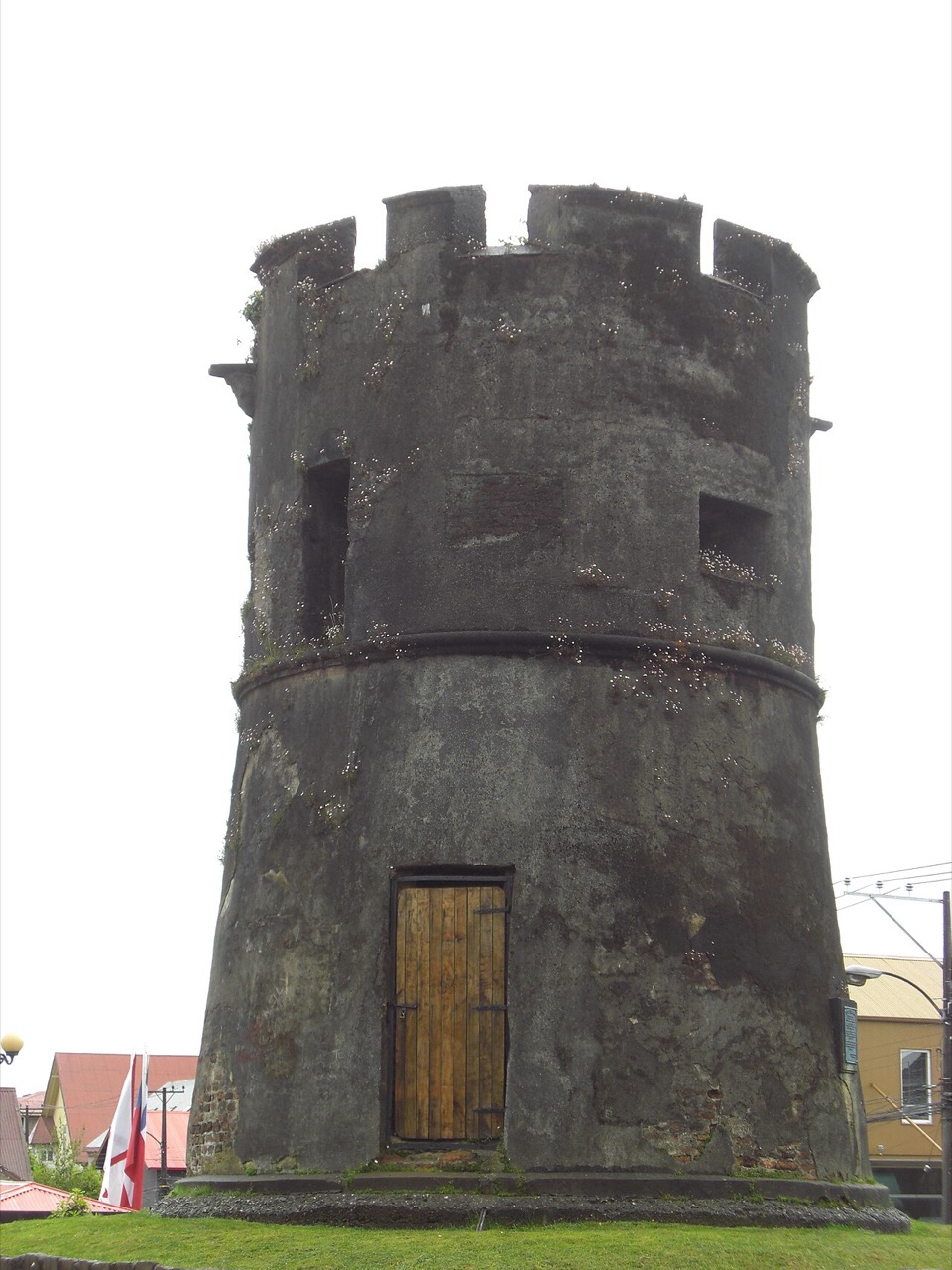
Valdivia was an important Spanish stronghold on the Pacific coast, and you can still see it. The Torreón Los Canelos was built in 1774 under Governor Joaquín de Espinoza y Dávalos. Its walls are 60 cm thick at the base and still 30 cm at the top. Together with a second tower farther east, it is the only remnant of the colonial city defenses. It has been a national monument since 1926. The canelo in its name is a tree that the Mapuche consider sacred.
Just a little farther along stands the Iglesia de San Francisco. A church with that name already stood here in the 16th century, but it was destroyed in 1599 when the Spaniards were driven out of the city. After the Jesuits were expelled, the Franciscans laid the first stone of the current church on 8 December 1786. It was fully restored in 1977, and since 2007 the church and monastery have been a national monument. If the doors are open, it's a good spot for a short break.
The heart of the city is the Plaza de la República. The square was laid out in 1552 on an empty field for palín, a traditional Mapuche ball game. On 15 June 1820, after the city had been taken from the Spaniards, Chile's act of independence was sworn here. The square received its name in November, and it is the only square in Chile with that name. Linden trees line its edges, and on one side the bell tower of the Nuestra Señora del Rosario cathedral rises 50 meters high.
Play Valdivia right in your browser →
Wood, Fire and Concrete
Between 1859 and 1909, Valdivia burned down many times. After the great fire of 1909, the city rebuilt, this time using concrete instead of wood. The Teatro Cervantes is part of that story. The architects Carlos Swinburn and Eduardo Secchi designed it in reinforced concrete, and it opened on 14 November 1935 with 1,140 seats. When cinema took over in the 1940s, everyone simply started calling it 'Cine Cervantes'. The name honors Miguel de Cervantes, the author of Don Quixote.
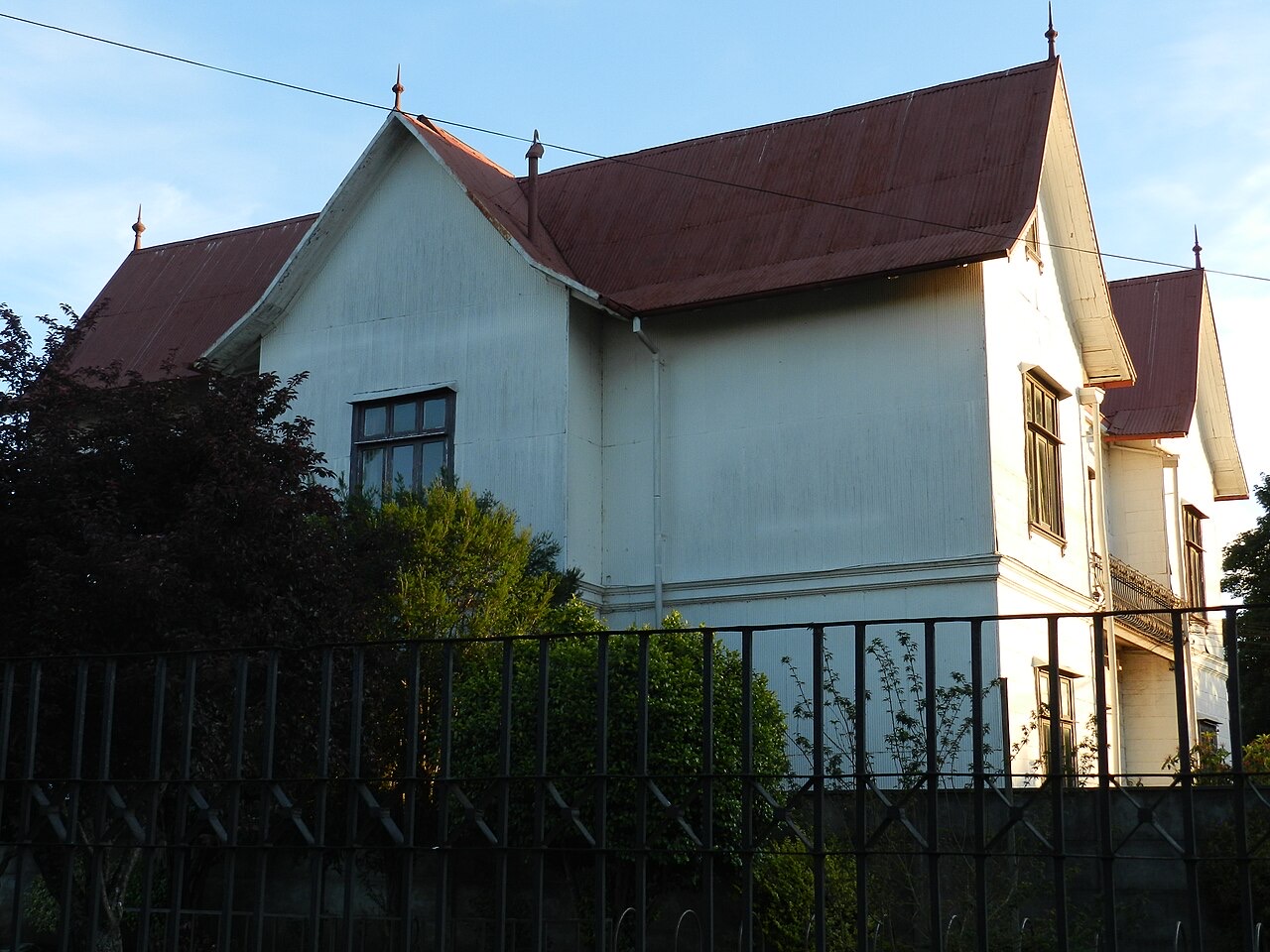
On Calle General Lagos, which runs parallel to the river, you can see what remains of the older, wooden city. From the mid-19th century, German immigrants built large family homes here, in years when agriculture, shipping and timber made Valdivia prosperous. Several mansions survived both the fire of 1909 and the earthquake of 1960, the strongest ever recorded. Since 1991 the street has been protected as a 'Zona Típica'. One house, the Hoffmann House, now belongs to a university campus.
Speaking of German influence: Carl Anwandter, a Prussian settler and entrepreneur, came to Valdivia in 1850 and kickstarted early industry, including a brewery. He had his house built in the 1860s for his large family. A tornado on 26 April 1881 badly damaged it, after which the facade was rebuilt into what you see today. The brewery next door was lost in the earthquake of 1960. Today the Universidad Austral runs the house as a museum of history and anthropology, and since 1981 it has been a national monument.
On and Beside the Water
Valdivia revolves around its river, and you notice this best at the Feria Fluvial. Follow your nose: fresh fish and shellfish, vegetables from the countryside and crafts from southern Chile. Trade has probably taken place on this bank since before the Spaniards arrived, with goods arriving by boat from villages along the rivers and the coast. The market covers a strip of about 80 meters between the river and Avenida Arturo Prat and is protected as a national monument. South American sea lions often wait at the water's edge for scraps. Feel free to watch, but don't feed or pet them.
A little farther on lies something you wouldn't expect in a river: the submarine O'Brien, some 15 km from the sea. Built by Scotts in Greenock, Scotland, for the Chilean navy; launched in 1972 and arrived in Chile in 1976. It served until the last day of 2001. The city bought it in 2008 and brought it here from Talcahuano in August 2009. Visitors enter through a hatch just 90 cm wide and climb down a 4.7-meter ladder. Then try to imagine an entire crew in that space.
To take in the river, cross the Puente Pedro de Valdivia to Isla Teja, home to the main campus of the Universidad Austral de Chile. Construction began in 1938 and the bridge was finished in 1953. It is 238.7 meters long and 10.5 meters wide, with a 7-meter roadway and a 1.8-meter footpath on each side. It bears the name of Pedro de Valdivia, the Spanish conquistador who founded the city in 1552. Halfway across, the view over the river is at its widest.
More Than This
This article is only a taste of what you'll come across along the way. The full walk through Valdivia includes more stops, quiz questions and details that are easy to miss without a guide, such as what there is still to see on Isla Teja. If you'd like to discover them yourself, choose the Valdivia walk in the CityWalkGems app and walk it at your own pace.
- 10 stops
- Calle General Lagos start
- ~3,6 km route length
- ~649 m longest stretch
- about 1,5–2 h duration
- Free

