
Also known as: Vérone
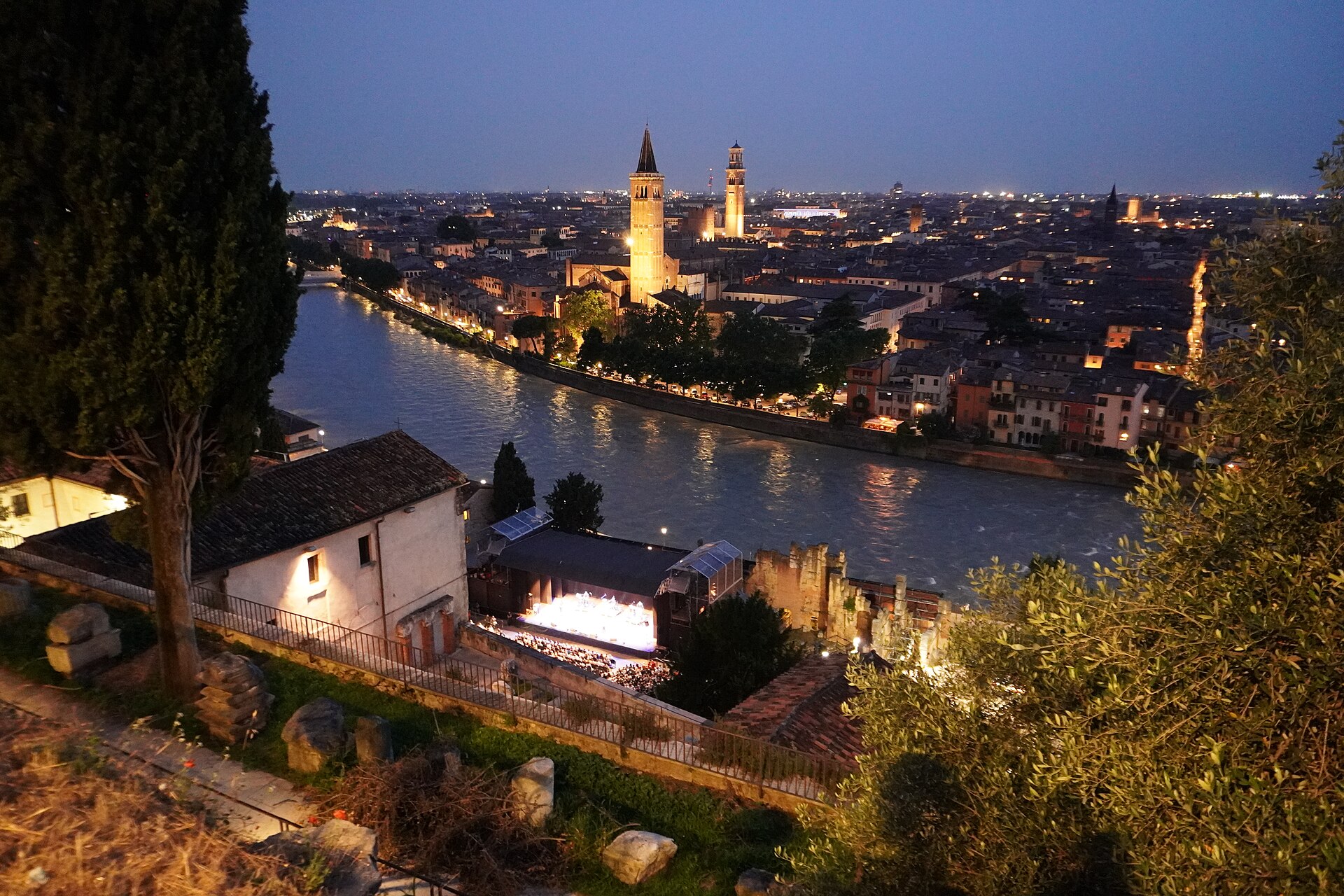
Verona, a city where every cobblestone tells a story and the Adige river winds like a silver ribbon through centuries of history. It's a place you don't just visit; you step into it, letting yourself be carried away by the echoes of gladiatorial battles and the grandeur of medieval palaces. Verona is a living museum, where layers of the past seamlessly merge with the vibrant present. Forget the clichés and dive with me into the authentic soul of this North Italian gem, where architecture, art, and daily life meet in a way you rarely find elsewhere.
Echoes of the Roman Empire
Our journey of discovery through Verona begins with a monument that has impressively withstood the test of time: the Arena di Verona. This majestic amphitheater, built in the 1st century AD, is one of the best-preserved Roman amphitheaters in the world. Here you feel the history, imagine the roaring crowd watching gladiators fight on the sand, a spectacle that has captivated imaginations for almost two millennia. It is a timeless place that transports you back to Roman times.
Not far from there, we step through the Porta Borsari, a gate that was the glorious main entrance to Roman Verona, also built in the 1st century AD. Look up at the richly decorated facade with its elegant arches and the ancient inscription that has stood the test of time. It is a living monument to Verona's imperial past, a window into a time when this city was an important center of the Roman Empire.
Another rare jewel from that period is the Arco dei Gavi. This triumphal arch from the 1st century AD is unique because it was not built by an emperor, but by the influential Gavi family as a private monument. Once, this arch marked the start of the Via Postumia that ran through the city, offering a fascinating insight into personal prestige in Roman Verona.
The Ponte Pietra is a bridge that whispers tales of resilience. This Roman bridge, originally built in the 1st century BC, has withstood countless floods and wars. Notice the beautiful mix of white marble from Roman times and red brick from later repairs, a mosaic of history. It is a symbol of Verona's unyielding spirit, a bridge that literally and figuratively spans the centuries.
Power and Splendor Along the Adige
Verona's history isn't just Roman; the Middle Ages also brought their own grandeur. The imposing Castelvecchio Museum breathes the power of that era. This castle, built by the domineering Scaligeri family in the 14th century, was both a palace and an impregnable defensive stronghold. Look up at the unique swallowtail battlements, a proud symbol of their Ghibelline political party.
Directly connected to the castle is the indestructible Castelvecchio Bridge, also known as the Ponte Scaligero. This majestic bridge, also built in the 14th century, was a masterpiece of military engineering, designed as a safe escape route from the castle. Its three progressively larger arches and red brick towers create an unforgettable silhouette over the Adige, an iconic symbol of Verona's past.
Leave the city's hustle and bustle behind for a moment and step into the serene splendor of the Complesso del Duomo di Verona. This complex is a fascinating mix of styles, with Romanesque foundations later receiving Gothic additions. At the entrance, two majestic griffins guard the portal, symbols of divine and human power, a place of deep spirituality and centuries of architectural evolution.
For a breathtaking overview of all this splendor, take the Funicolare di Castel San Pietro. This effortlessly takes you to one of the city's most spectacular viewpoints. From here, the city unfolds like a living map, with the Adige river winding through it like a silver ribbon. It's a perfect place to soak in Verona's beauty.
The Beating Heart of Verona
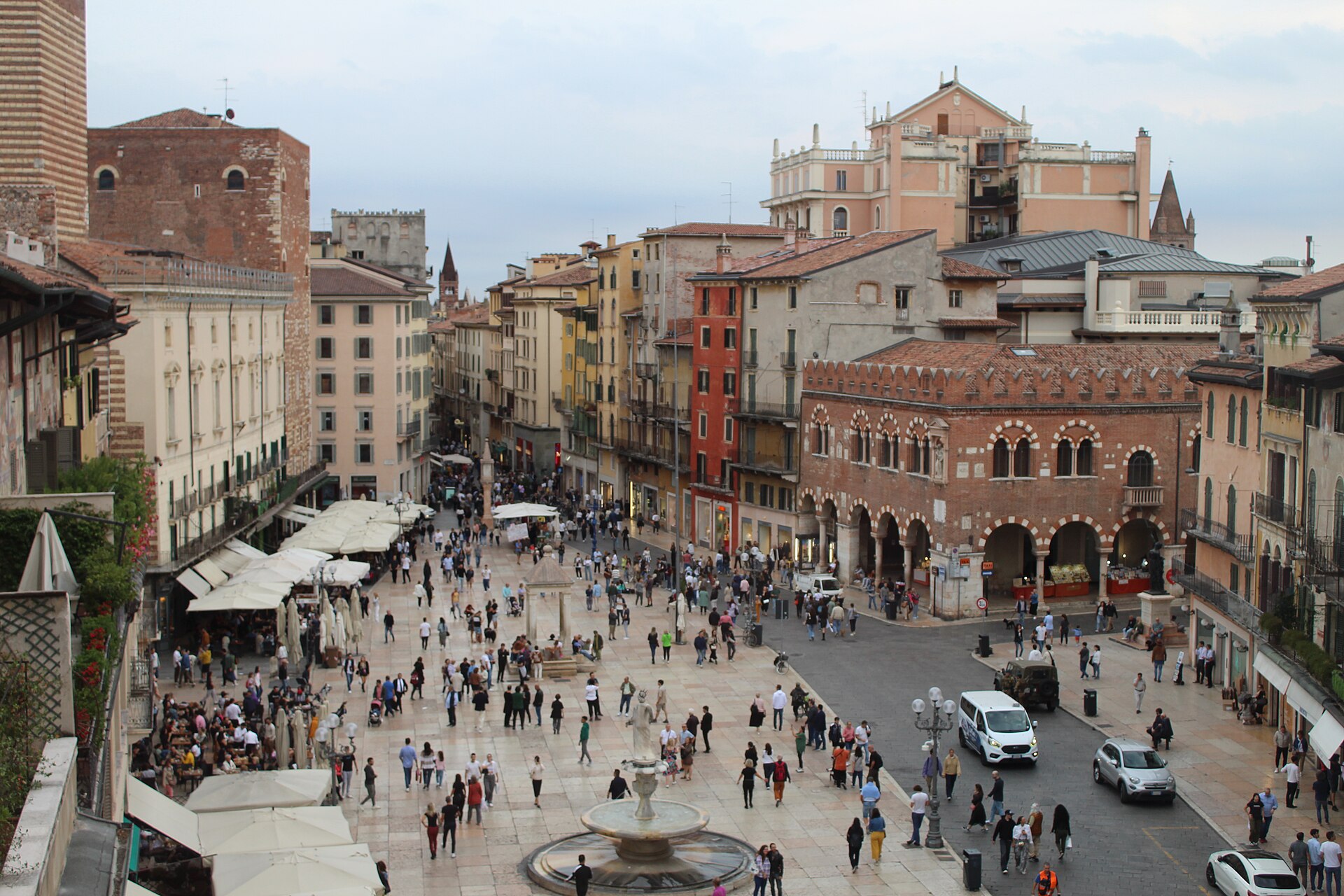
No visit to Verona is complete without experiencing its lively squares. The Piazza delle Erbe has been the city's beating heart for centuries. This bustling square, built on the site of the ancient Roman forum, is an explosion of colors, scents, and sounds. In the center stands the beautiful Madonna Verona fountain, the oldest monument on the square, keeping watch over the busy market stalls. It's a place where history and daily life seamlessly intertwine.
The elegant facade of Palazzo Maffei Casa Museo dominates a part of Piazza delle Erbe. This Baroque masterpiece stands on the foundations of the ancient Roman Capitol. On top of the roof, a series of statues of Greek gods – Hercules, Jupiter, Venus – parade as if overseeing the lively piazza, a true architectural gem.
A little further on lies the Piazza dei Signori, also known as 'Piazza Dante'. This elegant open-air salon was the political and administrative heart of the city, surrounded by the palaces of power. In the center stands the pensive statue of Dante Alighieri, who sought refuge here after being exiled from Florence. It is a place full of grandeur and intellectual heritage.
Finally, in the Piazza Bra, you'll find the proud Statua di Vittorio Emanuele II. This equestrian figure, the very first king of a united Italy, reminds us of the Risorgimento, the tumultuous struggle for Italian unification. He stands here as an unwavering symbol of national pride, his gaze fixed determinedly on the future.
This walk offers a deep dive into the soul of Verona, from the grandeur of the Roman Empire to medieval power and today's vibrant squares. But this article is just a glimpse of what you'll discover on the route; the full walk through Verona contains even more stops, riddles, and hidden details waiting to be uncovered. For a complete experience, full of surprises and profound stories, choose the Verona walk in the 'CityWalkGems' app.
- 12 stops
- Start anywhere
- ~3,4 km route length
- ~631 m longest stretch
- about 1,5–2 h duration
- Free

