
Wellington is a capital you can cover almost entirely on foot in a single afternoon, and that is exactly what makes it special. Between harbour and hills, everything sits close together: museums, government buildings, a cable car, and squares where the wind helps write the streetscape. If you want to know what to do in Wellington, you're best off zipping up your jacket and simply setting out on foot. Here is a selection of what you'll meet along the way.
By the Water: Wind, Treasures and a Heavy Story
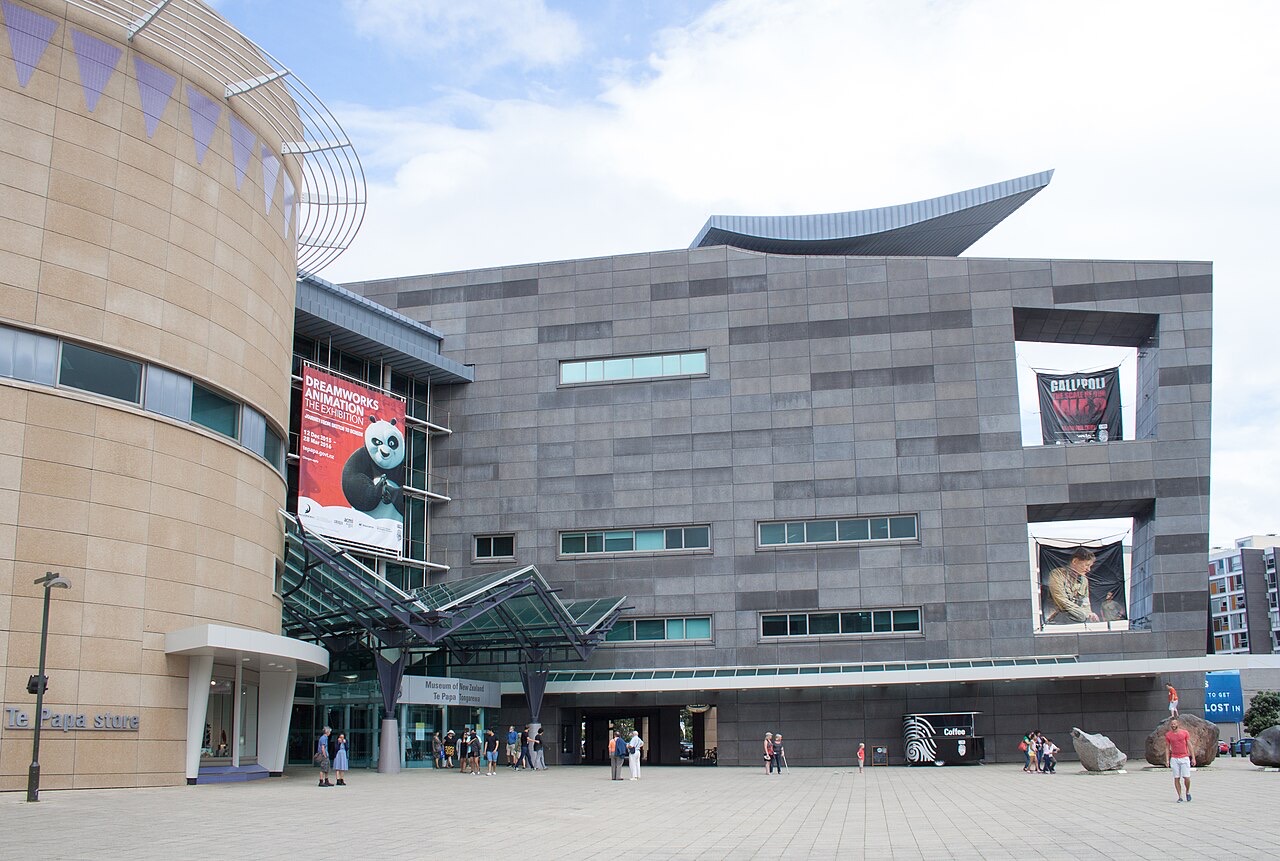
Start at Te Papa, the national museum. Its Māori name, Te Papa Tongarewa, is usually translated as "container of treasures". Inside, the stories of the country are told side by side in English and te reo Māori. It's an ideal introduction to the rest of the route.
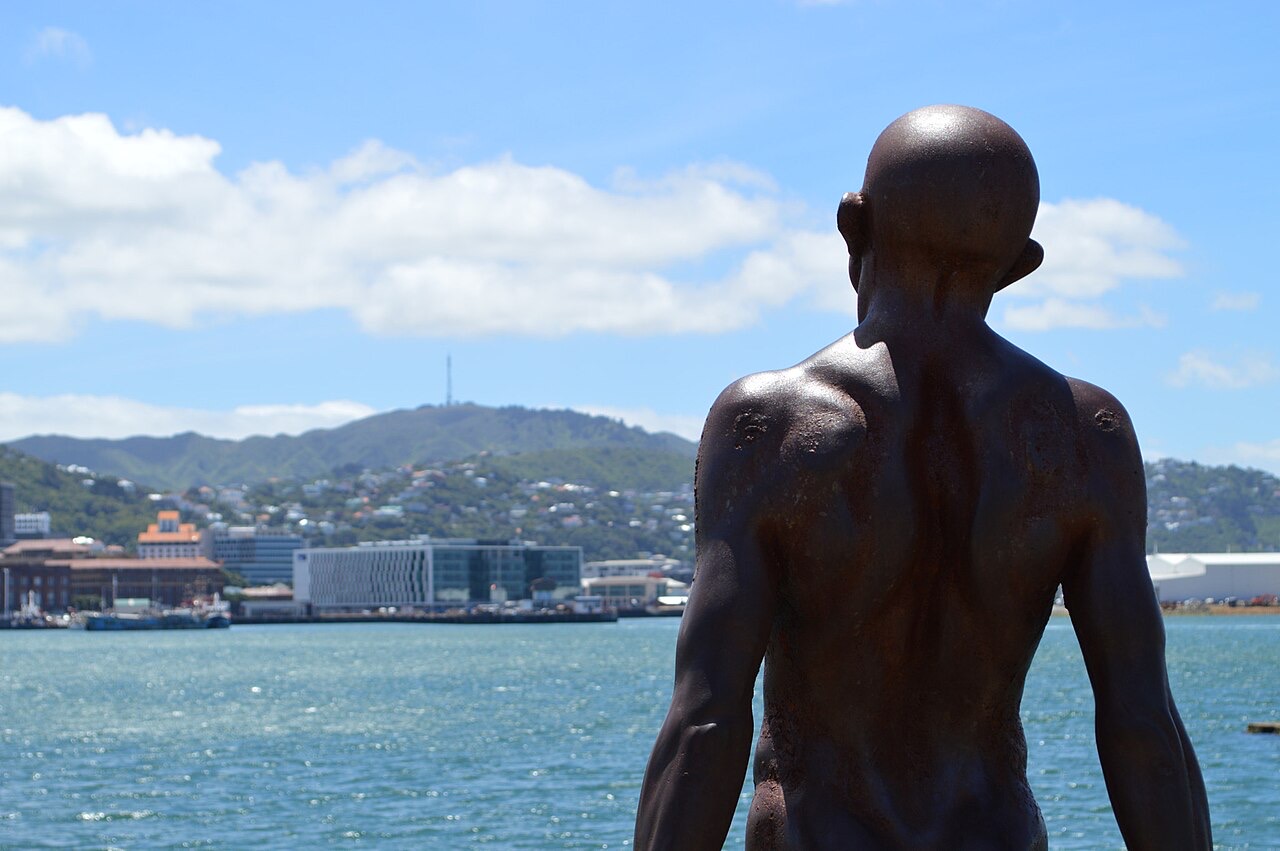
A little further on, a naked figure leans forward into the wind: Solace in the Wind, popularly known as The Naked Man. He tilts at an angle no living body could hold. On an ordinary Wellington day the gusts tell half the story, and before you know it you're leaning along with him.
It's much quieter in a corner of Frank Kitts Park, at the Wahine Memorial. The monument commemorates the Wahine, which sank in Wellington Harbour, and everyone who was on board that day. You look out over the same water while the bustle of the waterfront fades away. If you want to know more, the story continues at the Wellington Museum. There you'll find a memorial theatre for the Wahine, in a building with a story of its own: the Bond Store of 1892, where crates and barrels once waited to clear customs. Today four floors tell the history of the city, from Māori legends brought to life with a Pepper's ghost illusion to the harbour as a place of work. In 2013 The Times counted it among the 50 best museums in the world.
Kupe, a Fountain and a Cable Car Up the Hill
On the waterfront by Taranaki Street Wharf stands Kupe, the great Polynesian navigator who in Māori tradition first found these islands. William Trethewey made the statue for the 1939–40 Centennial Exhibition. After decades indoors as a plaster figure it was cast in bronze, and since 2000 it has looked out over the harbour.
A few streets further on, you'll hear the Bucket Fountain in Cuba Mall before you see it. This moving sculpture, designed by Graham Allardice and installed in 1969, has been soaking passers-by ever since. On windy days the water blows for metres. Every now and then someone pours in dish soap, and the whole street disappears under suds.
From Lambton Quay, the Wellington Cable Car takes you up to Kelburn in a few minutes, right beside the Botanic Garden. Below you, the office towers look small in the landscape, with the harbour behind them. Take the cable car up for the view, then walk back down through the garden. On Lambton Quay, also look up as you go: most people never do. The Public Trust Building has a stately old façade, fitting for an institution that managed other people's money and property and therefore had to look trustworthy.
Power in Timber and Concrete
The best thing about the government quarter is that it isn't what it seems. The Old Government Buildings look like stone from across the street, but they are made of wood. Completed in 1876, the building is the largest timber-framed building in the Southern Hemisphere. It holds 143 rooms where the civil servants of the young country once worked. Today law students from Victoria University of Wellington cram for their exams in the same corridors.
Nearby stands the Beehive, the Executive Wing of Parliament. The building is round and tiered, and named for its resemblance to a woven straw beehive, a "skep". The Cabinet meets on the top floor, and "the 9th floor" is political shorthand for the Prime Minister's office. Its design goes back to a sketch by the British architect Sir Basil Spence.
Finish at Old St Paul's, where you step out of the wind and your eyes need a moment to adjust to the quiet timber above you. The church is called one of the finest examples of Gothic Revival in wood in the world. Weddings, concerts and quiet visits still take place here. Take a seat in a pew and let the walk from waterfront to Parliament sink in.
There Is More to Discover
This is only a taste of what Wellington has to offer. The full walk includes more stops, a few quiz questions and details you only notice when you look for them. If you'd like to explore the city this way, choose the Wellington walk in the CityWalkGems app and follow the route yourself.
- 11 stops
- Museum of New Zealand Te Papa Tongarewa start
- ~3,9 km route length
- ~700 m longest stretch
- about 1,5–2 h duration
- Free

