
Worms, a city on the Rhine, is more than just a dot on the map. It's a living history book, where every cobblestone whispers tales of emperors, bishops, legendary heroes, and revolutionary thinkers. This ancient imperial city, steeped in millennia of history, invites you on a journey of discovery that takes you from Roman grandeur to the cradle of the Reformation and the epic saga of the Nibelungenlied. Prepare for a trip through time, right through the heart of a city that helped shape the course of Europe.
The Majesty of the Imperial Past
Our exploration begins with Worms' undeniable landmark: the Cathedral of St. Peter (Dom St. Peter). This imperial cathedral, built of imposing red sandstone, is a masterpiece of Romanesque architecture. Within these walls, emperors were buried and important imperial diets took place, underscoring Worms' central role in the Holy Roman Empire. The scale and details of this edifice are a silent testament to centuries of power and faith.
Near the Cathedral stands the Statue of Bishop Burchard, a figure crucial to the reconstruction of Worms in the 11th century. His determined gaze recalls his immense influence on the city and the Cathedral, and how he laid the foundations for much of what we still see today. A small, but fascinating detail on the Cathedral wall is the Worms Ell. For centuries, this was the standard measure for merchants and artisans to measure fabrics and materials, a tangible reminder of the lively medieval market and the early standardization of measurements.
Play Worms right in your browser →
The Echoes of the Reformation
Worms is inextricably linked to one of the most profound events in European history: the Reformation. The place where it all culminated is the former Bishop's Court in Heylshof Park. Here once stood the imperial palace and the bishop's court, and on this historic ground, the famous Diet of Worms took place in 1521. It was here that Martin Luther refused to recant his theses, a moment that forever changed the course of history.
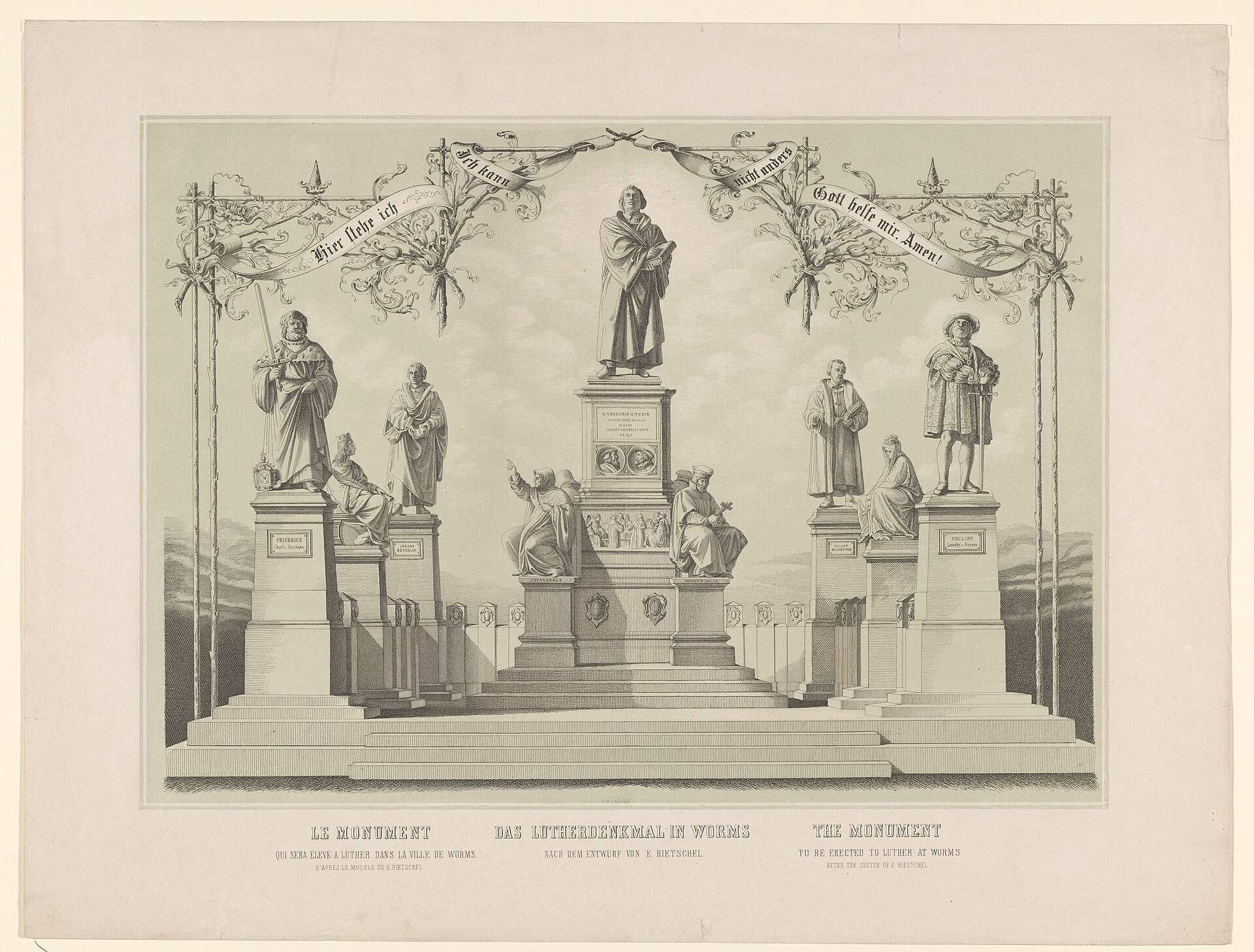
An impressive tribute to this historical figure is the Luther Monument. The central figure of Martin Luther, surrounded by other important reformers and princes, tells the story of this turning point. The scale and detailed execution of this monument are a powerful reminder of the impact of his actions.
Nearby is the Heylsschlösschen, an elegant gem of 19th-century architecture. This small castle, surrounded by a beautiful garden, was the residence of the influential Heyl family, who made their fortune in the leather industry. It exudes the grandeur of a bygone era and once housed an impressive art collection. The cultural legacy of the Heyl family is further highlighted in the Kunststiftung Heylshof (Heylshof Art Foundation), located in a beautiful building, where an impressive collection of artworks collected by the family can be seen. It is a testament to their passion for art and their contribution to the cultural life of Worms.
Jewish Heritage and Legendary Tales
Worms also has a profound Jewish history. The Jewish Museum in the Rashi House offers a fascinating insight into this rich heritage. Worms was one of the famous SHUM cities, important centers of Ashkenazi Judaism. Amidst the remains of the old synagogue and the mikveh, you feel the echoes of a flourishing community that shaped intellectual and spiritual life for centuries. The stories told here are powerful and moving.
As we continue our walk, we pass the 118er Denkmal (118th Infantry Regiment Monument), a sober monument commemorating the 118th Infantry Regiment, which served in World War I. It recalls the sacrifices made and the profound impact of conflicts. A little further on stands the elegant Ludwigsbrunnen (Ludwig's Fountain), a 19th-century fountain with classical statues and ornate details, a tribute to Grand Duke Ludwig IV of Hesse. It is a peaceful spot in the city, where you can enjoy the architecture.
The remains of the medieval defensive wall on Rheintorgasse are silent witnesses to Worms' past. These robust stone walls protected the city from invaders for centuries and tell the story of a powerful imperial city. They demonstrate Worms' resilience throughout the ages.
Finally, we arrive at the Hagendenkmal (Hagen Monument), an impressive tribute to Hagen von Tronje, the legendary hero from the Nibelungenlied. His powerful stature and determined gaze capture the essence of this epic tale so deeply intertwined with the history of Worms. It is a fascinating connection between myth and the city we explore today.
This walk through Worms has given us only a glimpse of the incredible depth and diversity of this historic city. From the majestic Cathedral to the places where the Reformation began and the echoes of the Nibelungenlied, Worms is a treasure trove of stories. The full walk through Worms reveals many more hidden details, captivating puzzles, and unexpected insights. Dive deeper into history and choose this unique city walk in the CityWalkGems app for a complete experience.
- 12 stops
- Start anywhere
- ~3,1 km route length
- ~825 m longest stretch
- about 1,5–2 h duration
- Free

,_RP-P-2018-1053.jpg)