
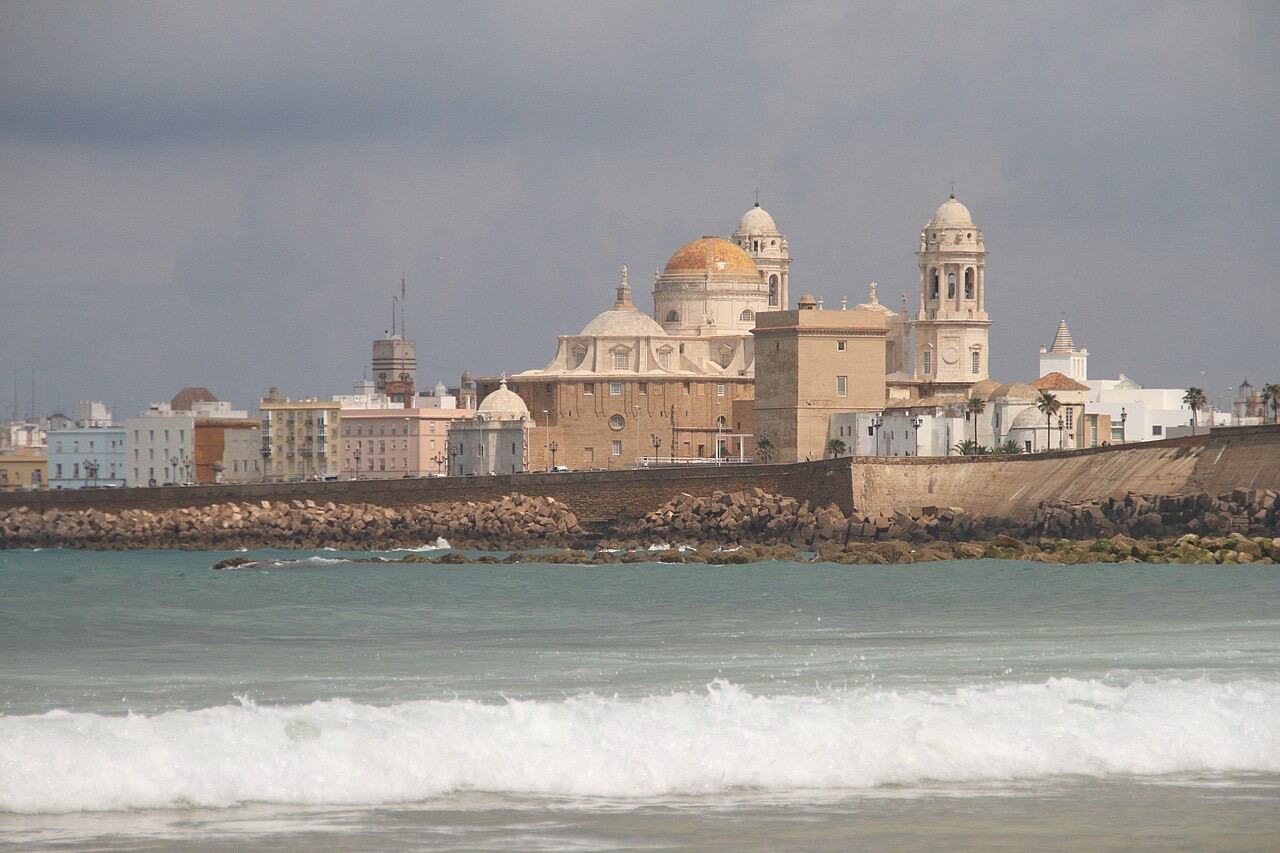
No Spanish city is as intimately tied to the sea as Cádiz. Perched on a narrow spit of land jutting deep into the Atlantic Ocean, the city has caught the salty ocean winds for thousands of years. Here, waves crash against centuries-old defensive walls, while the cityscape is defined by whitewashed facades, stately squares, and distinctive watchtowers. Anyone seeking a complete impression of this maritime enclave will discover, through a walking tour, that Cádiz is a layered stronghold full of unexpected turns.
Silver Routes, Roman Arches, and Medieval Alleys
The walk begins along the southern waterfront, where the Catedral de Cádiz commands the horizon. The construction of this cathedral by the sea took an astounding 116 years and was financed by the wealth flowing from overseas silver trade routes. Its structure reflects this drawn-out period of craftsmanship: the base consists of dark, rough oyster stone (piedra ostionera) naturally resistant to salt spray, while the upper levels and the gleaming yellow-tiled dome were fashioned from luminous marble.
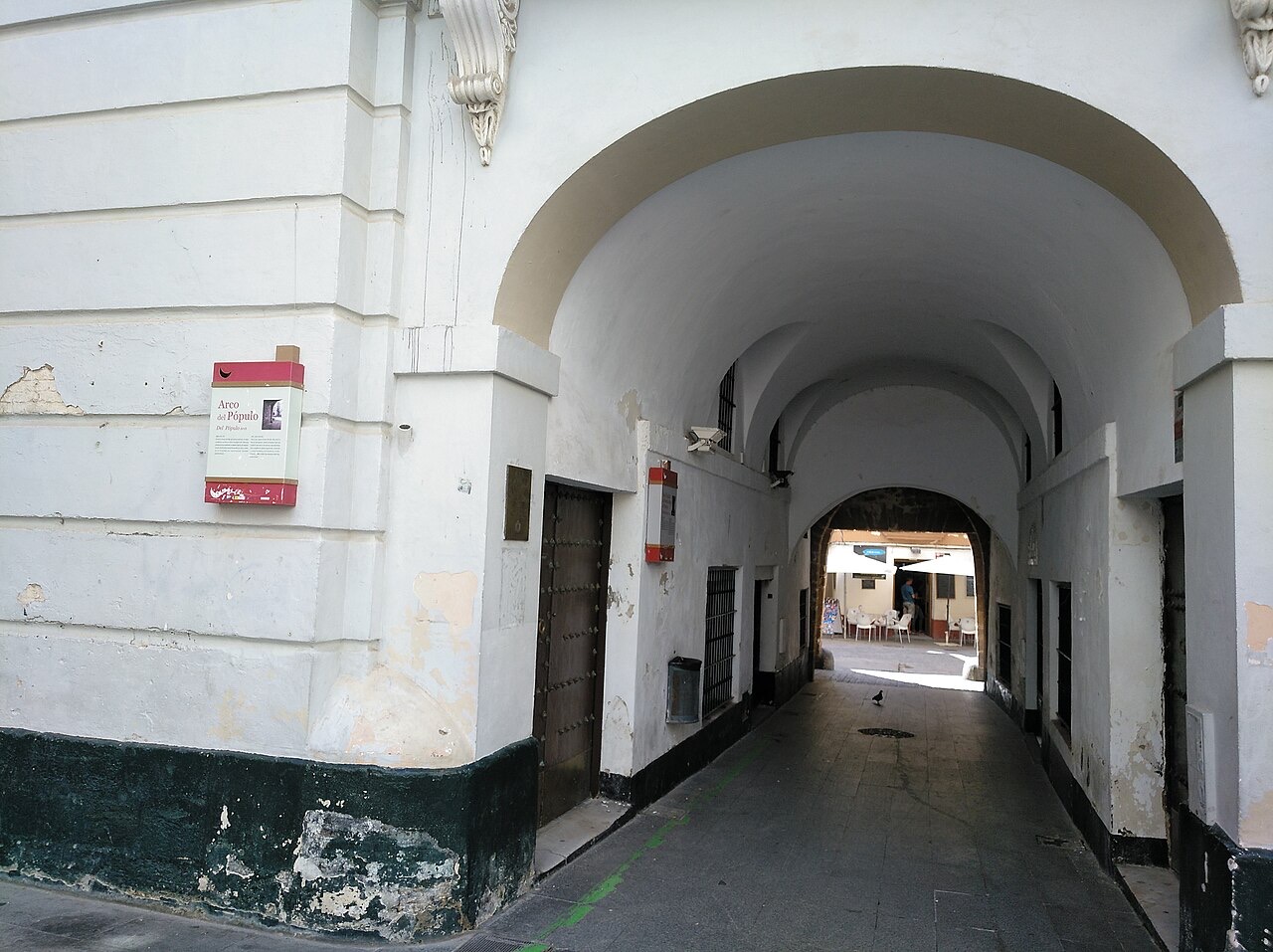
Just a few streets away, the scenery shifts from monumental marble to medieval intimacy. In the thirteenth century, the Arco del Pópulo served as the main sea gate in the defensive walls erected by King Alfonso X. Stepping beneath the stone arch, you are immediately enveloped in cool shadow—a striking contrast to the brilliant sunlight pouring over the adjacent Calle Pelota. Above the vault, a chapel was later built where departing sailors would pray for safe passage across treacherous seas.
Cádiz often conceals its deepest history behind unassuming facades. The Teatro Romano de Cádiz, for instance, lies tucked away behind ordinary residential buildings. One of the oldest Roman theatres on the Iberian Peninsula, it was uncovered purely by chance in 1980 following a warehouse fire. From its stone tiers, ten thousand spectators once gazed out over the waters of the bay. Nearby, the narrow, whitewashed Calle Santiago Donday recalls the former thirteenth-century Jewish quarter. Within these medieval ramparts lived merchants, physicians, and translators who forged vital connections between Mediterranean and Atlantic trading networks.
The Bastion of Democracy and Freedom
At the Plaza de San Juan de Dios, palm trees rustle above lively terrace cafes, overseen by the bronze statue of Segismundo Moret. This Cádiz-born statesman rose to become Prime Minister of Spain and etched his name in history with his 1870 law, which granted freedom to newborn children of enslaved people in the Spanish colonies.
That tradition of progressive thought reached its zenith at the start of the nineteenth century. In Plaza de España, the Monumento a la Constitución de 1812 commemorates a watershed moment in Spanish history. While Napoleonic troops occupied nearly the entire Iberian Peninsula, Cádiz remained unconquered thanks to its formidable ramparts and naval fleet. Here, deputies from Spain and its overseas territories gathered to draft the pioneering principles of national sovereignty and freedom of the press. At the nearby Museo de las Cortes on Calle Santa Inés, visitors can witness what the city looked like during this golden age. Its centerpiece is an exquisite eighteenth-century model of Cádiz, intricately crafted from mahogany and ivory by order of King Carlos III, situated right beside the chamber where delegates debated beneath a baroque vaulted dome.
Underground Silence and Atlantic Bastions
Not all of Cádiz's history unfolds in plain daylight. On Calle Valverde lies the entrance to the Catacumbas del Beaterio. Carved out of sandstone in the seventeenth century, this subterranean network of passageways originally served as a burial vault for devout lay sisters. Centuries later, during the Spanish Civil War, the tunnels found a new purpose when residents sought shelter from aerial bombardments. In profound silence, the damp stone walls bear witness to these enduring chapters of grief and survival.
Above ground, the Torre Tavira offers an entirely different vantage point. In 1778, this watchtower was designated as the official observation post of the port. From here, harbor watchman Don Antonio Tavira scanned the horizon to spot incoming merchant fleets. Stepping out onto the viewing platform reveals an enchanting sea of flat rooftops and watchtowers. Inside, a historic camera obscura still projects a captivating live image of everyday street life onto a concave white screen via an arrangement of mirrors and lenses.
The journey concludes at the northwestern tip of the promontory at the Castillo de Santa Catalina. This star-shaped bastion fortress was constructed atop a rocky outcrop in the wake of the devastating Anglo-Dutch raid of 1596. For centuries, its sixteenth-century ramparts absorbed enemy assaults and the relentless battering of Atlantic waves, guarding the traditional fishing fleet anchored off Playa de La Caleta. As dusk settles and the late afternoon sun casts a golden glow across the ocean waters, it becomes unmistakably clear why this fortified city has stood resilient for millennia.
This article highlights just a handful of the remarkable treasures waiting in Cádiz; along the walk, you will uncover countless more historical details, tucked-away alleys, and local stories. If you want to experience the journey for yourself and uncover every fascinating background story step by step, choose the complete Cádiz walking route in the CityWalkGems mobile app.
- 12 stops
- Catedral de Cádiz start
- ~3,8 km route length
- ~926 m longest stretch
- about 1,5–2 h duration
- Free

