
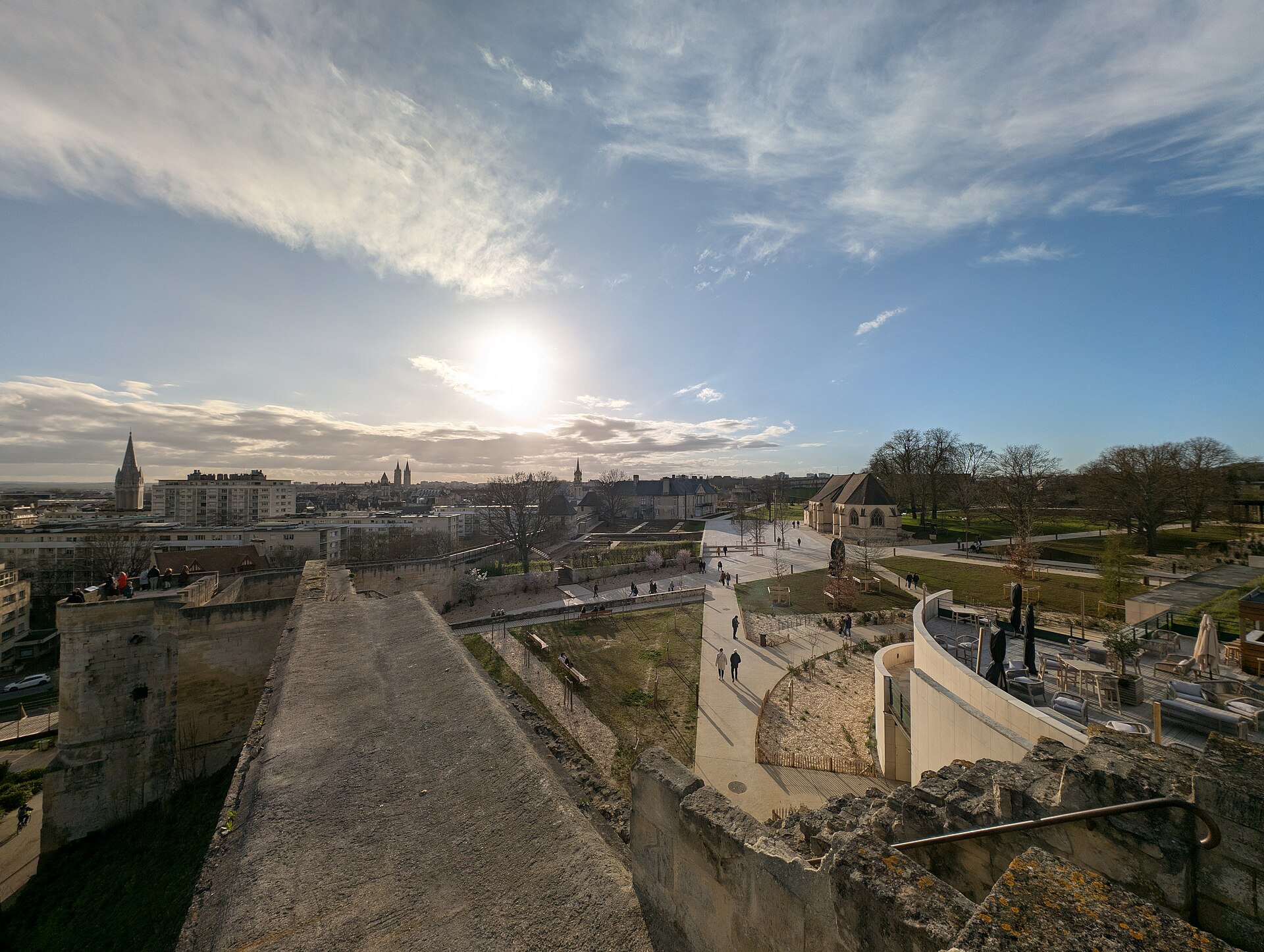
Caen, a city in the heart of Normandy, is a place where history is tangible at every corner. It is a city that radiates resilience, shaped by centuries of royal power, architectural splendor, and profound events. Those who wish to take a deep dive into the past and experience the soul of Normandy will find Caen a fascinating destination. A city walk through Caen reveals the layers of this special place, from imposing castles to serene abbeys and charming medieval streets.
Caen Castle: A City Within Walls
Our exploration begins at the imposing Caen Castle, a fortress that has reflected the city's history for a thousand years. This is no ordinary castle; it is a city within a city, a stronghold that has witnessed the rise and fall of empires. William the Conqueror himself built this fort, and its mighty walls have protected Caen through countless sieges and transformations. Within the castle walls, the remains of the keep can be seen, a place that once served as the residence of the Dukes of Normandy and later the Kings of England. Even in ruins, the grandeur of this strategically important fortress is palpable.
The castle grounds also house two important museums. The Musée de Normandie is a treasure trove that brings the rich history and ethnography of the region to life, from prehistory to modern times. The museum is located in the former 'Logis des Gouverneurs', a building that has whispered stories for centuries itself. Right next to it is the Museum of Fine Arts of Caen, an oasis of creativity in a modern building. Here, an exceptional collection of European painting can be admired, from the Italian Renaissance to French Romanticism, a surprising diversity of art within the historical walls of the castle.
The Majestic Abbeys of Caen
Caen is inextricably linked with William the Conqueror and his wife Matilda, and their legacy can be found in the city's two majestic abbeys. The Abbaye aux Dames, a masterpiece of Romanesque architecture, is the final resting place of Queen Matilda. Its serene atmosphere and beautiful facade with its two towers invite contemplation and offer a deep connection to history. The peace and beauty of this place are characteristic of Norman architecture.
Another monument of unparalleled historical and architectural value is the Abbaye-aux-Hommes. This is the final resting place of William the Conqueror himself, a place that reflects the power and piety of the Norman dukes. The impressive Romanesque facade and the serene cloister gardens are a feast for the eyes and make it clear why this abbey is a central point in Caen's history.
Through the Centuries: From Half-Timbered Houses to Monarchs
Beyond the grand monuments, Caen reveals a wealth of architecture and stories spanning the centuries. One of the oldest and most mysterious houses is the 'Templar House', a rare remnant from the 15th and 16th centuries with half-timbered and stone details. These walls have witnessed centuries of history, from medieval craftsmen to the secrets of the Templars.
Another architectural jewel is the Maison des Quatrans, one of the best-preserved examples of a medieval half-timbered house in Caen. This house, with its overhanging floors and richly decorated wooden beams, tells stories of craftsmanship and prosperity from the 14th century and survived the devastations of World War II. In the heart of the city also stands the birthplace of François de Malherbe, a 16th-century poet who reformed French poetry and laid the foundation for the classical style. His influence was so great that it was said: 'Malherbe came, and poetry was born.'
In Place Saint-Sauveur stands the impressive bronze statue of Louis XIV, the powerful King of France, proudly on horseback. This statue, created by Louis Petitot, recalls the grandeur of the French monarchy and is a powerful symbol of royalty. A little further on stands the statue of Bertrand du Guesclin, the legendary Breton knight and Constable of France, a key figure in the Hundred Years' War, known for his courage and tactics. His determined expression recalls a time of heroic struggle.
In a surprising contrast to the centuries-old abbey buildings, we find the Musée d'initiation à la nature. This museum is housed in a building that is a fascinating example of post-war architecture, with clean lines and functional aesthetics. It invites visitors to explore the natural world of Normandy, from the coast to the countryside, and showcases the diverse facets of Caen.
This selection of sights offers only a glimpse of the rich history and diverse atmosphere that Caen has to offer. The complete walk through this Norman city reveals many more hidden details, captivating stories, and surprising places waiting to be discovered. For a complete and interactive experience, we invite you to choose the Caen walk in the 'CityWalkGems' app and immerse yourself in the charms of this special city.
- 11 stops
- Start anywhere
- ~4,0 km route length
- ~798 m longest stretch
- about 1,5–2 h duration
- Free

