
Chemnitz rarely tops the list of German city breaks, and that is exactly what makes it interesting. Walk around here and you won't find a polished open-air museum, but a city where medieval remains, nineteenth-century industrial pride, department store architecture and socialist heritage all stand side by side. A walking tour of Chemnitz can easily be done in half a day, past lively, central spots that all lie close together. You begin at the river and end at the building where the city itself began.
River, Market and Town Hall
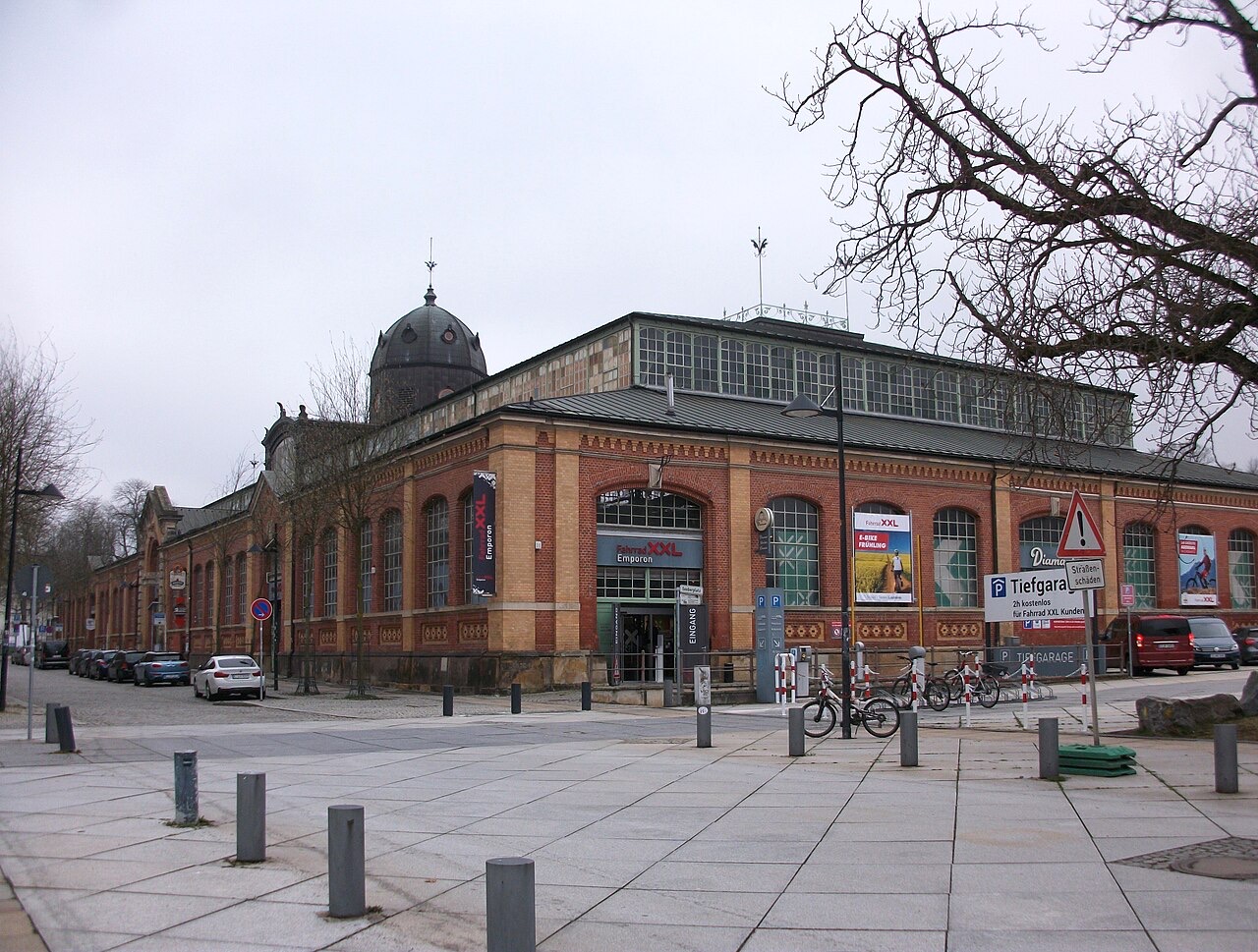
The first stop is the Markthalle, a brick-built market hall with the river Chemnitz flowing past one side. It was built in just eighteen months on the site of the old city wall and the filled-in moat, and opened on 9 December 1891. Inside there was room for 358 stalls. Since 2011 every stall has been let again.
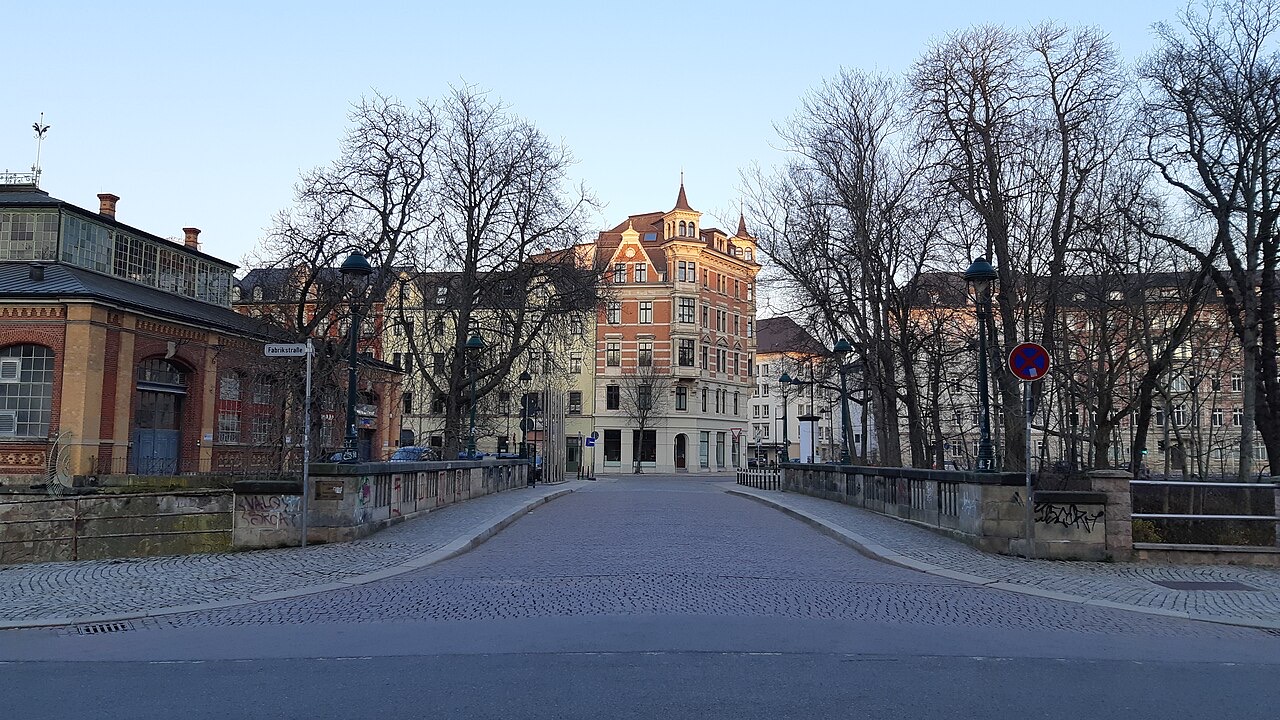
A little further on, the Bierbrücke takes you across the water. The bridge has carried that name since the 16th century. Until 1778, freshly brewed beer was carried across here. Pause for a moment and listen to the river beneath you.
The Altes Rathaus a little further on is less a museum piece than a working building: the mayor's office is still housed there. Where the stone town hall stands today, wooden predecessors once stood. Thanks to the many rebuilds, every era has left its mark on it.
Culture in Old Department Stores
Chemnitz has a striking trait: the department stores of old have become cultural landmarks. DAStietz is the best example. Wilhelm Kreis designed the building in 1913 as the Tietz department store. Since 2004 the city library, an adult education centre, the natural history museum and the Neue Sächsische Galerie have shared the premises, making it a true 'culture department store'. Keep walking to the great light court; something far older than the building itself awaits you there.
The same story repeats itself at the Staatliches Museum für Archäologie, housed in the former Schocken department store. Where people from Chemnitz once went shopping, there are now finds from 300,000 years of Saxon history. The museum opened on 15 May 2014 and ends its story with industrialisation. Three smaller exhibitions are devoted to the department store itself, to its founder Salman Schocken and to the building's architect.
Art lovers will find a different kind of collection at Museum Gunzenhauser. Federal President Horst Köhler attended the opening on 1 December 2007. It was the first collector's museum in the new German federal states. Of the 2,459 works in the collection, around 300 are on permanent display.
Theaterplatz and the Traces of Time
On the Theaterplatz stands a protected ensemble: the opera house, Hotel Chemnitzer Hof, the Petrikirche and the König-Albert-Museum belong together. The Petrikirche is a neo-Gothic hall church, built from 1885 to 1888 to a design by the Leipzig architect Hans Enger. It seats 1,200 people, and its iron roof truss was made by the Königin-Marien-Hütte. The museum next door went up in the early 20th century, in the same building boom as the opera house, the gasworks and the Barberina, and is regarded as one of the most important historic buildings in Saxony.
A very different atmosphere surrounds the Karl Marx Monument, the best-known monument in the city centre. Including its base, it stands more than 13 metres tall and weighs around 40 tonnes. On the wall behind it, the call 'Workers of the world, unite!' appears in several languages.
Your walk ends at the Roter Turm. It was built in the late 12th century as a watchtower and, at 35 metres, is the oldest structure in Chemnitz. Until the mid-19th century the tower was covered in plaster, probably painted white, which is why its name sounds a little odd. You are standing exactly where the city began.
There Is More
This article is only a taste of what Chemnitz has to offer. Along the way you will come across even more places, including a fountain with a story about lost metal and a church with a new purpose, plus details you only notice if you look closely. Want to walk the whole route and discover it for yourself? Then choose the Chemnitz walk in the 'CityWalkGems' app.
- 12 stops
- Start anywhere
- ~4,5 km route length
- ~738 m longest stretch
- about 1,5–2,5 h duration
- Free

