
Jena is not a city that clamors for attention. It lies in a ring of green hillsides along the Saale, and anyone who wanders through it soon notices that here, ideas mattered more than palaces. Students, engineers and naturalists shaped the cityscape. A walking tour of Jena takes you past a botanical garden, a planetarium and a monument to a flag, which fits the character of this university town perfectly.
Thinkers and Students: Jena Before the Factories
The Botanical Garden lies behind the Fürstengraben. The air smells of damp earth and freshly cut grass. Every bed is laid out to study plants rather than merely admire them, so a quiet stroll with a few information signs to read works better here than hurrying through.
Close by stands the Anatomieturm, or rather what is left of it: a stump with barely a window. From 1750 to around 1850 it housed an anatomical theatre, with windows metres high and descending rows of wooden benches around the dissecting table. Goethe and Justus Christian Loder studied the intermaxillary bone of human embryos and of an elephant here. They believed they had discovered something new, but science had known about it for a long time.
A little further on, the Phyletic Museum continues that quest. The word phylon is Greek for tribe or line of descent, and inside it is not about individual animals but about how living creatures branch out, like a tree with millions of twigs.
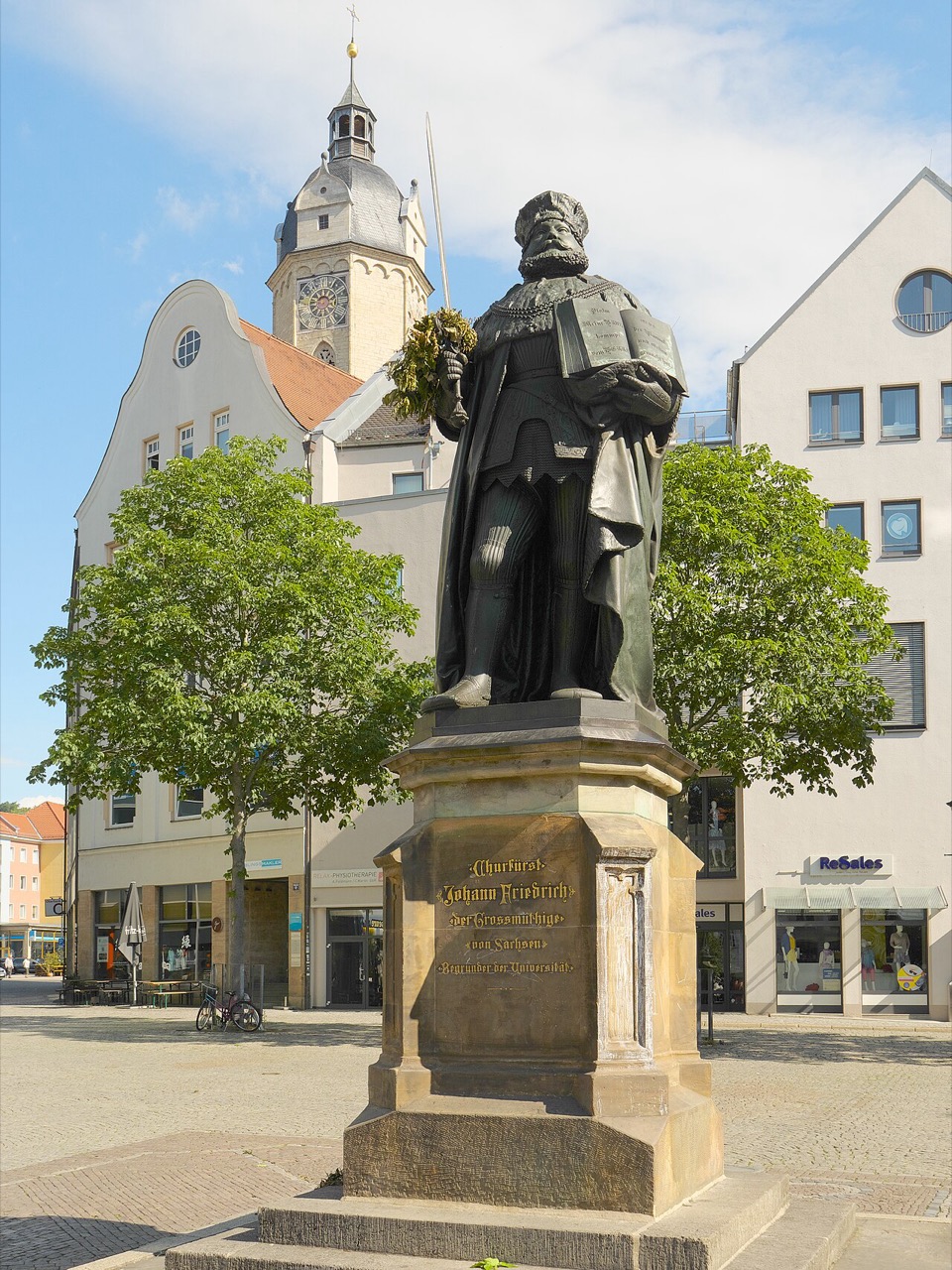
A completely different branch of Jena's history stands at the Burschenschaftsdenkmal. The sculptor Adolf von Donndorf unveiled it in 1883. It commemorates the Urburschenschaft, which students founded in Jena on 12 June 1815. That fraternity fought for a unified Germany, and its colours of black, red and gold later became the German national flag.
Play Jena right in your browser →
Zeiss and Abbe: A City Built on Lenses and Stars
Then the focus shifts from the lecture hall to the workshop. The Zeiss Planetarium has been running since 18 July 1926, making it the oldest planetarium in the world in continuous operation. Engineer Walther Bauersfeld designed it. Planets and fixed stars are projected onto a curved dome above the audience, so even at twelve noon it can be night here. The Ernst-Abbe-Stiftung is the owner.
On Johannisplatz stands a statue of Carl Zeiss, unveiled in 2017. In 1846 the mechanic opened a small workshop in Jena; together with Ernst Abbe and later Otto Schott, it grew into one of the best-known optics companies in the world.
The Ernst-Abbe-Denkmal shows why the name Abbe carries such weight in Jena. Henry van de Velde designed this temple-like pavilion, completed in 1911. Inside stands a herm by Max Klinger, surrounded by reliefs by Constantin Meunier depicting workers. Ernst Abbe (1840–1905) was a co-owner of Carl Zeiss and in 1889 founded the Carl-Zeiss-Stiftung, which shared profits with staff and the university.
From Skyline to River
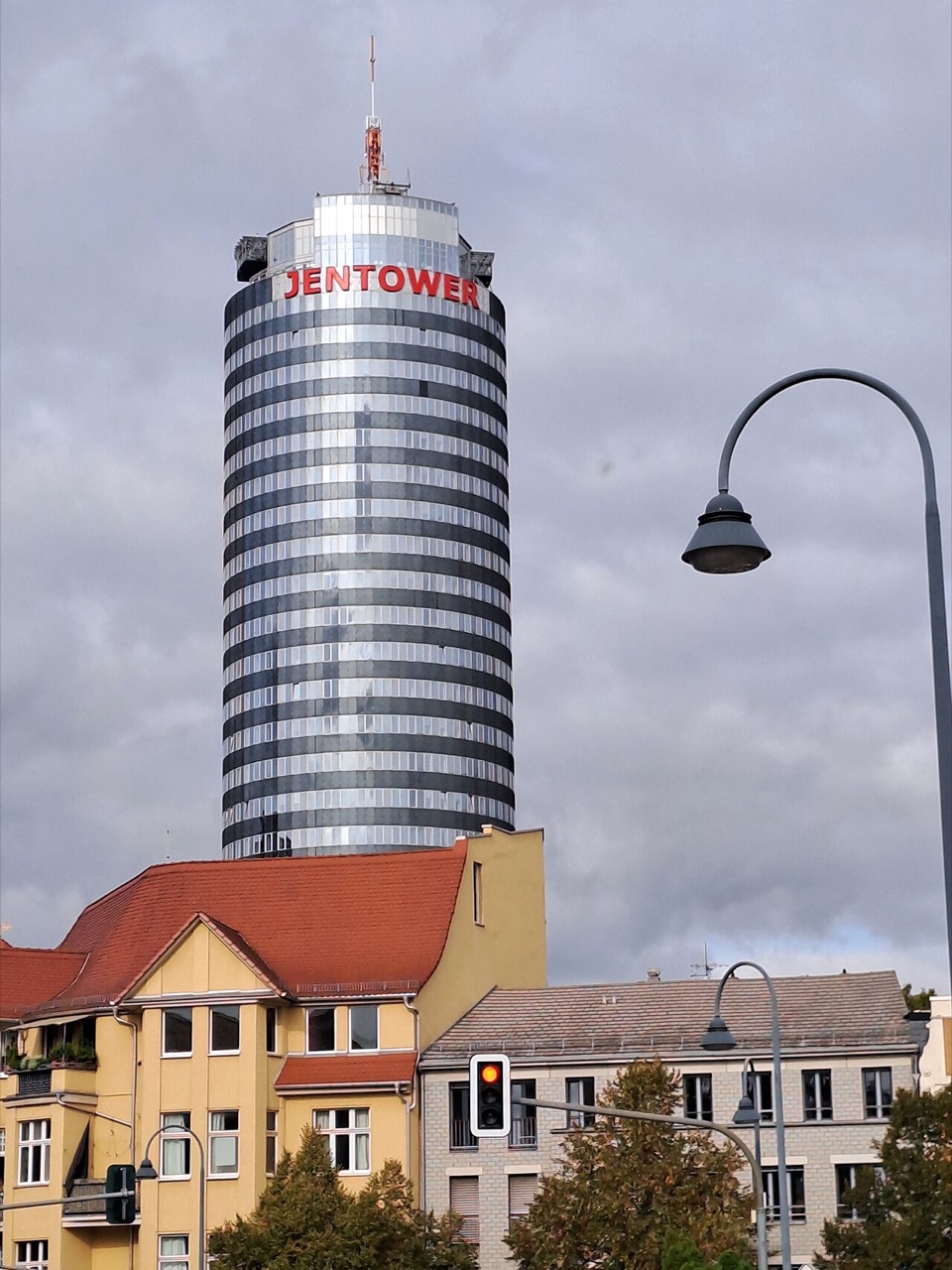
On the Leutragraben stands the JenTower, the tallest silhouette of the entire walk. Here the newest skyline touches the oldest edge of the city, because the past lies only a few steps away. The contrast is typical Jena: modern high-rises right next to the places where it all began.
Cross the Saale afterwards and you arrive in Wenigenjena, on the far side of the old town. There, on Camsdorfer Straße, the Geleitshaus recalls the escorts who once guided travellers along the roads. Walk down to the river, let the water drift by and look back at the centre you have just walked through.
More Than a Taster
This article covers only a part of what you will come across along the way. The full walk through Jena has more stops, contains quiz questions to answer and hides details you only see when you look for them. If you want to discover for yourself what is missing here, choose the Jena route in the CityWalkGems app and walk it at your own pace.
- 11 stops
- Start anywhere
- ~3,6 km route length
- ~637 m longest stretch
- about 1,5–2 h duration
- Free

