
On the northern shore of the deep Traunsee lies Gmunden, a town where stately Habsburg grandeur and centuries-old crafts meet at the water’s edge. While other mountain towns are often defined by a hurried transit to ski slopes, Gmunden invites you to slow down along elegant promenades and through quiet lanes. Anyone embarking on a thoughtful walking tour of Gmunden quickly discovers how closely the crystal-clear lake, the historic salt trade, and the celebrated art of ceramics are interwoven.
Imperial Havens along the Shore
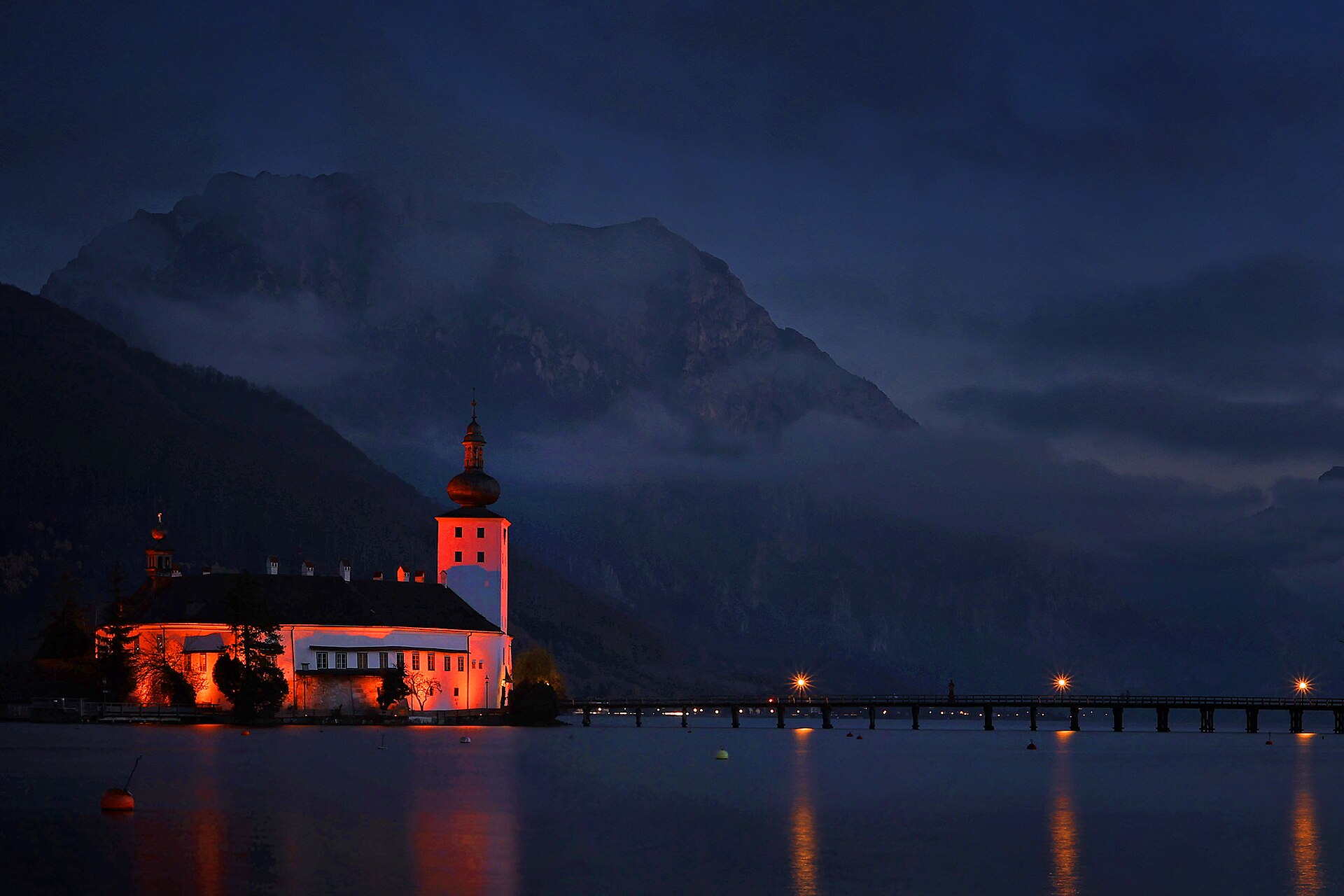
The start of the walk along the water leads immediately to one of Upper Austria's most recognizable landmarks: Schloss Ort. A wooden bridge spanning more than a hundred meters crosses the water to the island upon which the castle rests. Once across the creaking planks, you enter triangular walls that conceal a serene colonnaded courtyard. Throughout the centuries, this structure served as a secure island refuge in the heart of the lake.
Near the lakeshore avenue stands an understated monument: the Kreuz. This cross commemorates Johann Orth, the Habsburg archduke who renounced his noble titles and privileges to sail the world’s oceans as a sea captain, only to vanish without a trace at sea in 1890. The aristocratic past also echoes through the adjoining Toskanapark. The park takes its name from Grand Duchess Maria Antonia of Tuscany, who retreated here in the nineteenth century. Between exotic conifers and along wooden jetties where swans glide peacefully by, one can still sense the secluded serenity of this former royal domain.
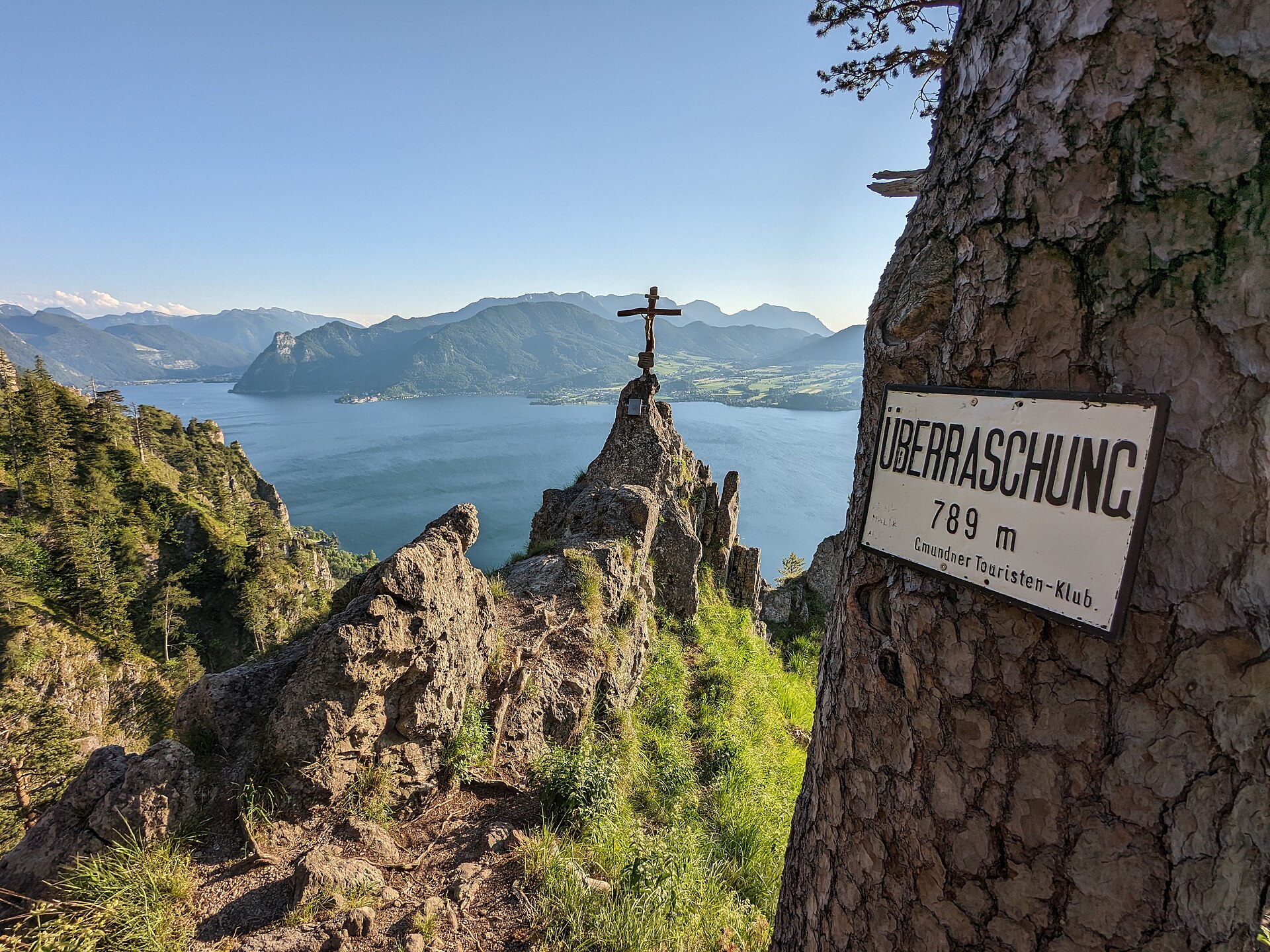
A little further on, a vantage point highlights the dramatic geography of the landscape. From the benches, you look directly out at the near-vertical limestone cliffs of Mount Traunstein, rising sharply against the sky and deep blue water. Landscape painters have traveled to this exact spot since the nineteenth century to capture the interplay between the mirror-smooth lake and rugged rock faces.
Play Gmunden right in your browser →
Strolling Along Quays and Lakeside Baths
Following the shoreline, the atmosphere gradually shifts from stately seclusion to civil vibrancy. The Gmundner Strandbad has welcomed bathers since the beginning of the twentieth century. Featuring wooden docks, historic changing cabins, and expansive sunbathing lawns, this lakeside bath is a tangible testament to the early rise of Austrian swimming and health resort culture in pure alpine waters.
Continuing toward the town center, you will pass the Lehenaufsatz. This leafy terrace serves as a tranquil, green lookout perched above the quays, offering shaded benches beneath mature tree canopies overlooking sailboats in the bay. From here, the path transitions seamlessly into the wide Esplanade. This stately lakeside promenade emerged during the heyday of nineteenth-century spa tourism. Beneath majestic plane trees, imperial guests, diplomats, and composers once strolled past flowerbeds and open-air cafés—a tradition of seeing and being seen that keeps the elegance of historic salon culture alive.
At the end of the promenade, the ceramic sculpture of the Salzträgerin honors a very different chapter of the town's history. The glossy, glazed figure depicts a woman carrying a heavy wooden tub on her back. The artwork pays tribute to the arduous labor of the women who hauled precious salt—the 'white gold' of the Salzkammergut—through the harbor. Here, two cornerstones of local identity unite: the historic salt trade and the delicate Gmundner ceramic craft.
Craftsmanship and Governance in the Old Town
Beyond the waterfront, the narrow Kirchengasse climbs gently toward the historic heart of the settlement. Characterized by rounded cobblestones and facades painted in soft pastel shades, this alley is home to small artisan workshops and independent boutiques. The sloping lane bridges the transition from the shore to the Gothic and Baroque core of Gmunden.
Near the edge of the historic quarter, the preserved walls of the Kurzmühle bear witness to early industry. For centuries, the rushing waters channeled from the river powered heavy wooden waterwheels to grind grain for local bakers and residents—a vivid reminder of how water power once fueled the early urban economy.
The administrative heart of this prosperity was situated at Museumplatz. Surrounding the cobbled square stand the sturdy stone arches and Renaissance windows of the former Imperial Salt Office. From this central vantage point, officials oversaw the lucrative regional salt monopoly. Today, the museum collections housed within the building preserve the extensive history of Gmunden ceramics alongside the life stories of notable local figures.
The walk concludes in the main square before Gmunden’s sixteenth-century Rathaus (Town Hall). While the building stands out for its graceful arcades and curved gables, its true wonder rings out through the air: the town hall features a world-famous carillon crafted entirely from local ceramic bells. As the clear chimes echo across the square, they offer a fitting finale to a journey connecting the water, the salt, and the clay of this remarkable region.
This route highlights just a selection of the historical spots and stories that Gmunden has to offer. On the complete walk, you will uncover many more hidden alleyways, architectural details, and intriguing anecdotes about life by Lake Traunsee. If you would like to explore at your own pace and discover all the fascinating backgrounds and secrets, open the Gmunden walk in the CityWalkGems app.
- 12 stops
- Lakeshore Memorial Cross start
- ~4,7 km route length
- ~694 m longest stretch
- about 1,5–2,5 h duration
- Free

