
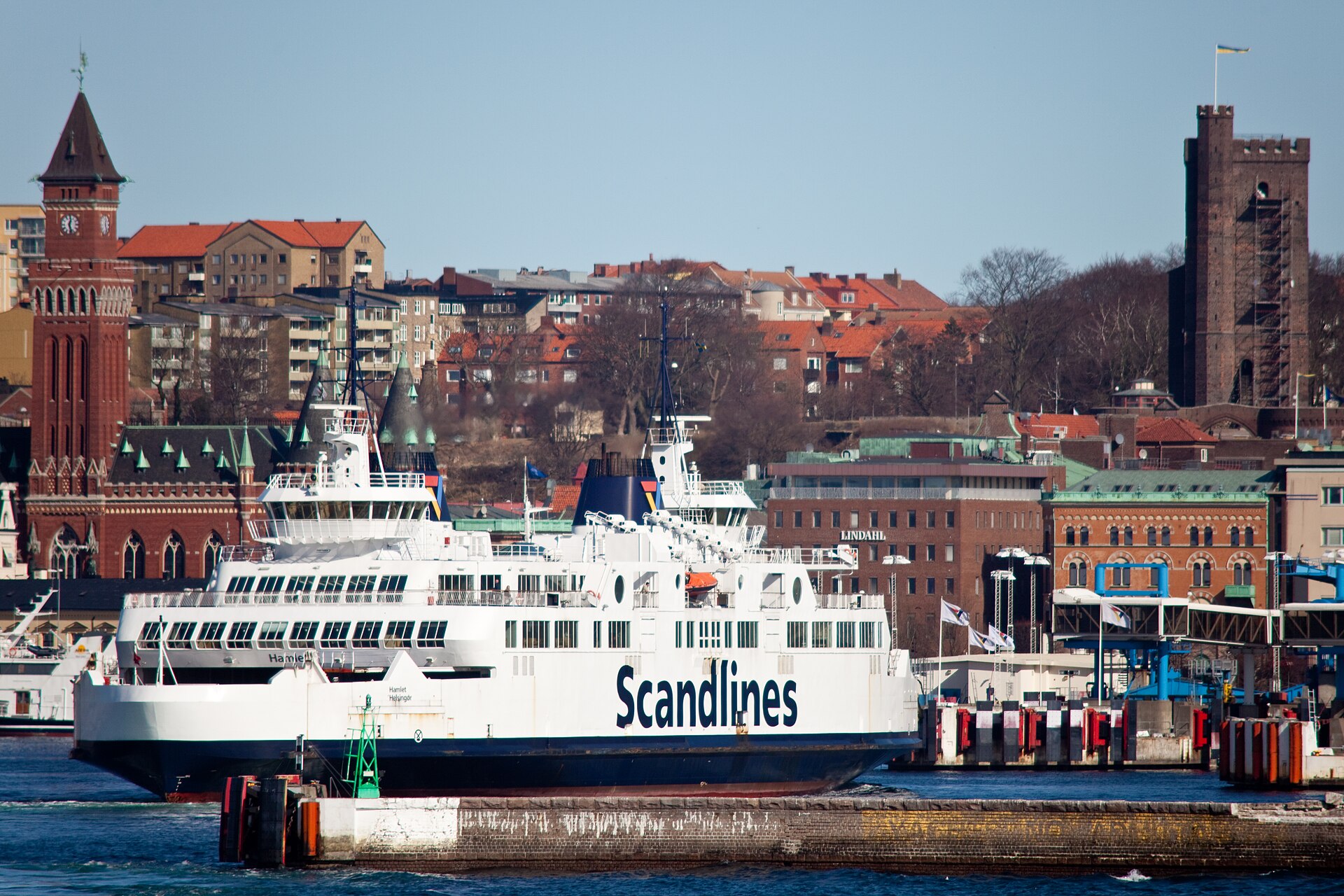
Helsingborg is characterized by its dramatic changes in elevation and its direct connection to the Sound. At the narrowest point between Sweden and Denmark, the city has overlooked busy maritime traffic toward the Danish coast for centuries. Anyone setting out on a diverse walking tour of Helsingborg will discover a compact coastal city where medieval military history, nineteenth-century port expansion, and modern culture blend seamlessly.
Between Fortified Ramparts and Parkland on the Ridge
Helsingborg's varied topography is immediately apparent from Stortorget. Here, the Terrasstrapporna (Terrace Steps) rise with broad granite steps toward the top of the ridge. King Oscar II inaugurated this ceremonial structure in 1903 to connect the lower districts of the city with the medieval fortress grounds. It is well worth pausing on the intermediate landings: the view stretches across the harbor basins and out over the waters of the strait.
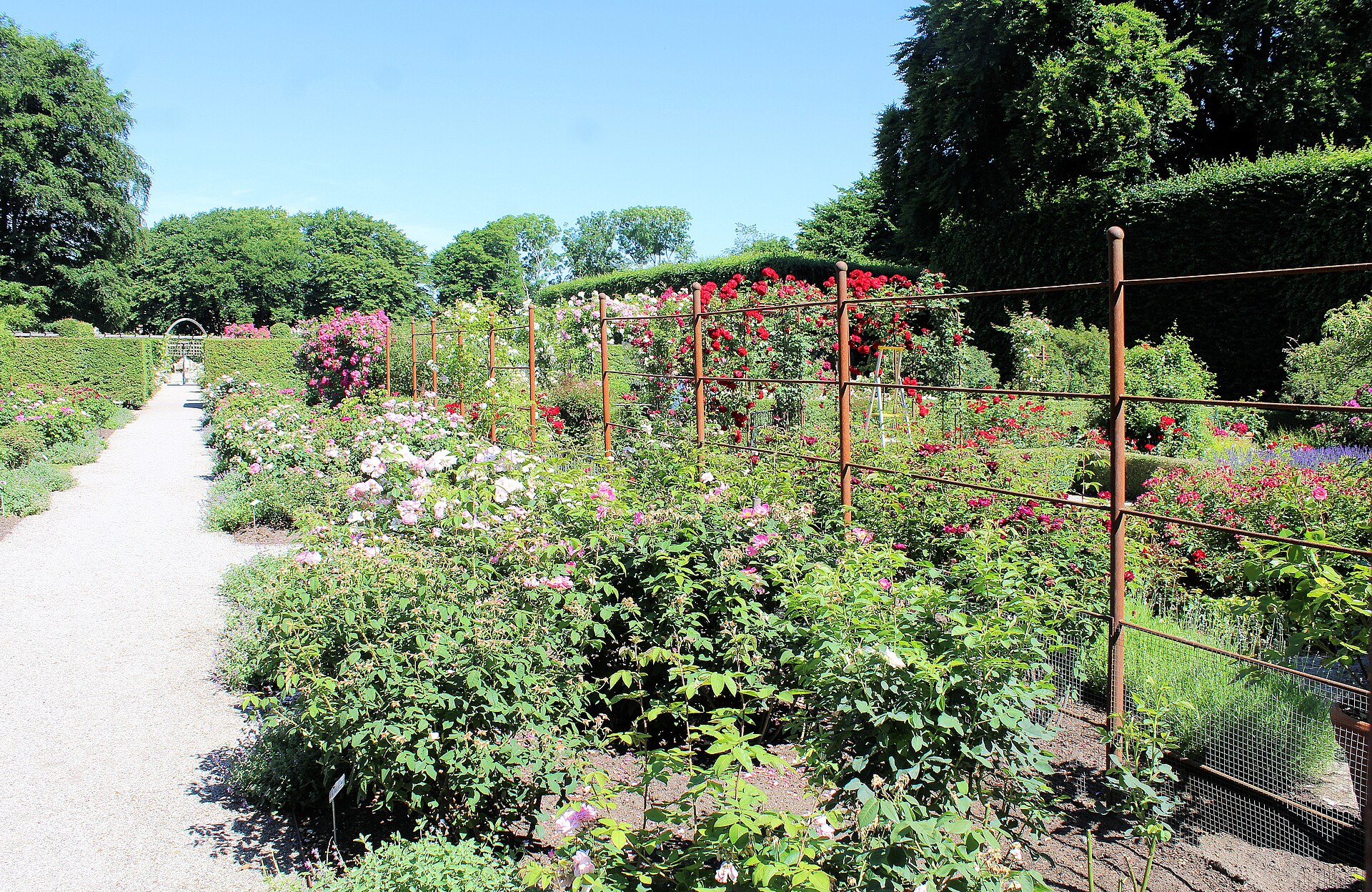
Once at the top, you arrive in Slottshagen, a park built atop centuries-old earthen ramparts and deep former moats. Where locals now stroll across rolling lawns and watch passing ferries, Swedish and Danish forces once fought fiercely for strategic dominance over the water. Tucked away among the leafy avenues of this elevated park lies the rose garden. Geometric boxwood hedges frame a collection of historic varieties and modern shrub roses, while the canopy of surrounding trees effectively muffles the sounds of the city.
A little further along the ridge, on Bergaliden, a stately brick building recalls a very different chapter of urban history: the Medical History Museum. During the nineteenth century, the premises served as an infirmary and maternity clinic. Inside, original apothecary cabinets, early medical instruments, and historical documents offer a glimpse into how epidemics were fought and healthcare was organized in times past.
Quays, Kings, and the Crossing to Denmark
Down along the waterline, the bustling harbor dominates the scene. A salty sea breeze consistently sweeps across the open esplanade of Kungstorget. It was here that King Oscar II came ashore in 1895 to mark the expansion of the port, an undertaking vital for accommodating the era's booming steam navigation. Even today, ferries depart from just off the quayside on their frequent crossings to Danish Helsingør.
Just to the north lies Hamntorget, where creaking mooring ropes and lapping water set the tone. For centuries, this historic quay served as the primary gathering place for herring fishermen, pilots, and merchants. Preserved harbor cranes and former warehouses still bear witness to the quay's maritime trading heritage. If you continue to the very tip of the pier, you will find Vågpelare 1-10 m/s. This stone column, sculpted by Claes Hake, stands as a tangible tribute to the wind and wave patterns of the Sound. From this blustery vantage point, you enjoy an unobstructed view across the water to Kronborg Castle on the opposite shore.
The Refugee Monument (Flyktingmonumentet) along the quay stands as proof that this strait was not merely a trade route, but also a vital lifeline. This granite memorial commemorates the autumn of 1943, when Danish fishermen used hundreds of small boats under the cloak of darkness to ferry thousands of fellow citizens and resistance fighters across the occupied waters to safety in neutral Sweden.
Industrial Heritage and Contemporary Art
Near the harbor quays, Henry Dunkers Plats pays tribute to the man who left an indelible mark on modern Helsingborg. Entrepreneur Henry Dunker expanded the local rubber manufacturing industry into a global enterprise and bequeathed his considerable fortune to an educational and cultural foundation. That patronage took physical form in 2002 with Dunkers kulturhus, located right on the square. With its striking white facades and expansive windows reflecting the light off the harbor water, the building brings exhibition halls, music venues, and displays on local history together under one roof.
Continuing south toward the Söder neighborhood, you pass Stadsparken. Its circular pool with a gently splashing fountain, surrounded by beeches and lawns, has long served as a natural threshold between the historic city center and the southern working-class quarters. In Söder itself, the city takes on a contemporary, creative flair: adorning the windowless facade of an apartment block is Mélia's Journey, a towering trompe-l'œil mural by French artist Mantra. Depicting pinned butterflies in exquisite detail, the piece was created during the ArtStreetHbg street art festival and lends an eccentric charm to the surrounding streets, which are lined with eateries and outdoor terraces.
This selection of sights is merely a taste of what the shores of the Sound have to offer. The complete walking tour of Helsingborg—featuring additional historical locations, interactive stories, and hidden gems—can be found in the CityWalkGems mobile app. Select the Helsingborg route and discover the city at your own pace.
- 12 stops
- Terrace Stairs start
- ~4,4 km route length
- ~746 m longest stretch
- about 1,5–2,5 h duration
- Free

.jpg)