
Also known as: Narbona

Narbonne, nestled in sunny Southern France, is more than just a picturesque Mediterranean town. It's a living history book, where every cobblestone whispers tales of emperors, archbishops, and flourishing trade. From the impressive grandeur of unfinished cathedrals to the depths of Roman excavations, Narbonne invites you on a journey of discovery that transports you back in time, while simultaneously letting you savor the vibrant French atmosphere. Here, a rich past unfolds, woven with threads of ambition, art, and the constant rhythm of water, a city that has preserved its unique identity through the centuries.
Narbonne, the First Roman Colony
The journey through Narbonne often begins with a deep dive into its Roman past. Literally, because at the Roman Granary Museum you descend to the very foundations of the city. Beneath your feet lies the ancient Via Domitia, the crucial Roman road that connected Narbonne to the rest of the empire. This museum is ingeniously built around the impressive remains of a Roman granary, a tangible reminder of the bustling life and economic activity of 2000 years ago. It's a place where you can feel the echoes of a lost era.
Not far from there stands the iconic La Louve de Narbonne, a powerful and direct link to the city's Roman roots. This replica of the famous Capitoline Wolf reminds us that Narbonne, then known as Narbo Martius, was the very first Roman colony outside Italy. It symbolizes the founding power and the deep-rooted heritage that has persisted in the city throughout the centuries.
For those who truly want to travel back in time, the Vestiges archéologiques du Clos de la Lombarde are a must. Here, hidden behind the modern city, lie the fascinating remains of a lavish Roman villa. You can admire beautiful mosaics and clear traces of the daily life of the Roman elite. It's a window into Narbonne's rich past as a thriving Roman metropolis, where you can imagine what life was like back then. Even in the Archevêché Garden, an oasis of tranquility in the heart of the city, subtle Roman remains emerge, a silent witness to Narbonne's deep history.
Play Narbonne right in your browser →
Gothic Ambition and Architectural Splendor
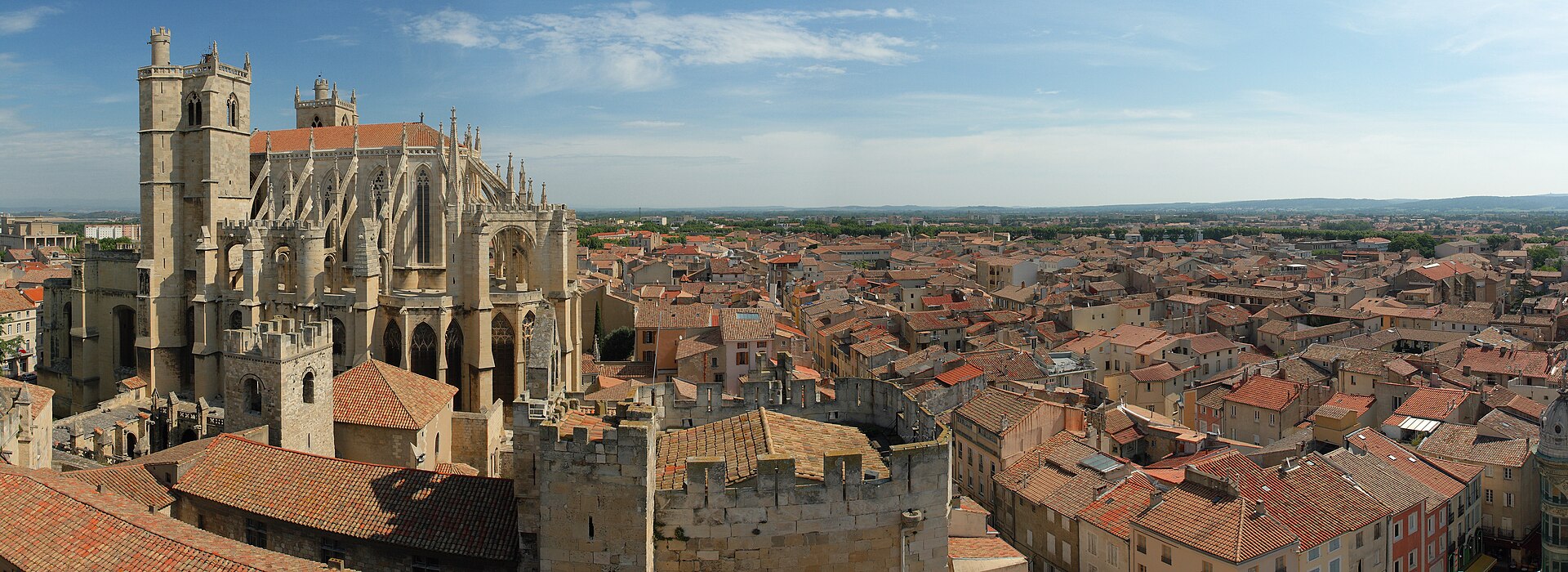
Roman influence gave way to new ambitions, visible in the imposing architecture that graces Narbonne. The Cathédrale Saint-Just et Saint-Pasteur is a striking example of this. This Gothic giant, though unfinished, showcases Narbonne's unparalleled ambition in the Middle Ages. The intention was to build the tallest cathedral in France, and the towering walls that stand here are a silent testament to that grandiose dream. The scale of the building is truly impressive.
Next, step into the grandeur of the Palais-Musée des Archevêques, a complex that exudes centuries of power and history. This is not just a building; it's a collection of architectural styles, from Roman to Gothic, reflecting Narbonne's evolution as an important episcopal city. The stately halls tell stories of influential archbishops, and the impressive keep towers high above the city, a symbol of their authority.
A jewel of Renaissance architecture is the Maison des Trois Nourrices. This house, dating from the 16th century, is a beautiful example of wealth and refined taste. The three female figures, the 'nourrices' or caryatids, supporting the balconies, are a rare and elegant detail that you won't easily overlook. Further on, the Ancienne sous-préfecture, with its stately facade and classical details, testifies to the administrative grandeur of yesteryear. The building exudes timeless elegance and tells stories of power and decisions made here throughout the centuries.
The Rhythm of Water and the Music of the City
Narbonne's identity is inextricably linked to water. At the Ècluse de Narbonne, where the Canal de la Robine crosses the city, you feel the heartbeat of the water. This lock is an essential part of the canal, connecting Narbonne to the Mediterranean Sea. It's fascinating to watch boats ascend and descend, a place where water, engineering, and history converge in a soothing rhythm.
The Gabare 'Le Solal' floats peacefully here, a reminder of a bygone era. Once, boats like this were the lifeblood of Narbonne. They transported wine, grain, and other goods along the Canal de la Robine, keeping the city a bustling trade center. The 'Solal' reminds us of an era of slow travel and flourishing trade, crucial for the city's prosperity.
And then there's the music, equally a part of Narbonne's soul. Here, in this humble place, it all began for Charles Trenet, the man who taught France to sing. This house is the birthplace of the 'Fou chantant' (Singing Madman), whose joyful songs still echo through the streets of Narbonne and far beyond. His spirit lives on in every note you hear, a cheerful echo of the city's cultural heritage.
Conclusion: This glimpse into Narbonne's highlights shows only a fraction of the stories the city has to offer. From its deep Roman roots to its medieval grandeur and vibrant waterways, Narbonne is a city you must experience with all your senses. The full walk through Narbonne reveals many more hidden details and fascinating places, and invites you to unravel the secrets of this special city yourself. Choose the walk in the 'CityWalkGems' app and let yourself be carried away by Narbonne's rich history and culture.
- 12 stops
- Start anywhere
- ~4,7 km route length
- ~871 m longest stretch
- about 1,5–2,5 h duration
- Free

