
New Plymouth is not a town you tick off on autopilot. It has a gallery the art world knows by name, a stone church older than any other in New Zealand, and a 52-hectare park within walking distance of the centre. A walking tour of New Plymouth takes you past art, early colonial history and greenery in just a few hours, with no car needed. Here is a selection of what you will come across along the way.
Art by the Coast
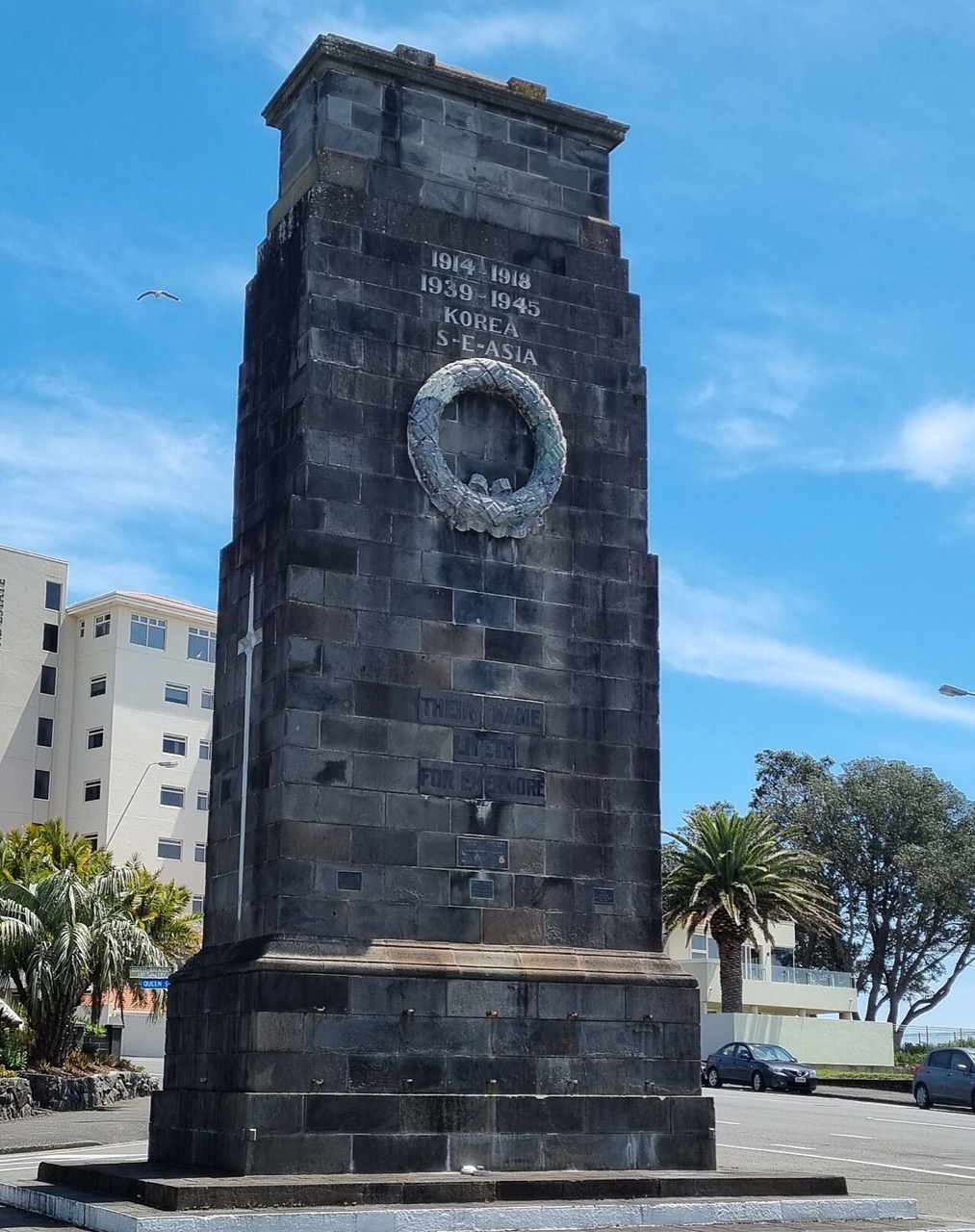
The route begins at the Cenotaph on the corner of Queen Street and St Aubyn Street. Lord Jellicoe unveiled it in September 1924. A cenotaph is an empty tomb. It honours people who rest far away and gives families a place to remember them close to home.
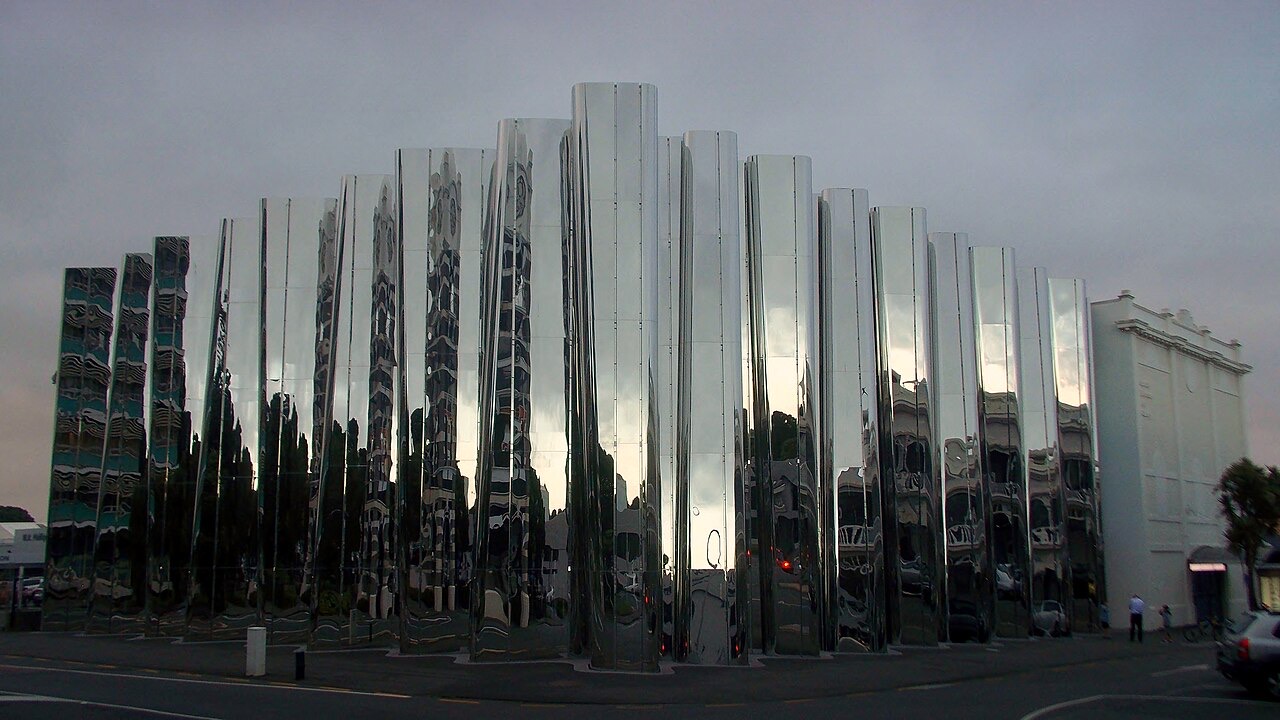
Next comes the Govett-Brewster Art Gallery. Monica Brewster made it possible with a gift of £50,000 in 1962. The gallery opened in 1970 in a former cinema and has shown contemporary art ever since. Next door the Len Lye Centre opened in 2015. Step inside and form your own opinion.
On the coastal walkway waits the Wind Wand, a slender tube of 48 metres by artist Len Lye. It was installed in December 1999 but had to come down again within a few weeks. After repairs it returned in June 2001. Come back after dark, when it lights up.
Library, Cinema and Churches
Since June 2003 Puke Ariki has combined the public library from 1848 with the Taranaki Museum from 1919. The Māori name comes from the pā of Te Āti Awa that once stood on this spot. Most of the site was later dug away for the railway yards. So you are walking on ground with a long history.
A little further on stands Richmond Cottage, smaller than almost everything else on the route. It was built in 1853 and 1854 for the Richmond and Atkinson families. It first stood by the sea and was moved to this site in 1961. Since 1963 it has been a museum.
On Devon Street West stands the Mayfair. It opened in 1916 as Everybody's Theatre. In 1937 and 1938 architect Thomas H. Bates gave it an Art Deco front. Heritage New Zealand lists the building as Category 2.
Another building with that status is St Andrew's Presbyterian Church by architect Frederick de Jersey Clere. It opened in 1932 and is built of local stone under a roof of Welsh slate. Walk around it and see how the building holds the corner.
Taranaki Cathedral is the oldest stone church in New Zealand. Its first part was built in 1845 and 1846 as St Mary's. As a cathedral it only dates from 2010. The building closed in February 2016 for earthquake strengthening. It is the seat of the Bishop of Waikato and Taranaki.
Marsland Hill and Pukekura Park
On Marsland Hill stands the Boer War Memorial, unveiled in January 1911. It is therefore older than the First World War. It honours the men of the district who fell in the South African War of 1899 to 1902. Heritage New Zealand has registered the monument as Category 2.
Marsland Hill is also called Pūkākā. Here too is the observatory of the New Plymouth Astronomical Society. It has stood here since 1920. The society opens it to the public on Tuesday evenings. Check the times before you go.
From here you walk into Pukekura Park, 52 hectares of greenery in the middle of the city. It opened in 1876 and is a Garden of National Significance. The walk ends at the Poet's Bridge, built in 1884 and rebuilt in 1938. This bridge is a Category 2 Historic Place too.
More Than This Selection
This article covers only part of what the route has to offer. The full walk through New Plymouth includes more stops, quiz questions and hidden details that you only see when you come across them yourself. If you would like to discover them for yourself, choose the New Plymouth walk in the CityWalkGems app and explore the city at your own pace.
- 12 stops
- Cenotaph start
- ~3,9 km route length
- ~648 m longest stretch
- about 1,5–2 h duration
- Free

