
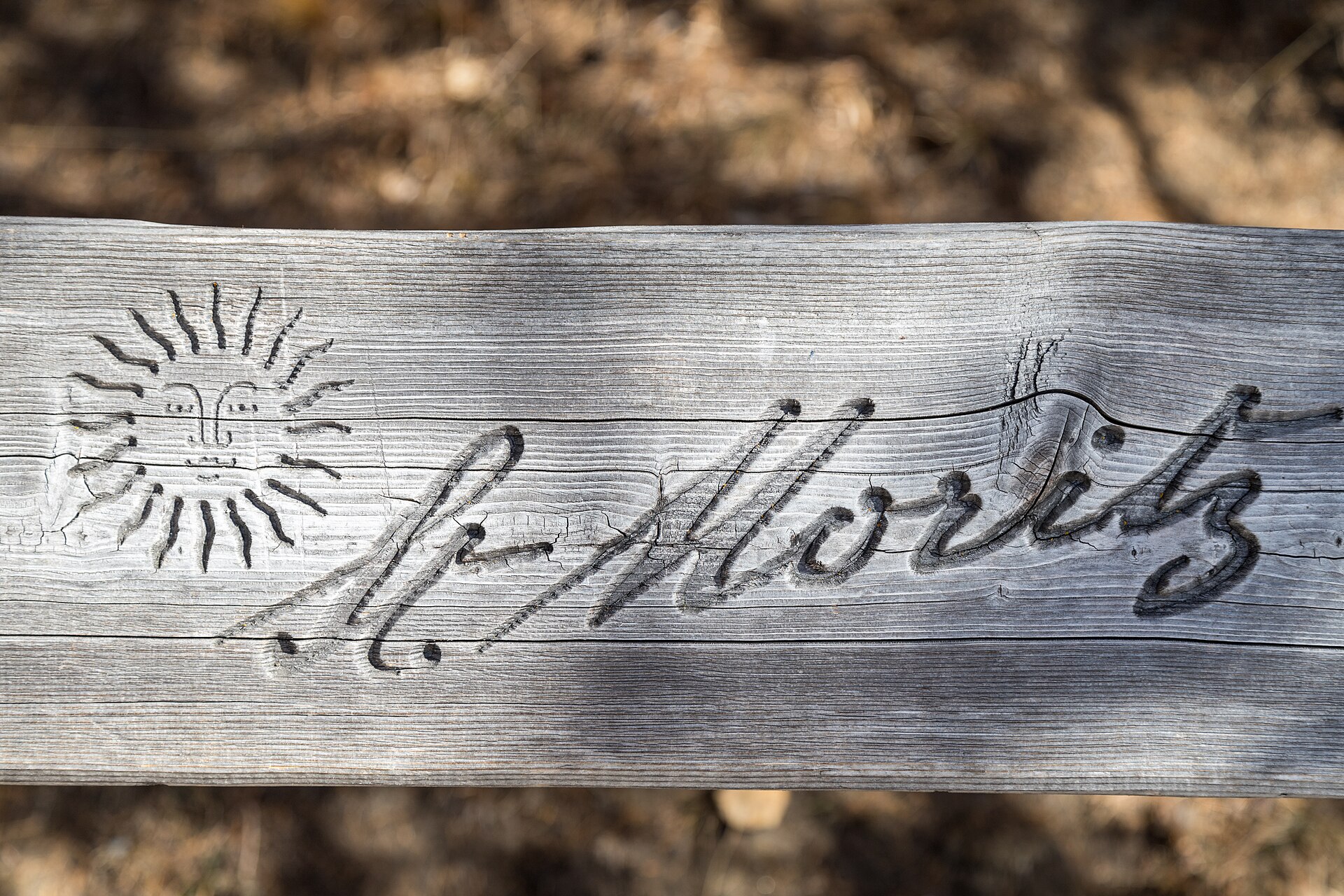
St. Moritz has twice seen the Winter Olympics open and close, it has an ice run well over a kilometre long that is given over to skeleton every winter, and it has a tower that stands visibly off plumb. So anyone wondering what to do in St. Moritz soon gets well beyond hotels and winter sports. On foot, you notice how closely these stories are packed together: sporting history, art, churches and the Romansh language of the Engadin all make an appearance. Even the name has something to tell. Moritz is the German form of Mauritius, or Maurice, and the Catholic church of San Maurizio honours the same saint in Italian.
Where winter sport picked up speed
In the early 1870s, guests at the Kulm Hotel began racing each other on sledges. Out of that pastime grew the Cresta Run, which hotel guests and St. Moritz locals built together in 1884. The track takes its name from the hamlet of Cresta, which you can pick out as you look down from above. In winter it consists of 1212.5 metres of natural ice, and it is one of the few tracks in the world devoted entirely to skeleton.
The tradition lives on off the ice too. The St. Moritz Tobogganing Club was founded in 1887, and its members still lunch in the Sunny Bar at the Kulm.
The other great sporting chapter unfolds in Badrutts Park. In both 1928 and 1948, the Olympic Stadium was the setting for the opening and closing ceremonies of the Winter Games, and it hosted competitions in ice hockey, speed skating and figure skating. Later the stadium building stood empty for about twenty years, until it was restored and given a new purpose.
A tower that demands attention
If the horizon suddenly seems a little off, you are probably looking at the Schiefer Turm, the Leaning Tower. It dates from the 16th century and, according to the municipality, was tilting by a full 5.5 degrees in 2021. That makes it one of the most steeply leaning towers in the world.
The cause lies in the ground beneath it. At the end of the 18th century, a shift in the slope set the tower moving. It owes the fact that it is still standing to repeated and costly interventions. Take your time to look at it properly and compare its line with the buildings around it: only then do you see how much 5.5 degrees really is.
The Engadin beyond the ice
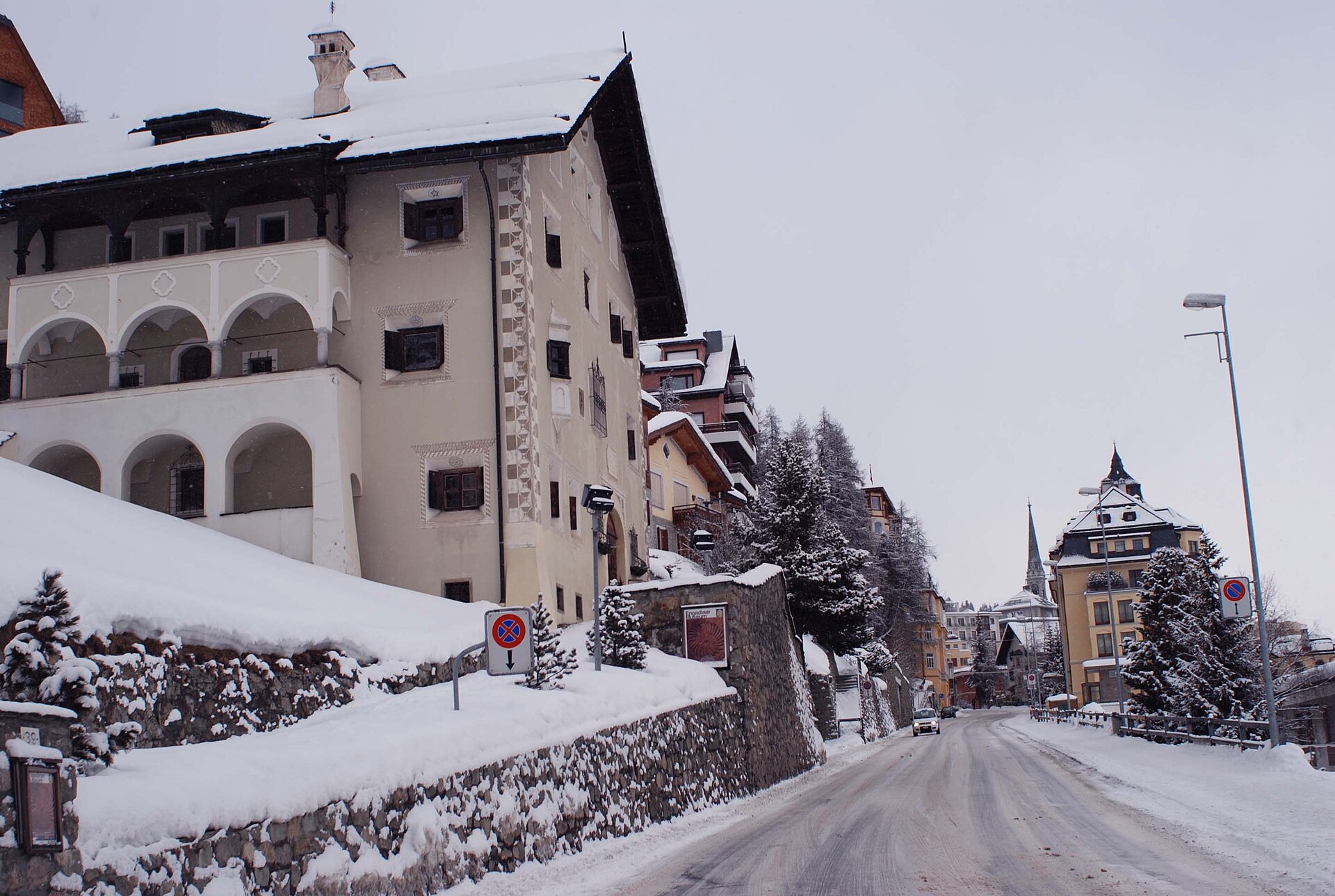
Long before there were Olympic rings and grand hotels, people were already living in this high valley. The Engadiner Museum tells their story. Don't expect an art gallery: this is a local heritage museum devoted to the folk culture of the Upper Engadin, and as such a useful counterweight to the image of St. Moritz as a sports resort.
For art, head to the Segantini Museum, dedicated to the work of Giovanni Segantini. Architect Nicolaus Hartmann built it from local quarry stone rather than iron, and its doors opened in the summer of 1908. The design follows the pavilion that Segantini himself had conceived for his Engadin panorama at the 1900 World's Fair in Paris. The St. Moritz version is smaller and was given additional floors. The result is a building that harks back to a plan intended for a very different stage.
If you want to slow the pace even further, there is the St. Moritz library, a quiet counterpoint to all those races on the ice.
From Dorf to Bad
St. Moritz has several faces, with the village of St. Moritz Dorf as one part and the spa district of St. Moritz Bad as another. The Reformed parish holds services in three places spread across this area. The name of the Reformierte Dorfkirche, the Reformed village church, tells you where to find it. Then there is the Badkirche, and in St. Moritz Bad stands the Französische Kirche, or French Church. The latter is a protected neo-Gothic church, built from 1875 to 1877 for the French-speaking congregation.
Between the Badkirche and the French Church you walk through more of St. Moritz Bad. The Catholic church of St. Karl, with its slim Italian-style bell tower, stands close to the Inn. A little further on, the Forum Paracelsus recalls the age of the spa guests. The springs here were already known in the Bronze Age, more than 3,400 years ago.
Set out for yourself
What you have read here is just a selection of what there is to see along the way. The full walk through St. Moritz has more stops, questions that make you look at façades and streets differently, and details we have deliberately held back. Fancy discovering them yourself? Choose the St. Moritz walk in the CityWalkGems app and lace up your walking shoes.
- 12 stops
- Olympiastadion start
- ~4,6 km route length
- ~718 m longest stretch
- about 1,5–2,5 h duration
- Free

