
Arras is not a city you simply wander through at random. Located in the north of France, it has a centre that feels like a piece of the former Low Countries, with open squares and a single tower that watches over everything. A seventh-century abbey, a UNESCO-listed belfry and a cathedral with a remarkable story all lie within walking distance of each other. On a walking tour of Arras, you see within just a few kilometres how a city grows, is destroyed and rises again.
Beneath the Belfry: The Squares of Arras
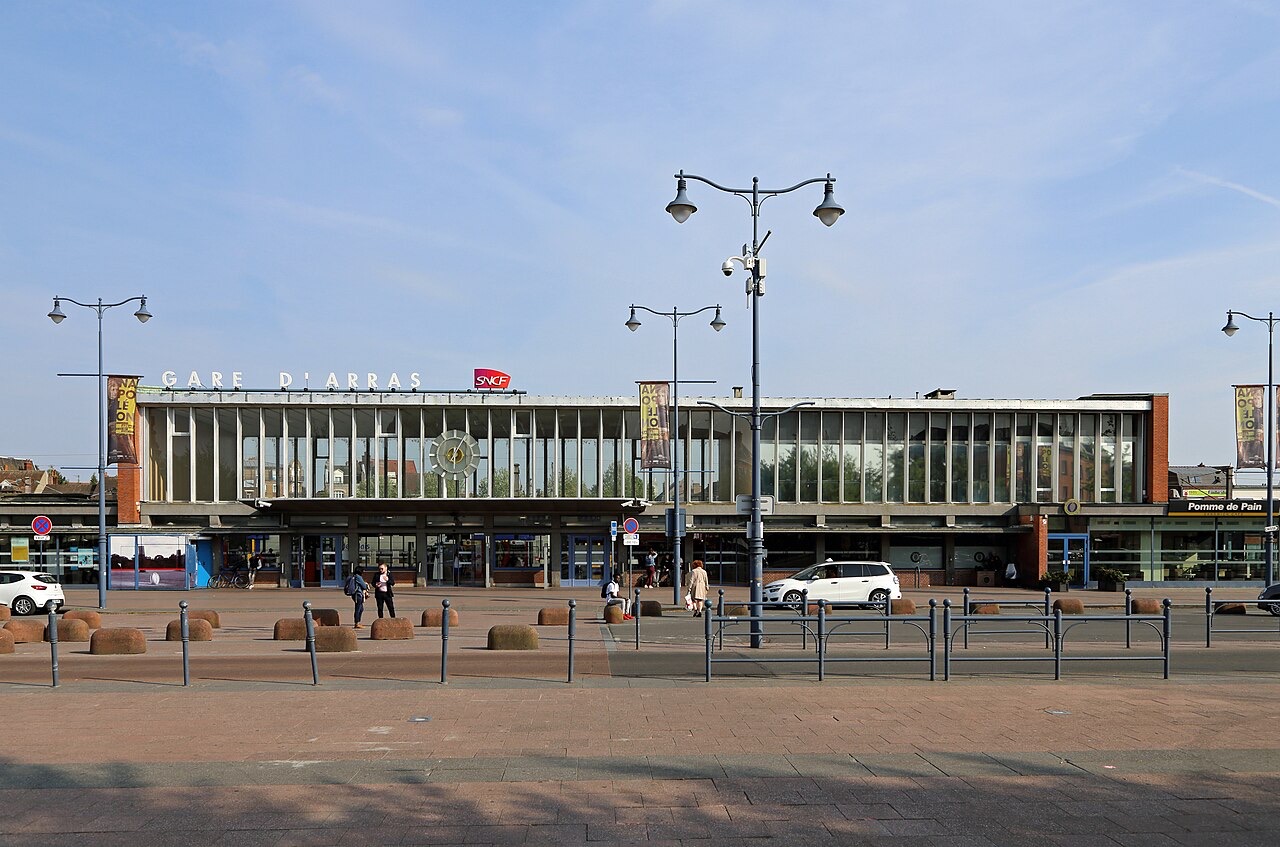
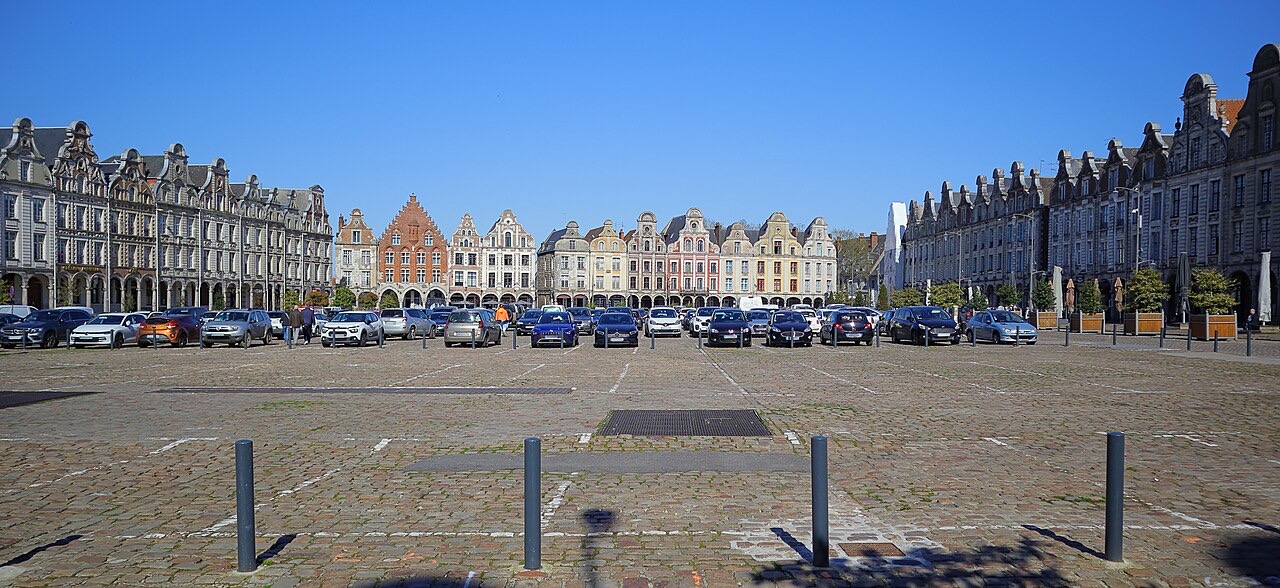
You begin at Arras railway station, where trains from Paris and Lille stop. From there you walk to the heart of the city, where two squares together form the historic centre: the Grand-Place and the Place des Héros. Both are open squares of the 'grand-place' type, like those found in many cities of the old Low Countries. They lie right next to each other, and what you notice most is how far your gaze travels before anything stops it.
That 'something' is the tower of the town hall, the Hôtel de Ville. This belfry is the landmark of all Arras: on every map, everything points towards it. The French state recognised the building as a monument historique in 1921.
The belfry itself, the Beffroi d'Arras, has an eventful history. Construction began in the 15th century and was completed in 1554 to plans by Jacques le Caron. It is a Flamboyant Gothic tower that once also served as a prison. It was rebuilt identically twice: in 1833 because it threatened to collapse, and again after the German shelling of 1914. Since 2005 it has been on the UNESCO World Heritage list. Knowing this changes how you look at the tower: what you see is a carefully repeated version of the original.
Between the two squares runs the short Rue de la Taillerie. In the Middle Ages the cloth hall stood here, and Arras was known for its fine cloth. The name refers to the 'taille', a measure for cloth. Look up at the house signs: number 10 still shows a carved piece of cloth.
Play Arras right in your browser →
Abbey and Cathedral: The City That Grew Around Saint-Vaast
A few streets further on, the story shifts from civic to ecclesiastical. Arras grew around the abbey of Saint-Vaast, at first as a village on the banks of the Crinchon. Benedictines founded the abbey in 667, and in 1619 it even established one of the three first colleges of the University of Douai. That says a lot about the weight of this place in the region.
Next to the abbey stands the Cathédrale Notre-Dame-et-Saint-Vaast. In 1778 construction began on an enormous new church for the abbey. When the French Revolution seized the abbey buildings, that church took on a new role: in 1804 it became a cathedral. In doing so it replaced the great Gothic cathedral of Notre-Dame-en-Cité in the west of the old town, which had been destroyed during the Revolution. Today it is the cathedral of the diocese of Arras. It is one of those places where you see at a glance how politics and faith have shaped the city.
Quiet Corners and Small Monuments
Not everything in Arras clamours for attention, and that is precisely the appeal of the route. The Chapelle des Chariottes is easy to miss, but has the same status as the town hall: monument historique. Protection in Arras was therefore never meant only for the giants of the skyline. The Église Saint-Géry, a parish church of the diocese of Arras, borrows its style from the Middle Ages without being medieval itself, and does not appear on the postcards.
A lovely detail along the way is the Fontaine du Pont-de-Cité, also known as the Neptune Fountain: a sea god, far from any sea. It has been protected as a monument historique since 1988. At the end of the route stands the Église Saint-Nicolas-en-Cité, consecrated in 1846 and likewise part of the diocese of Arras. Then you walk back to the great squares, where the terraces beneath the belfry round off the walk in a convivial way.
More Than a Taster
This article covers only part of what Arras has to offer. The full walk includes more stops, a series of quiz questions and details you only notice when you truly stop to look. If you want to discover the city that way, choose the Arras walk in the CityWalkGems app and let the route do the work while you read the façades.
- 12 stops
- Gare d'Arras start
- ~3,9 km route length
- ~692 m longest stretch
- about 1,5–2 h duration
- Free

