
Traveling across the vast plains of northern France, you can see Laon rising on the horizon from miles away. Perched atop a limestone ridge a hundred meters high, the fortified upper town towers proudly over the surrounding countryside. With its miles of ramparts, medieval gates, and deeply carved valleys, the historic center feels almost like an island in the sky. Taking a walking tour through Laon means stepping into a layered past that spans from Celtic excavations to royal sieges.
Stone Beasts of Burden and the Templar Legacy
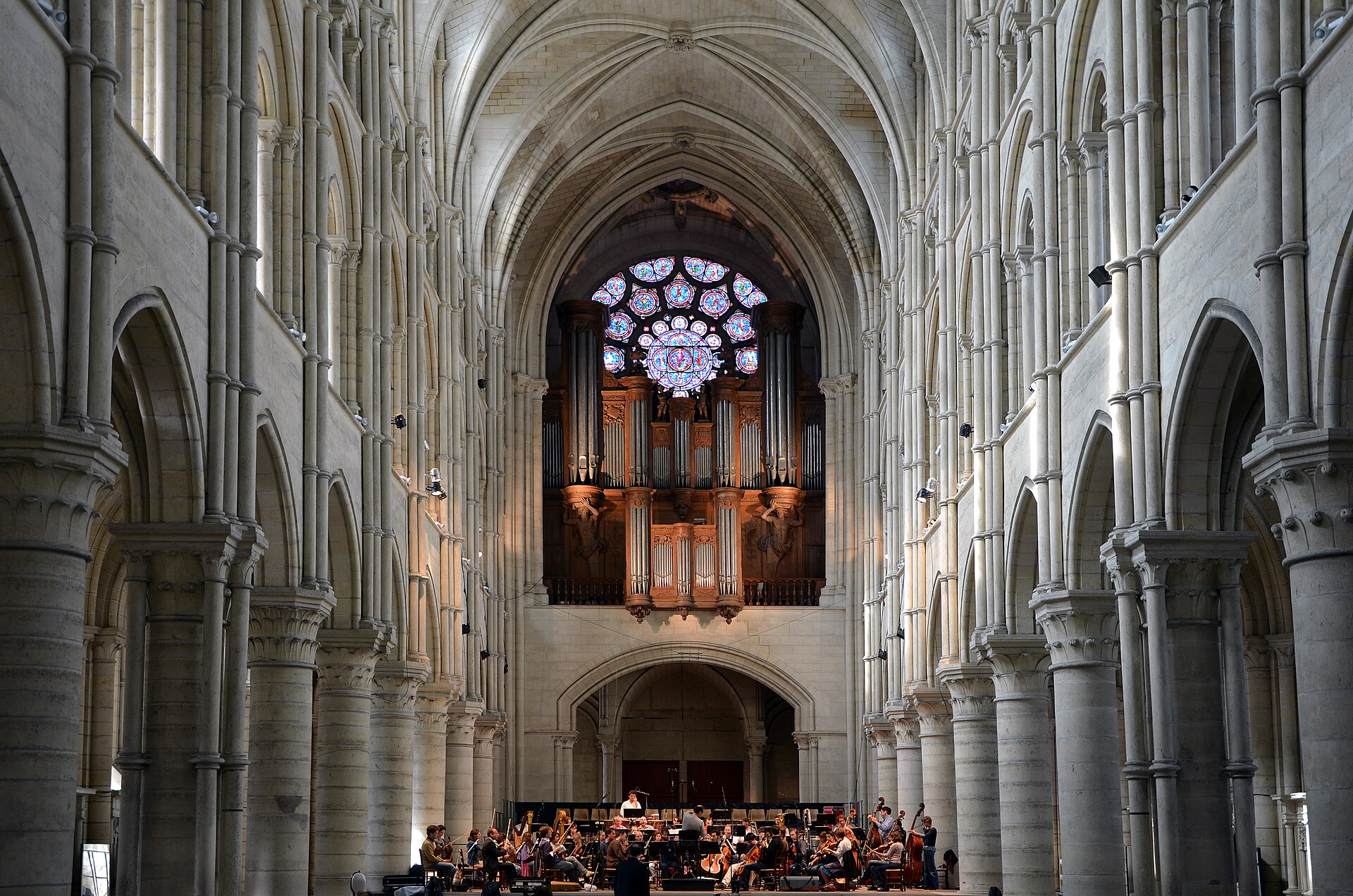
The silhouette of the upper town has long been dominated by the Cathédrale Notre-Dame de Laon. This early Gothic masterpiece rose at the end of the twelfth century on the ridge's highest point. A striking detail adorns the highest tower openings: a series of sculpted stone oxen and beasts of burden gaze down across the plains below. The builders granted these working animals this eternal place of honor as a tribute to their arduous labor hauling heavy limestone blocks up from the foot of the hill.
Just steps from the cathedral, the Musée d'art et d'archéologie de Laon reveals just how deep this site's roots run. Tucked behind a tranquil cloister courtyard lies a former Templar commandery. In the courtyard stands the twelfth-century octagonal chapel where the knightly order once gathered. Inside, display cases safeguard delicate Greek ceramics and Celtic jewelry unearthed by archaeologists in the hills surrounding the city.
Bastions Above the Valley
At the edge of the plateau, sacred architecture gives way to formidable military defenses. The Promenade de la Citadelle follows the rampart path along the easternmost bastions. From this stone ledge, you peer straight down a hundred meters to the poplars and fields stretching to the horizon. The citadel behind it was commissioned by King Henry IV. Following the siege of 1594, he ordered the fortress built with thick brick and limestone walls—not merely to protect the region, but above all to keep the rebellious citizens of Laon firmly in check. For centuries, the grounds served as a garrison and military barracks.
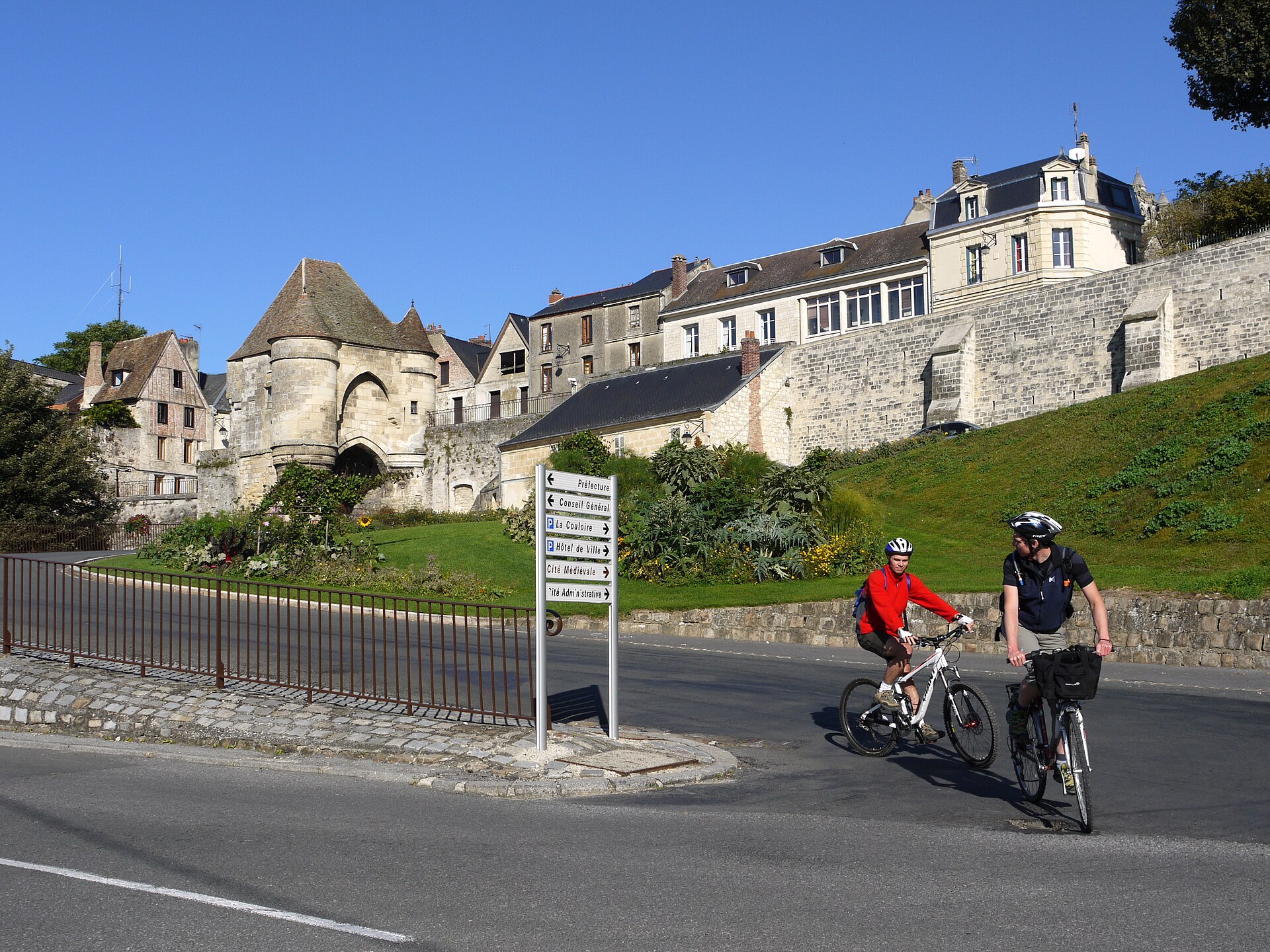
Following the southern ramparts toward the Ardon Valley, you first pass the open arbor of the Promenade de la Couloire, shaded by linden trees. A little further along, the thirteenth-century Porte d'Ardon guards the entrance to the plateau. This massive city gate is flanked by heavy round towers. The cart ruts worn into the stone under the pointed arch bear witness to centuries when this passage served as the strictly guarded primary gateway.
Beyond the gate, the cobblestoned Rue Serurier follows the medieval street pattern. Here stands the former municipal town hall, marked by an ornate corner turret, while deep beneath the mansions in neighboring streets lie extensive underground stone quarries that once provided the building blocks for the entire city.
Memorial on the Slopes and a Leaning Bastion
On the northern flank of the ridge, the rampart trail takes on a different tone. Right along the steep drop of the Mont de Vaux stands the Monument aux Martyrs des Camps de Concentration. This somber cliffside memorial honors the citizens of Laon deported to concentration camps during the Second World War who never returned. From the stone terrace, one looks out in absolute stillness over the northern plains.
Continuing westward along the ramparts brings you to one of the city's most intriguing fortifications: the thirteenth-century Tour Dame Ève, also known as the Leaning Tower of Laon. Centuries of ground shifting along the slope have caused this massive structure to tilt dramatically without ever collapsing. Having weathered sieges and subsidence alike, the tower stands as a striking landmark along the medieval wall, offering commanding views across the ridge.
The landmarks described here are just a glimpse of what awaits on the plateau of Laon. On the full walk, you will uncover many more fortifications, hidden passageways, and historical tales that give the city its unique character. Anyone wishing to follow the complete route with all the historical context can find it in the CityWalkGems app.
- 12 stops
- Cathédrale Notre-Dame de Laon start
- ~4,5 km route length
- ~708 m longest stretch
- about 1,5–2,5 h duration
- Free

