
On the eastern edge of the Vienna Woods lies a town where nature, spa culture, and musical history have intertwined for centuries. Baden bei Wien owes its prestige not only to its thermal springs, but also to its unique location at the junction of wooded hills and open plains. Anyone embarking on a city walk through Baden bei Wien soon discovers that the best way to explore this Austrian spa town is to head for the heights first, before descending into its elegant historic heart.
Views Across the Vienna Woods
The hills surrounding Baden were already a favorite retreat in the nineteenth century for urbanites seeking clean, restorative air. At Faber Höhe, a peaceful ridge where pine needles crunch beneath your feet, you stand precisely at a geographic threshold: here, the forested slopes of the Vienna Woods transition into the gentler lowlands of Lower Austria. It is a strategic spot to take in the surrounding landscape.
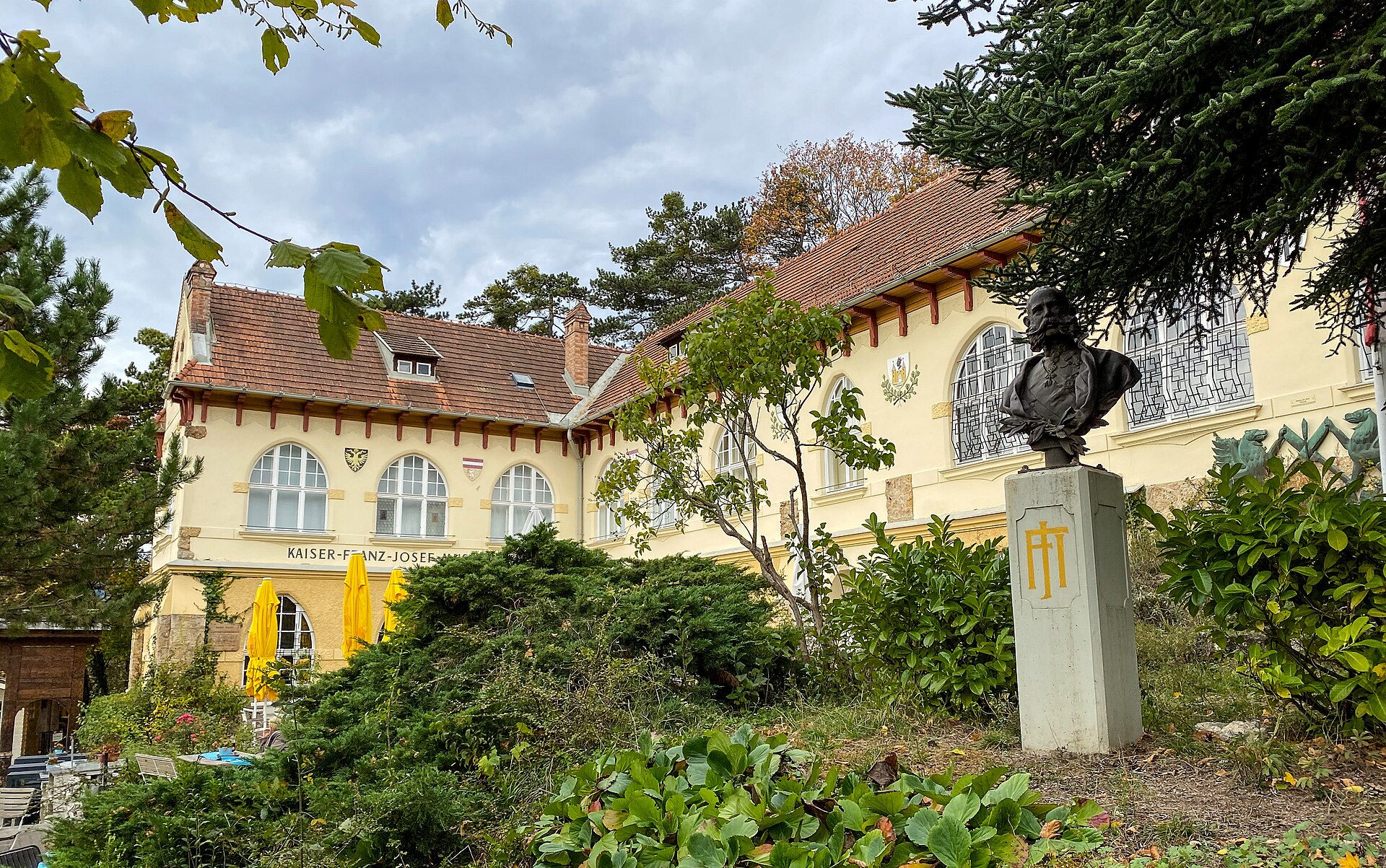
Not far away, perched on the hillside, stands the Kaiser-Franz-Josef-Museum. Opened in 1905 to honor Emperor Franz Joseph, the building's elevated setting served more than just an aesthetic purpose; it immediately provided visitors with a panoramic vista over the valley. Inside, the museum houses an extensive collection of folk art and artifacts documenting the region's cultural past.
Wandering further along the forested paths reveals more tributes to the area's rich cultural heritage. The Ferdinand-Raimund-Aussicht is named after the Austrian playwright who spent time here during the Biedermeier era. From this rustic vantage point, the view extends over the town's rooftops and rolling slopes—a panorama Raimund once drew upon for creative inspiration. A little farther ahead lies Anna-Höhe, where simple wooden benches rest under a dense canopy of leaves. Its name reflects the romantic nineteenth-century tradition of spa visitors naming trails and lookout points after idyllic spots or loved ones.
Green Heritage and Musical Footsteps
From the wooded hills, granite stairs lead down toward the Kurpark, beginning at the Bellevue viewpoint. For generations, this stone balcony served as a meeting place for aristocrats and artists eager to see and be seen during their daily afternoon promenades. Leaning over the balustrade, you look out over the lush greenery below.
Baden's Kurpark dates back to the early nineteenth century and grew into one of Central Europe's grandest spa gardens. Laid out in classical spa tradition, it features symmetrical flowerbeds, splashing fountains, and broad strolling avenues leading toward the casino.
Tucked deep within the park's trees stands the Mozarttempel, a semicircular colonnaded pavilion. The monument pays tribute to Wolfgang Amadeus Mozart, who stayed in Baden in June 1791. The tranquility of the spa town provided the composer with a welcome respite; it was here that he composed his celebrated motet Ave verum corpus.
The town's musical heritage continues through the cobblestone streets just below the park. Tucked down a narrow lane is the Beethoven-Haus, housed in a former bakery. Ludwig van Beethoven rented the upper floor of this building between 1821 and 1823. Seeking relief in Baden from his advancing deafness, he coupled his artistic retreats with the local thermal treatments. Today, the building serves as a museum illustrating his stay and daily life in the early nineteenth century.
Market Traditions and Imperial Squares
Continuing into the town center, the serenity of the park gives way to the lively rhythm of local life. The central square is dominated by the Dreifaltigkeitssäule (Holy Trinity Column). This baroque marble monument adorned with gilded accents was erected between 1714 and 1718 in gratitude for the end of the last major plague epidemic to strike Baden. Everyday urban life unfolds around this historic monument.
Just nearby on Brusattiplatz, you will find the Genussmarkt. Here, regional farmers and artisans display their goods, offering everything from local delicacies and cheeses to fresh flowers. The market sits in the shadow of the historic Frauenbad. Once a bathhouse reflecting Baden's origins as a premier thermal center, it now serves as an art museum. This blend of lively market stalls and classical bathhouse architecture lends the square its distinctive character.
The route through the historic center ultimately concludes at Josefsplatz. Here, you'll hear the familiar chimes of the Badner Bahn, the iconic blue-and-white tram-train that reaches its southern terminus directly from Vienna. Surrounded by vibrant café terraces and stately imperial facades, the square forms the vibrant heart of the city—a fitting finale to a journey through Baden's storied layers.
This selection captures only a glimpse of the rich historical heritage and green retreats waiting in Baden bei Wien. The full route features many more stories, lesser-known stops, and architectural details to discover at your own pace. Download the CityWalkGems app to experience the complete self-guided walk with interactive challenges.
- 11 stops
- Faber Höhe start
- ~4,3 km route length
- ~944 m longest stretch
- about 1,5–2 h duration
- Free

