
Also known as: Znaim
High above the meandering Thaya River, close to the Austrian border, lies Znojmo. Walking through its streets, you immediately sense that this South Moravian town served as a strategic bastion for centuries. Limestone bluffs, deep river valleys, and massive defensive ramparts shape the appearance of the historic core, which is also firmly rooted in a long tradition of winemaking. A well-planned walking tour of Znojmo takes you past medieval fortifications, underground escape routes, and Romanesque artistic treasures that are rare in Central Europe.
Underground Escape Routes and Baroque on the Town Square
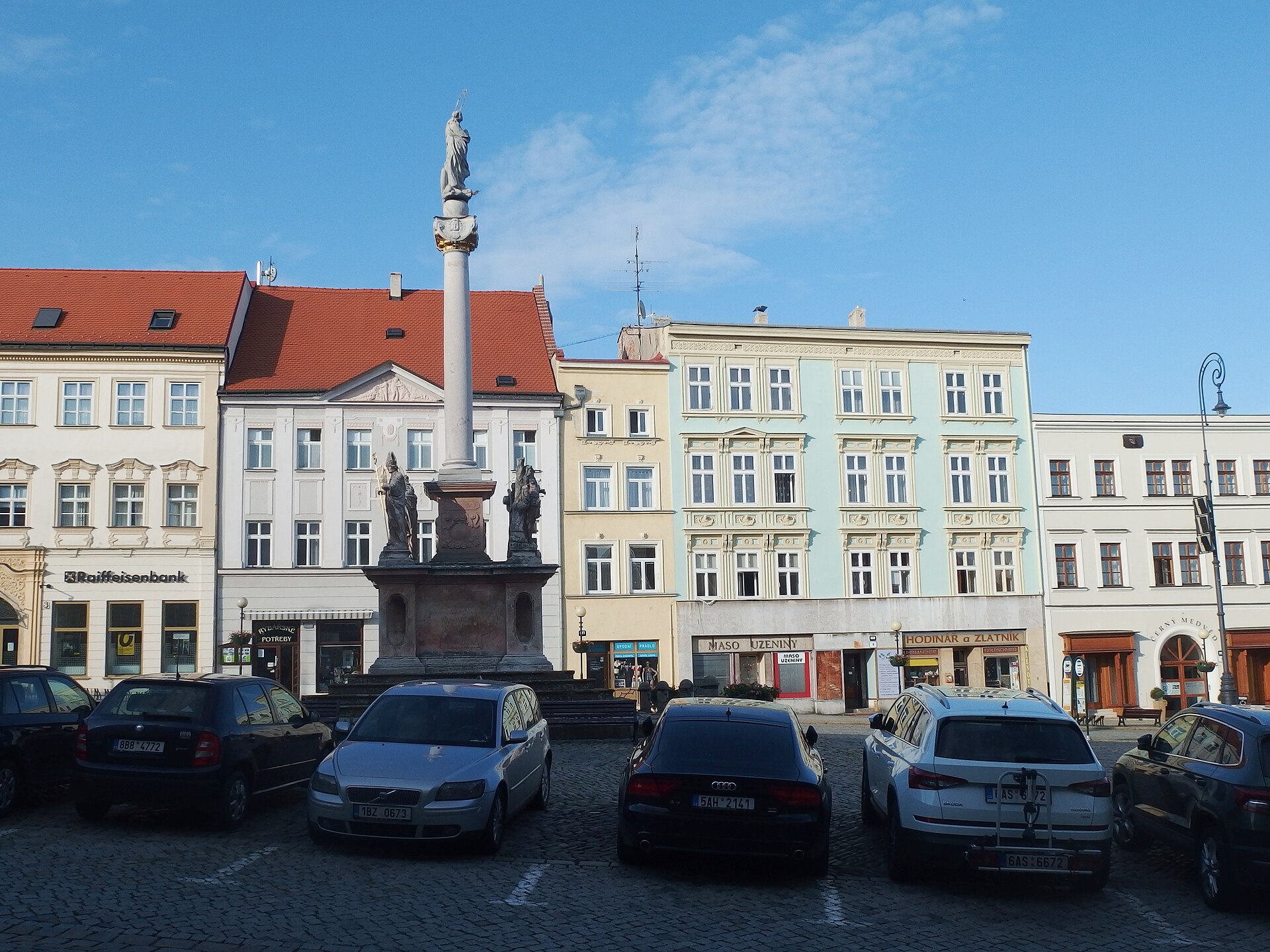
At first glance, Znojmo's main square exudes peace and commerce. In the middle of the cobblestones rises the slender Morový sloup, the Baroque plague column. Erected in the late seventeenth century, this monument was raised in gratitude for deliverance from devastating epidemics. From its peak, the statue of the Immaculate Conception watches over the weekly market activities that continue to take place here today.
Yet the square's true surprise lies beneath the pavement. Noticeably cool air rises from the ventilation grates: the entrance to Znojmo's famous underground labyrinth. Beginning in the fourteenth century, townspeople started connecting their cellars and carving deeper into the bedrock. Eventually, a network spanning nearly thirty kilometers of corridors, storage rooms, and shelters emerged. This subterranean system enabled the population to sit out long sieges and town fires unseen and unharmed, even as everyday life above ground ground to a halt.
A Triple Defensive Belt
Above ground, the imposing town fortifications bear witness to the border town's military past. King Přemysl Otakar I ordered the construction of a triple defensive ring of walls and deep moats to protect the Margraviate of Moravia against incursions from Austrian lands. Along Kollárova Street, the sheer depth of the medieval moat remains tangible. Where archers once patrolled and watched for advancing enemy troops, quiet walking paths now run alongside robust towers and ramparts.
Later history has likewise left marked traces around the fortified zone. In the nearby Palach Park stands the Kopal Monument, a nineteenth-century obelisk crowned by a winged Victoria. It honors Karl von Kopal, a local officer who fell during the 1848 Italian campaign. A little further along the shaded promenade stands the Pomník vítězství, colloquially known as "Ivan." This statue of a helmeted soldier was erected after May 1945 to commemorate the arrival of the Red Army. Both monuments illustrate the complex political and military layers that characterize this Central European border region.
Between Industrial Heritage and the Gránice Gorge
On the western edge of the town center, the landscape plunges steeply into the valley of the Gránice stream. Just outside the stone ramparts lies the Přírodní dětský park Gránice, a woodland park laid out at the beginning of the twentieth century with winding trails and wooden play equipment alongside the babbling stream. Towering high above the valley is a striking rocky outcrop bearing the Polish Stone Monument. This memorial stone commemorates Polish military units that camped here during the Napoleonic Wars. From the ridge, you can look out across the dense forest blanketing the valley slopes.
Down by the Thaya River, Znojmo reveals an entirely different side of its past. Housed in a former watermill and tannery is the Muzeum motorismu. Inside lingers the scent of polished chrome and engine oil: the collection includes dozens of historic motorcycles, automobiles, and agricultural tractors from the interwar period. It offers a practical, technical contrast to the religious and aristocratic monuments up on the plateau.
Ducal Power and Vistas Over the Thaya
Back on the rocky ridge, Znojmo's history culminates at the castle grounds. Within a preserved wing of the stronghold, the South Moravian Museum displays archaeological finds stretching from the Stone Age to the Middle Ages. The forecourt commands sweeping views over the deep river canyon, but the most important historic treasure stands on the uppermost terrace: the eleventh-century St. Catherine's Rotunda. This Romanesque fieldstone chapel holds unique frescoes depicting the dynastic genealogy of the Přemyslid rulers—a rare secular theme in medieval wall painting.
Just steps away lies the rocky viewpoint beside the Chapel of St. Wenceslaus. Built in the fifteenth century, this structure features two levels: a Gothic lower chapel topped by a Baroque addition. From the terrace, you can admire the iconic horseshoe bend the Thaya carves around the granite cliffs, flanked by terraced vineyards that attest to South Moravia's ancient viticultural heritage.
Discover More of Znojmo
This article highlights just a handful of remarkable sites along a multifaceted historical trail. On the complete walking route through Znojmo, you will encounter hidden passageways, intriguing lore, and subtle details easily missed on your own. To experience the full tour with complete historical context and interactive challenges, choose the Znojmo walking tour in the CityWalkGems app.
- 12 stops
- Start anywhere
- ~4,9 km route length
- ~710 m longest stretch
- about 2–2,5 h duration
- Free

